In the realm of CNC machining, selecting the right aluminum grade is as critical as the design itself. While aluminum is generally praised for its excellent machinability, the choice between 6061-T6 and 7075-T6 can significantly impact the component’s structural integrity, weight, and total production cost.
For design engineers, understanding the nuances of these two workhorse alloys is essential for optimizing Design for Manufacturing (DFM). This article provides a technical deep-dive into their mechanical properties and CNC cutting performance.
1. Chemical Composition and Mechanical Strengths
The primary difference lies in their alloying elements. 6061 is an aluminum-magnesium-silicon alloy, while 7075 uses zinc as its primary alloying agent.
| Property | 6061-T6 Aluminum | 7075-T6 Aluminum |
| Tensile Strength | ~310 MPa (45,000 psi) | ~570 MPa (83,000 psi) |
| Yield Strength | ~275 MPa (40,000 psi) | ~503 MPa (73,000 psi) |
| Hardness (Brinell) | 95 | 150 |
| Corrosion Resistance | Excellent | Moderate |
| Machinability Rating | Good (80%) | Fair (70%) |
7075 Aluminum is often referred to as “aircraft grade” due to its incredible strength-to-weight ratio, which rivals some steels. However, 6061 offers superior versatility and better resistance to environmental degradation.
2. CNC Machining Performance:
Chip Formation and Surface Finish
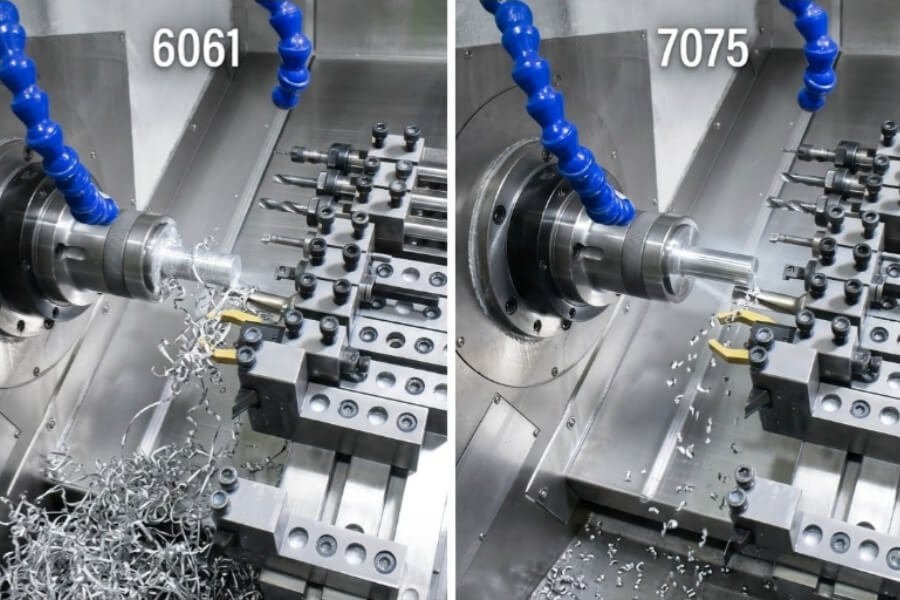
7075 aluminum is significantly harder and more brittle than 6061. During high-speed CNC milling, this hardness translates to cleaner chip breaking. While 6061 is easier to cut, it can sometimes be “gummy,” leading to longer, stringy chips that may mar the surface finish if not managed with proper coolant and tool paths. 7075 generally yields a superior, mirror-like surface finish directly off the machine.
Tool Wear and Heat Management
Because of its higher zinc content and hardness, 7075 is more abrasive. Engineers should expect slightly higher tool wear when machining 7075 at scale. Furthermore, heat management is more critical for 7075 to prevent stress cracking, although its higher thermal conductivity helps dissipate heat during aggressive roughing cycles.
3. DFM Considerations: Which One Should You Choose?
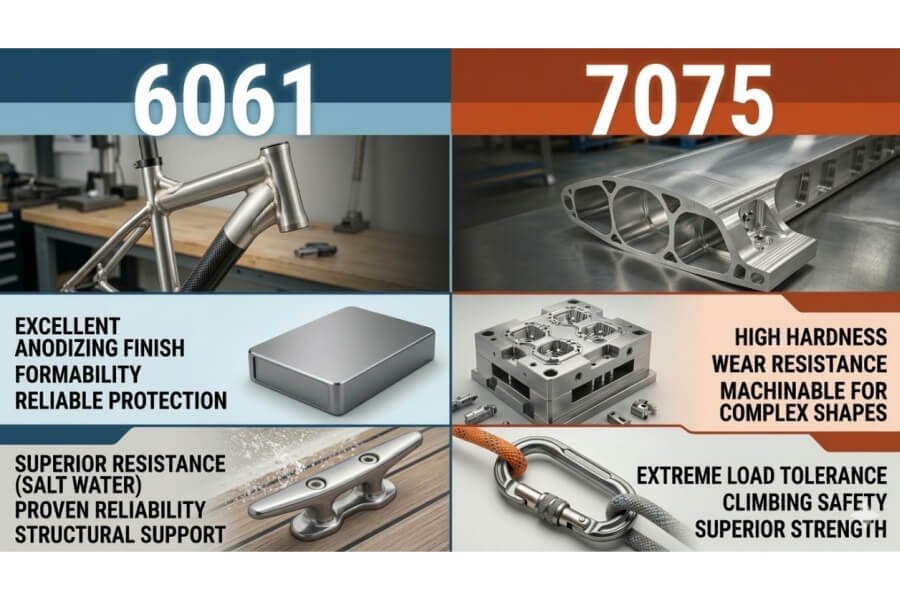
Choose 6061 Aluminum if:
①Cost is a priority, 6061 is more economical and widely available in various extrusions and plates.
②Welding is required, 6061 has excellent weldability, whereas 7075 is generally considered non-weldable for structural applications.
③Corrosion is a concern, Parts exposed to marine or harsh outdoor environments benefit from 6061’s natural protective oxide layer.
Choose 7075 Aluminum if:
①Designed to withstand high stresses, suitable for aerospace frameworks or high-stress structural components.
②Weight reduction is critical, Its high strength allows for thinner-walled designs without sacrificing safety.
Precision and Hardness, If the part requires high wear resistance or must maintain extremely tight tolerances under mechanical load.
4. Post-Processing: Anodizing and Finishing
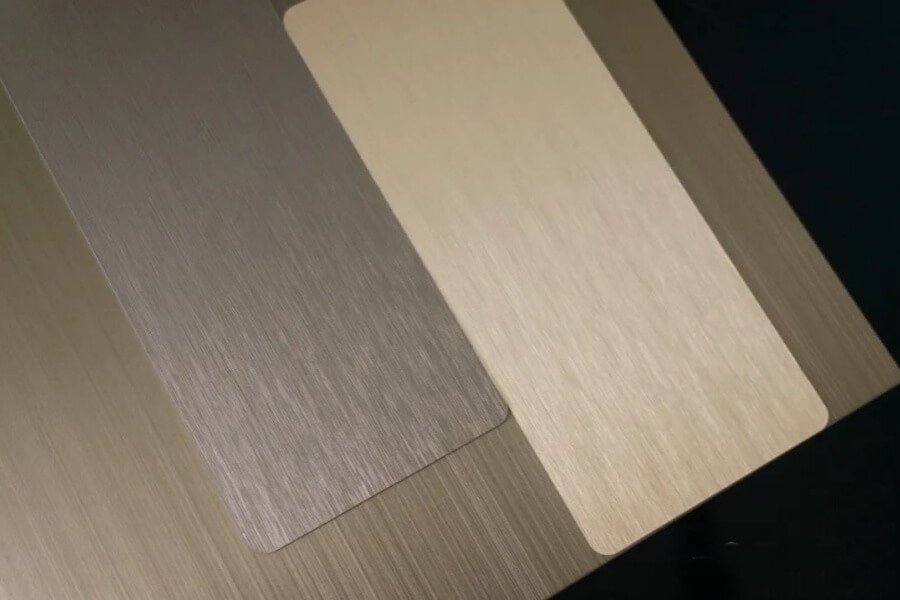
Both alloys respond well to anodizing. However, it is important to note that 7075 may result in a slightly different color hue compared to 6061 when undergoing Type II or Type III (Hard) anodizing due to its different chemical makeup. If aesthetic color matching is vital for your assembly, ensure both parts are made from the same alloy.
Conclusion: Partnering with a CNC Expert
Choosing between 6061 and 7075 is a balance of mechanical requirements and budget constraints. At Shenzhen Xinmingliang Technology, our engineering team provides comprehensive DFM feedback to ensure your material choice aligns with your project’s performance goals.
Ready to start your next project?
[Get an Instant Quote for 6061 or 7075 Machining]