
- Home
- »
- Zinc Die Casting
XML | High-Precision Zinc Die Casting Solutions
As a premier provider of custom zinc alloy die casting solutions, XML engineers high-precision components for demanding applications. By integrating advanced Hot-Chamber technology with the superior fluid dynamics of zinc, we achieve net-shape manufacturing that delivers intricate geometries and ultra-thin walls—significantly reducing or eliminating secondary machining costs.
Certifications : ISO 9001:2015 | AS9100D | ITAR Registered
Why Choose Zinc? The Process and Benefits of Zinc Die Casting
Zinc die casting is a highly efficient manufacturing process that utilizes high pressure to inject molten zinc alloy into precision metal molds. Because zinc has a relatively low melting point (approximately 380-400°C), manufacturers like XML employ an advanced Hot Chamber Casting technique. In this process, the injection mechanism is submerged directly into the molten metal bath, rapidly forcing the material through a gooseneck into the die. This results in exceptionally fast production cycles and rapid cooling, allowing for the creation of incredibly precise and intricate surface profiles.
Widely regarded as a highly versatile, all-around top performer in precision manufacturing, zinc offers several unparalleled advantages:
- Unmatched Design Complexity: Zinc exhibits extraordinary fluidity, enabling the casting of much thinner walls (down to 0.5mm) and far more intricate internal cavities than aluminum or magnesium alloys.
- Extended Tool Life: The low melting point minimizes thermal shock to the tooling. A typical zinc die casting mold can yield over 1 million shots—compared to just 100,000 for aluminum—drastically reducing long-term unit costs.
- Net Shape Manufacturing: Zinc die-cast components achieve extremely tight tolerances straight out of the mold, frequently allowing for direct assembly with no secondary machining required.
- Superior Shielding Properties: Zinc naturally provides excellent EMI/RFI (Electromagnetic/Radio Frequency Interference) shielding, making it an ideal material choice for electronics and telecommunications equipment.
Material Guide: Zinc Alloys for Precision Die Casting
At XML, we understand that selecting the precise alloy is the foundation of a successful manufacturing project. We work with premium-grade zinc materials to deliver components with exceptional dimensional stability, mechanical strength, and superior finishing characteristics. Explore our core alloy options and technical specifications below to find the perfect match for your application.
The Industry Standard
- The most widely utilized zinc alloy globally, offering the optimal balance of physical and mechanical properties. It features exceptional castability, long-term dimensional stability, and is highly receptive to a variety of surface finishes including plating and powder coating.
- Complex, multi-functional components requiring high precision and premium cosmetic finishes.
Enhanced Strength & Hardness
- Engineered with a higher copper content to deliver increased tensile strength, superior hardness, and enhanced wear resistance compared to Zamak 3. It retains excellent castability while providing the durability needed for more demanding environments.
- Components subjected to higher mechanical stress, friction, and demanding automotive or hardware applications.
High Performance & Creep Resistance
- The highest-aluminum zinc alloy compatible with the efficient hot-chamber die casting process. ZA-8 boasts significantly higher yield strength and superior creep resistance, allowing it to maintain its shape under continuous long-term stress and elevated temperatures.
- Highly demanding structural applications, high-stress mechanical parts, and load-bearing components.
Zinc Alloy Mechanical & Physical Properties Comparison (NADCA Standards)
| Property / Specification | Zamak 3 (ASTM AG40A) | Zamak 5 (ASTM AC41A) | ZA-8 |
| Tensile Strength | 283 MPa | 331 MPa | 374 MPa |
| Yield Strength (0.2% Offset) | 221 MPa | 295 MPa | 290 MPa |
| Hardness (Brinell) | 82 HB | 91 HB | 103 HB |
| Elongation (in 50mm) | 10% | 7% | 6 – 10% |
| Density | 6.6 g/cm³ | 6.6 g/cm³ | 6.3 g/cm³ |
| Melting Range | 381 – 387 °C | 380 – 386 °C | 375 – 404 °C |
| Primary Advantage | Balance & Castability | Wear Resistance | Strength & Creep Resistance |
Secondary Operations & Surface Finishes
One of zinc’s greatest advantages is its outstanding finishing characteristics. To provide a true end-to-end manufacturing solution, XML offers extensive in-house secondary operations and cosmetic surface treatments, reducing your supply chain complexity and lead times.
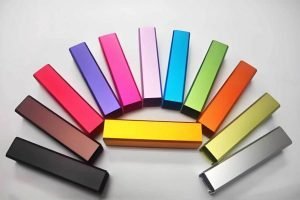
Anodizing enhances corrosion resistance and allows for vibrant color finishes on aluminum parts.
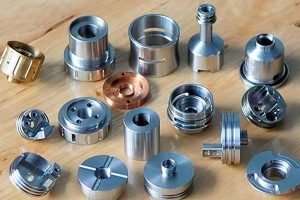
Electroplating adds a thin, protective metal coating to improve durability and appearance.
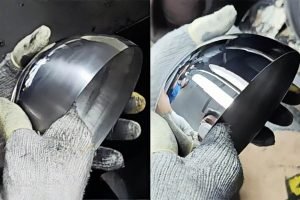
Polishing smooths the surface to achieve a shiny, mirror-like finish for enhanced aesthetics 
Powder coating provides a durable, colored finish that resists chipping, scratching, and fading.

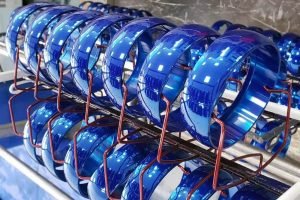
Electrophoretic coating provides a smooth, bonded protective layer, improving durability, aesthetic appeal.

Why Choose XML for Your Metal Parts?

Advanced Equipment
State-of-the-art Swiss CNC machines ensure exceptional precision, repeatability, and efficiency.

24/7 Engineering Support
Our engineers provide continuous technical support, from design review to production optimization.

Fast Turnaround
Streamlined workflows and dedicated project management enable quick and reliable delivery.

Competitive Pricing
Optimized processes and in-house production help customers save 30–40% without sacrificing quality.

Bottom CTA & Lead Form
Ready to Start Your Zinc Die Casting Project? Upload your 2D/3D CAD files today for a free DFM analysis and quote within 24 hours.