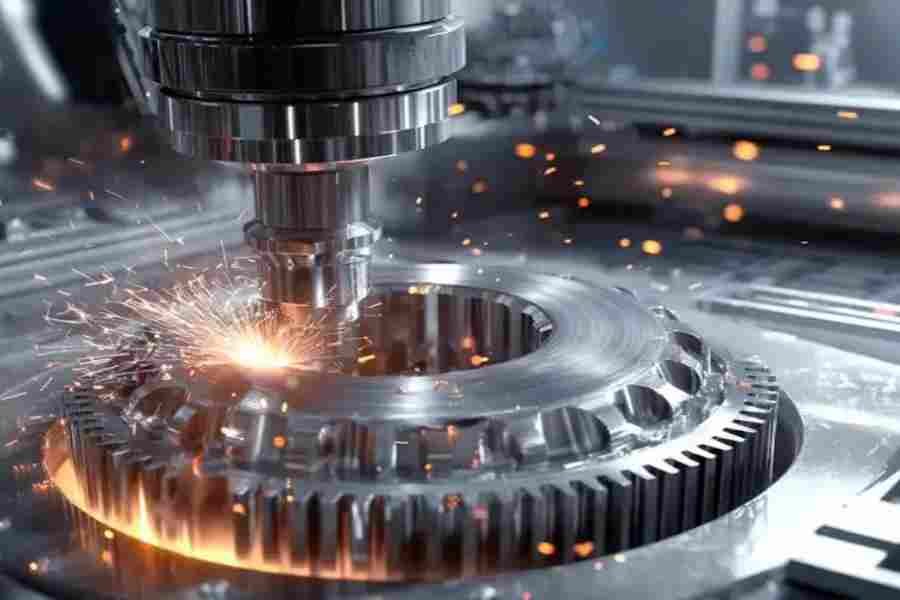
Most manufacturers treat gear production as a standard machining task, but anyone on the shop floor knows that the devil is in the details—specifically in how you manage material deformation and tool life. Whether you’re utilizing the forming method for low-volume custom gears or the generating method for mass production, the workflow determines your final ROI.
Here is a deep dive into the 7-step gear processing cycle that defines modern high-precision manufacturing.
1. Forging & Blank Preparation: Beyond the Basics
A gear is only as good as its grain structure. While Hot Die Forging remains the workhorse for automotive gears, we are seeing a significant shift toward Cross Wedge Rolling.
Expert Tip: If you are working with complex stepped shafts, cross wedge rolling isn’t just faster; it reduces subsequent machining allowance by up to 20%, saving you a fortune in raw material costs over a long production run.
2. Isothermal Normalizing: The Secret to Stability
If your gears are warping after heat treatment, look at your normalizing process. We typically use 20CrMnTi steel, but standard air cooling is too unpredictable.
The Solution: We implement Isothermal Normalizing. By strictly controlling the cooling rate, you get a uniform metallographic structure. This isn’t just a “quality check”—it’s a preemptive strike against the irregular thermal deformation that plagues lower-quality gear shops.
3. High-Precision CNC Turning
Positioning is everything. To ensure that the subsequent hobbing is accurate, the gear blank must be perfect.
One-Clamp Strategy: We use CNC lathes to process the aperture, end face, and outer diameter in a single clamping. This eliminates the cumulative error you get when flipping the part. Using mechanically clamped tools (no regrinding) ensures that your dimensions don’t drift across a batch of 10,000 units.
4. Hobbing & Gear Shaping: Boosting Tool ROI
For many, hobbing is a bottleneck. While the generating method is efficient, tool wear is the enemy of uptime.
The Modern Edge: Don’t just settle for standard hobs. Modern coating technologies (like AlTiN) can extend tool life by over 90%. In our experience, the reduction in downtime for tool changes far outweighs the higher initial cost of coated inserts.
5. Radial Gear Shaving: Precision Before the Oven
For high-volume automotive gears, Radial Shaving is the “sweet spot” for finishing. It allows for precise tooth profile and direction modification without the extreme costs of full-profile grinding. It’s about achieving that “quiet” gear mesh that modern EV and automotive transmissions require.
6. Heat Treatment: Controlled Carburizing
This is where the gear gets its “muscle.” To achieve the necessary surface hardness without sacrificing core toughness, we use continuous carburizing and quenching lines.
Industry Insight: If your process flow doesn’t include gear grinding after heat treatment, your furnace control must be flawless. Using automated lines from manufacturers like Ipsen ensures that the mechanical properties are baked in, not guessed at.
7. Final Finish Grinding
The final step is all about correcting the “breathing” of the metal after it comes out of the furnace. We focus on the inner hole and end faces to ensure the gear sits perfectly on its shaft. This minimizes vibration and ensures the geometric tolerances are tight enough for high-RPM applications.
The Bottom Line
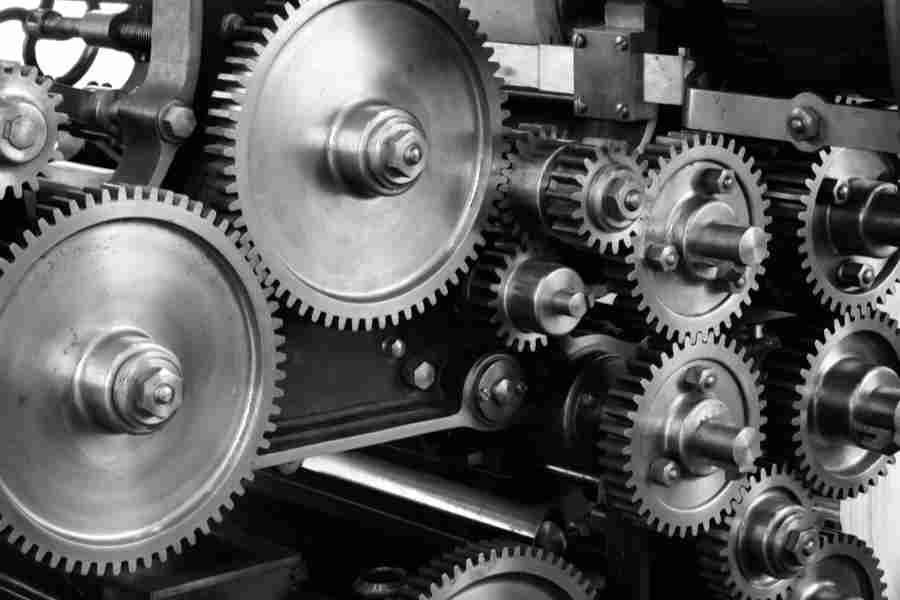
The gear processing process is a balance of physics and economics. By focusing on isothermal normalizing and leveraging coated tooling, you don’t just make a gear; you make a high-performance component that lasts.
7-Step Gear Manufacturing Process | From Forging to Finishing
Complete 7-step precision gear manufacturing process: forging, CNC turning, hobbing, shaving, heat treatment & grinding for high-performance gears.