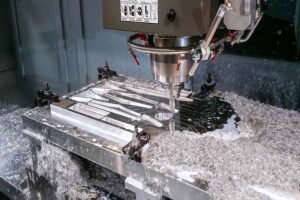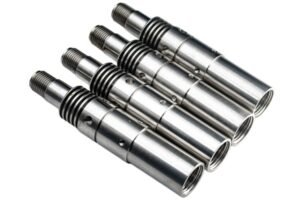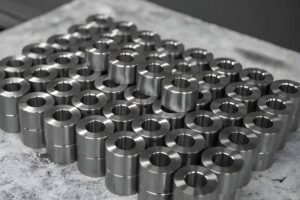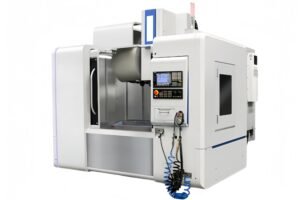
In modern comprehensive precision hardware manufacturing, whether providing custom cnc machining services for common aluminum alloys and engineering plastics, or tackling highly difficult materials like titanium and specialized hard metals, simultaneous 5-axis machining within advanced 5 axis manufacturing represents the pinnacle of capability and flexibility. Compared to traditional 3-axis setups, a 5 axis cnc machine utilizing 5th axis automation can not only handle highly complex spatial curves to produce intricate 5 axis cnc parts, but also significantly improve overall machining efficiency and surface quality across various 5 axis cnc service offerings. However, the underlying mechanical structure and kinematic configurations of any five axis machine—whether it is employed for detailed 5 axis cnc milling, robust heavy part 5-axis cnc machining, or general cnc 5 axis machining—directly dictate its load-bearing capacity and dynamic accuracy. This article will provide an in-depth breakdown of core 5th axis structures to help clarify what is 5 axis cnc, and analyze the key advantages of 5-axis cnc machining in actual production.
1. Structural Analysis of Mainstream 5-Axis Machining Centers
Based on the spatial layout of the spindle and worktable, 5-axis machining centers are primarily divided into the following typical structures:
1.1 Tilt-Rotary Table
This is a simple and widely used solution, involving the installation of a tilt-rotary table on a conventional 3-axis CNC machine. It helps the cutting tool approach multiple faces of the part. However, the table itself occupies a massive portion of the machine’s working envelope (sometimes over 75%), strictly limiting the size and weight of the workpiece.
1.2 Vertical 5-Axis Machining Centers
This type of machining center mainly features two mainstream rotary axis configurations:
1.2 Vertical 5-Axis Machining Centers
This type of machining center mainly features two mainstream rotary axis configurations:
Rotary Table Style: Both the A-axis (typically +30° to -120°) and the C-axis (360°) are located on the table. This structure offers excellent spindle rigidity and lower manufacturing costs, with minimum indexing values down to 0.001 degrees. However, load capacity is limited, as cutting forces generate significant moments on the table when the A-axis rotates past 90 degrees.
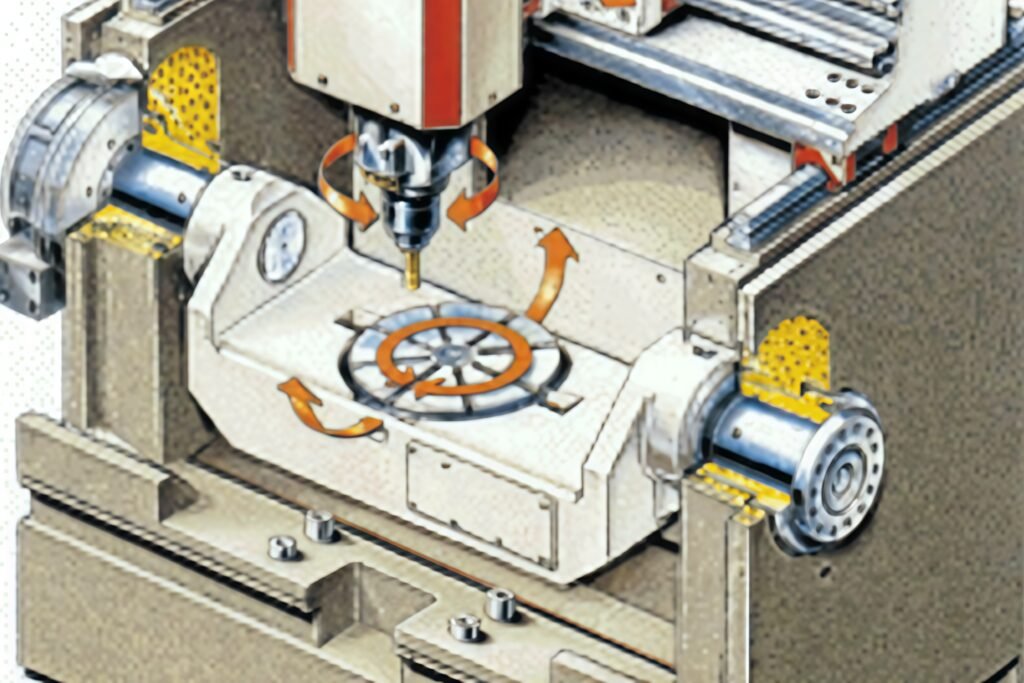
Swivel Head Style: Relies on the rotation of the vertical spindle head (C-axis around Z, A-axis around X). This allows for a massively scaled worktable, ideal for machining huge, heavy airframes or engine casings. Additionally, when using a ball nose end mill, tilting the spindle avoids zero-surface-speed cutting at the tool tip, drastically improving surface finish—a highly popular feature for precision mold machining.
1.3 Horizontal 5-Axis Machining Centers
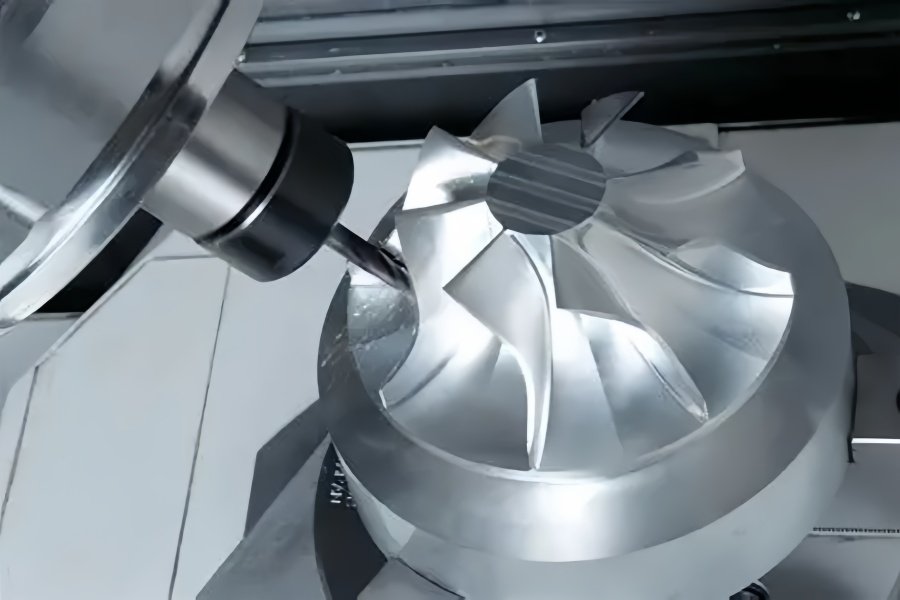
Horizontal machines typically boast spindle speeds over 10,000rpm and rapid feed rates of 30~60m/min, making them the premier choice for heavy machining. They feature two styles: one combines a swiveling spindle with a rotary table, offering highly flexible and practical horizontal-to-vertical conversion; the other uses a traditional dual-rotary table (A+B axes) with excellent simultaneous kinematics, often used for complex surfaces like large impellers.
2. Kinematic Configurations and Structural Types (Aij Models)
The deeper distinctions among 5-axis machines lie in their structural realization and the distribution of their five motion axes (often denoted by Aij):
2.1 Serial Kinematics
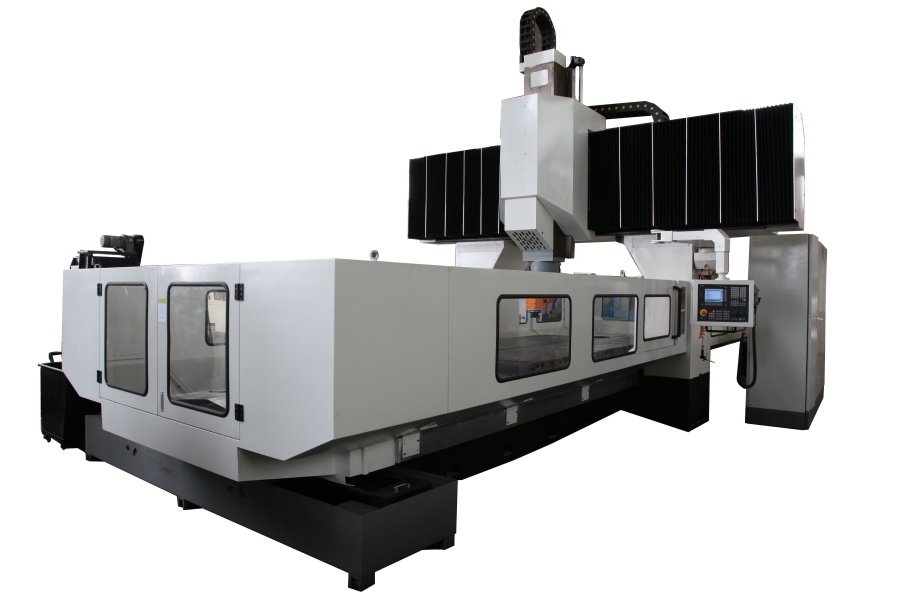
All on Tool Side (Type A11): All five coordinate motions (X, Y, Z, A, C) are concentrated on the spindle head side. Ideal for large, heavy shell parts with complex surfaces.
2.2 Parallel and Hybrid Kinematics
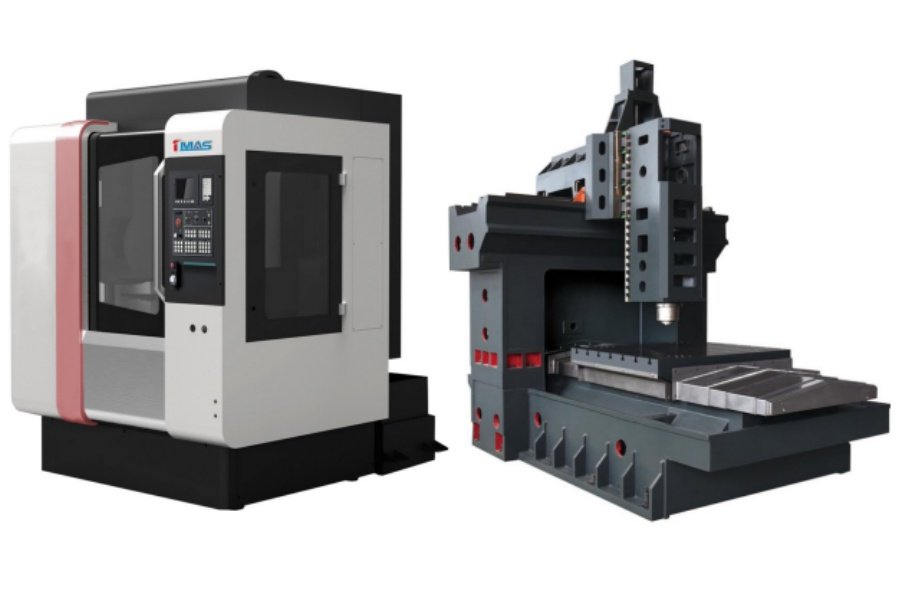
Parallel Kinematics (Stewart Platform – Type A21): Controls the tool’s spatial posture via six telescopic struts. Pros include lightweight moving parts, low inertia, and high rigidity; cons include a restricted working envelope and limited spindle tilt angles .
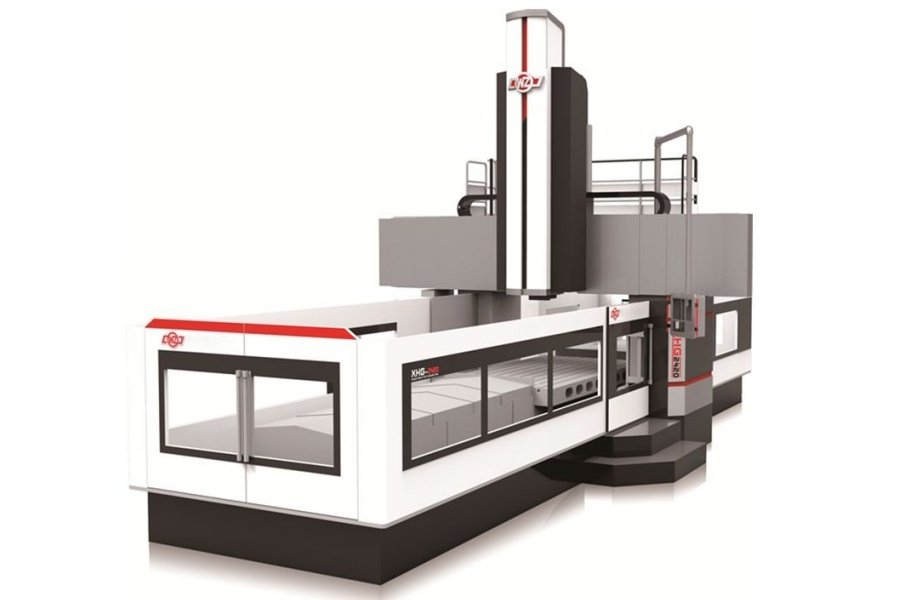
Hybrid Kinematics (Type A31/A33): Combines the benefits of both systems. Parallel mechanisms drive the linear coordinates, while a serial spindle head or table handles rotation. This expands the posture angle of the tool/workpiece and boosts overall machine precision and rigidity.
3. Why Choose 5-Axis Machining?
Integrating 5-axis technology into a production system enables the delivery of highly efficient, premium precision component manufacturing. Core advantages include:
1.Reduced Setups and Higher Efficiency: Compared to multiple setups, 5-axis machining completes complex shapes in a single clamping, entirely eliminating fixture positioning errors caused by re-clamping.
2.Extended Tool Life and Optimized Cutting: Swivel heads/tables reduce the distance between the tool and workpiece, allowing for shorter, more rigid tools. This enables higher cutting speeds while minimizing tool vibration and wear.
3.Enhanced Precision and Saved Polishing Costs: The use of shorter tools and optimal cutting angles ensures superior surface finishes, drastically reducing the time and cost of manual polishing.
4.Economic Prototyping and Low-Volume Runs: No need for months-long specialized casting and mold-making. 5-axis machines can carve extremely complex surfaces directly from solid billets, shortening lead times to just 1-2 weeks.
- Rapid Drilling Operations: For numerous complex angled holes, a 3-axis machine requires custom fixtures for each hole. A 5-axis machine simply reorients itself automatically, allowing the tool to plunge directly along the hole’s axis, saving massive amounts of positioning time.
Conclusion
Selecting the right 5-axis machining structure is key to ensuring the high-standard delivery of parts across diverse materials and complex specifications. As a precision hardware manufacturer with comprehensive capabilities, XML Tech is dedicated to leveraging the most advanced 5-axis CNC systems. Regardless of the engineering materials involved, we provide the optimal solution for your projects, perfectly balancing precision, efficiency, and cost.