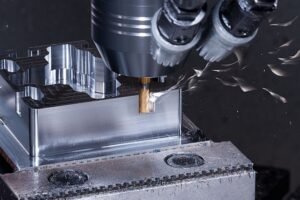
In precision mechanical R&D, high-end custom products and industrial component manufacturing, aluminum cnc machining is the most reliable and cost-effective solution for producing high-precision metal components. A wide range of lightweight, aesthetic and structurally stable mechanical accessories rely on customized aluminum cnc machined parts to meet strict dimensional standards and long-term functional performance. Among all precision metal components used for movable mechanical structures, aluminum turning parts are the top choice for rotational assemblies due to their excellent machinability, smooth surface finish and stable physical properties after anodizing treatment.
However, most product designers, mechanical engineers and procurement professionals face a common and frustrating manufacturing issue: custom rotating aluminum components work perfectly during prototype testing but start sticking, wobbling, shaking or stopping prematurely after mass production begins. Even if all aluminum rotary components pass static dimensional inspection, dynamic rotation performance often fails to meet design expectations, resulting in low batch yield, delayed product launches and increased production costs.
The core reason behind this widespread failure is that standard aluminum cnc machining processes are designed for static structural parts, not for precision rotating assemblies. Most manufacturers focus only on dimensional tolerance while ignoring micro-deformation, residual stress, end-face flatness and clearance consistency that directly affect rotating stability. For high-end rotary aluminum turning parts that require smooth, long-duration and zero-jitter rotation, conventional machining methods cannot achieve stable mass production results.
In this article, we analyze the root causes of sticking and wobbling on rotating aluminum components and share a proven mass production solution based on our precision project case. We explain how we optimized aluminum cnc machining workflows to achieve stable ±0.01mm tolerance control and consistent rotation performance for high-end aluminum rotary parts, delivering reliable and repeatable results for mass production.
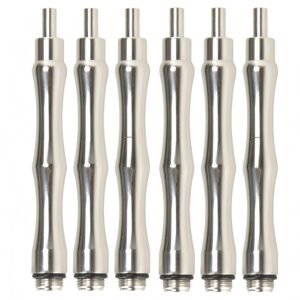
Precision CNC 6063 Aluminum Revolver Pen Holder
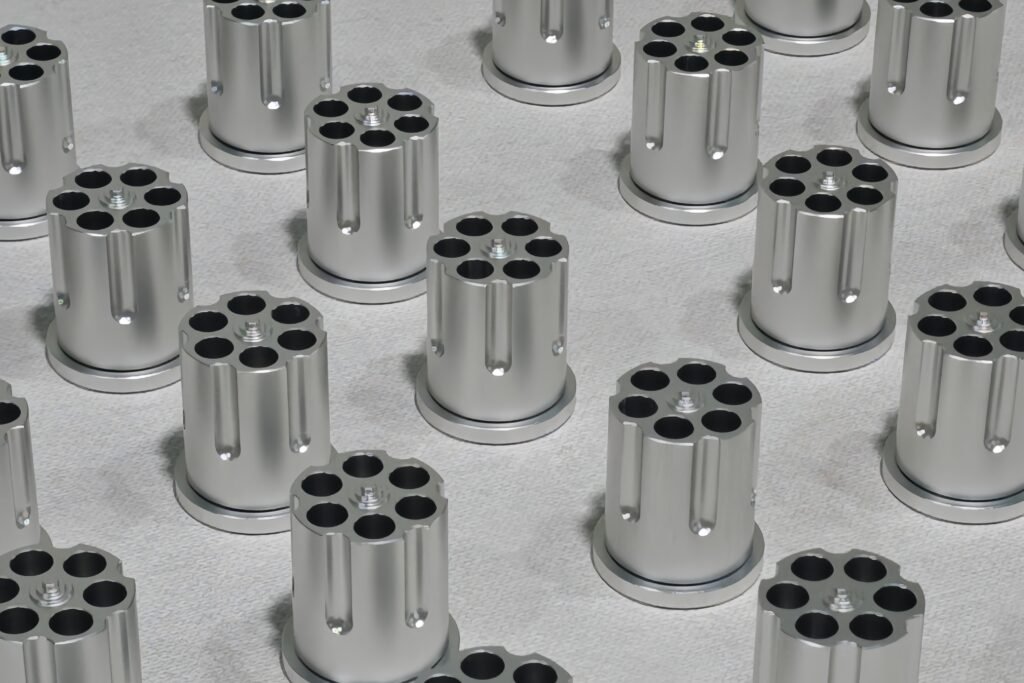
This featured customer project focuses on customized high-end desktop rotary accessories, requiring ultra-smooth free rotation, zero shaking appearance and strict dimensional consistency across thousands of finished units. In the early development stage, the client cooperated with multiple manufacturers for aluminum cnc machining and prototype verification. All prototype aluminum rotary components met drawing dimensions and looked flawless visually, but small-batch trial production revealed severe rotation defects.
Mass-produced aluminum turning parts suffered from intermittent sticking, obvious rotational wobble, insufficient spin time and inconsistent assembly clearance. Some units even locked completely after installation, resulting in a batch yield rate lower than 40%. After repeated failures, the client confirmed that standard machining processes could not solve the hidden precision defects of soft aluminum rotary components and finally partnered with our team for process upgrading and formal mass production.
We redesigned the entire aluminum cnc machining production process, optimized cutting parameters, eliminated residual stress, improved end-face precision and adopted cleanroom assembly standards. Ultimately, we stabilized the overall tolerance within ±0.01mm, enabled every finished product to achieve more than 3 minutes of stable free rotation, and raised the mass production yield rate to 99.8%. This case fully proves that professional process optimization is essential for high-quality rotary aluminum cnc machined parts.
Why rotating aluminum turning parts always stick and wobble in mass production
Many buyers and engineers misunderstand precision aluminum cnc machining, believing that qualified dimensions equal qualified performance. In fact, static dimensional compliance is only the most basic standard for aluminum cnc machined parts. For movable rotary structures, dynamic stability depends on multiple hidden precision indicators that most factories ignore. Especially for soft 6063 aluminum widely used in high-end customization, the material’s low hardness and high ductility make aluminum turning parts extremely prone to micro-deformation during cutting and finishing.
The invisible deformation caused by conventional aluminum cnc machining will not affect caliper detection results but will directly damage the balance of assembly clearance. After pairing and installation, uneven contact surfaces and inconsistent friction lead to continuous wobble and intermittent sticking. The following four technical defects are the main reasons for unstable rotation of mass-produced aluminum cnc machined parts.
1. Residual cutting stress causes invisible aluminum part deformation
Standard high-speed aluminum cnc machining prioritizes production efficiency, adopting aggressive single-pass cutting that generates massive mechanical stress and thermal stress inside the aluminum material. For hard structural aluminum parts, this stress release is negligible, but for soft 6063 aluminum turning parts, residual stress will slowly spring back within 48 to 72 hours after machining.
The micro warping and local tilting of aluminum cnc machined parts cannot be detected by conventional measuring tools. However, during assembly, the deformed contact surface will form high and low friction points. When the part rotates, friction resistance changes constantly, resulting in jitter, wobble and occasional sticking. This is why prototype samples are smooth while mass-produced aluminum turning parts fail frequently.
2. Tolerance stack-up errors destroy rotational clearance balance
Smooth rotation of mechanical assemblies relies on precise and uniform matching clearance. The commercial tolerance of ordinary aluminum cnc machining is ±0.05mm, which is acceptable for static parts but too loose for rotary structures. When multiple aluminum rotary components are assembled, tiny tolerance deviations accumulate into obvious clearance errors.
Excessively stacked negative tolerance leads to zero clearance and continuous sticking; excessive positive tolerance causes loose coordination and obvious rotational wobble. For high-end rotary aluminum turning parts requiring stable long-time rotation, the total clearance error must be strictly controlled within the micron level, which cannot be achieved by conventional aluminum cnc machining standards.
3. Poor end-face flatness leads to uneven friction contact
Most manufacturers only detect outer diameter, inner diameter and length dimensions during aluminum cnc machining quality inspection, ignoring form tolerances such as flatness and parallelism. In fact, end-face flatness is the core factor determining whether aluminum turning parts can rotate smoothly.
Ordinary machined aluminum surfaces retain tiny tool marks, burrs and flatness errors. These subtle defects create uneven contact areas after assembly. During rotation, high points bear excessive friction while low points form gaps, resulting in unstable rotation track, continuous wobble and intermittent jamming. Only ultra-precision finishing of aluminum cnc machined parts can eliminate uneven friction risks.
4. Unstable anodizing thickness changes finished clearance
High-end customized aluminum rotary components usually require anodizing to improve appearance texture and corrosion resistance. The oxide layer formed during surface treatment ranges from 5μm to 15μm. For common structural aluminum parts, this thickness change can be ignored, but for ±0.01mm tight-tolerance aluminum turning parts, it will completely change the pre-machined assembly clearance.
Ordinary factories cannot control uniform coating thickness in batch processing. Partial thick coating reduces clearance and causes sticking, while partial thin coating leads to loose rotation and wobble. Even if aluminum cnc machining precision is perfect, unregulated surface treatment will ruin the dynamic performance of rotary components.
Dual-forming process: Stable ±0.01mm mass production for rotary aluminum parts
To solve the inherent defects of soft aluminum rotary components, we upgraded the traditionalaluminum cnc machining process and developed a professional dual-forming precision manufacturing workflow. This set of processes is specially optimized for tight-tolerance aluminum turning parts, focusing on stress relief, flatness improvement, clearance calibration and batch consistency control.
Through staged processing, parameter customization, closed-loop inspection and dust-free assembly, we completely eliminate sticking and wobble risks of aluminum cnc machined parts, realizing stable mass production within ±0.01mm tolerance and achieving long-term smooth rotation of finished products.
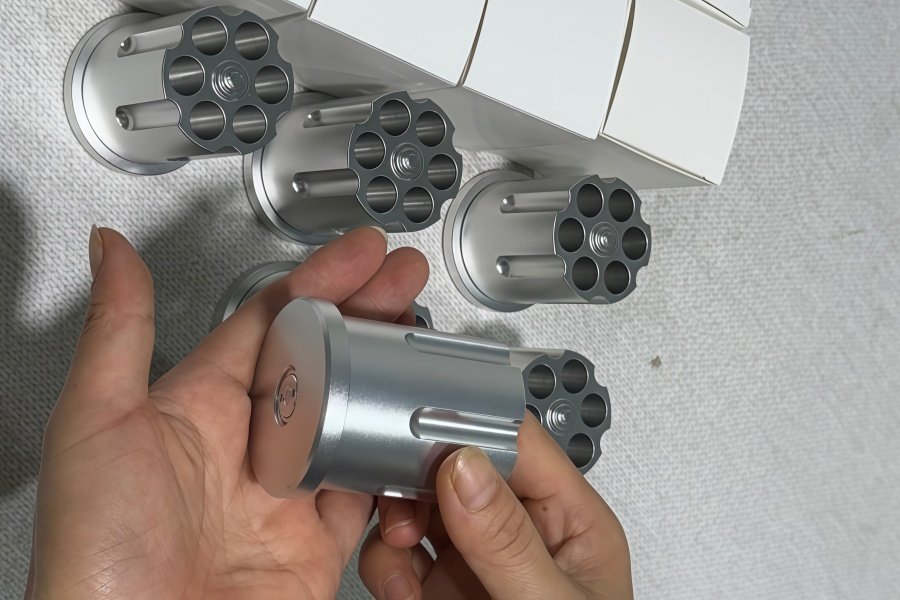
1. Two-stage forming process thoroughly releases aluminum material stress
We abandon the one-time high-speed cutting mode of traditional aluminum cnc machining and adopt separated rough processing and precision finishing. In the roughing stage, we reserve reasonable finishing allowance and reduce cutting speed to avoid excessive thermal stress accumulation. After rough machining, all aluminum rotary components are placed in a constant-temperature workshop for static stress relief.
After full stress release, we perform low-speed precision turning to correct end-face flatness, parallelism and concentricity. The two-stage processing mode fundamentally solves the post-processing deformation problem of soft aluminum aluminum turning parts, ensuring that the dimensional and geometric precision of each component remains stable for a long time without later distortion.
2. Custom cutting parameters optimize rotary part surface precision
Generic aluminum cnc machining parameters pursue speed rather than precision, which easily causes tool vibration and surface unevenness. For our high-end rotary aluminum cnc machined parts, we independently adjust spindle speed, feed rate, tool angle and cooling scheme according to 6063 aluminum material characteristics.
The optimized low-stress cutting mode effectively avoids thermal deformation and tool marks. The end-face flatness of finished aluminum turning parts is controlled within 0.005mm, realizing mirror-smooth contact surface. Uniform friction contact completely eliminates rotational wobble and intermittent sticking, greatly improving dynamic rotation stability.
3. Closed-loop micron-level inspection prevents batch precision drift
To ensure zero error in mass aluminum cnc machining production, we build a full-process closed-loop quality control system. Different from traditional post-production sampling inspection, our team monitors dimensional accuracy in real time during processing. Every two hours, we sample aluminum cnc machined parts to detect dimensional changes and parameter drift.
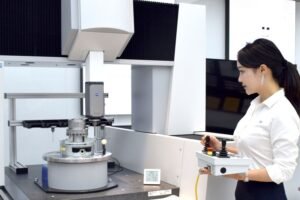
After production, all finished aluminum turning parts undergo 100% full inspection via 2.5D measuring instruments and precision micrometers. Key indicators including inner and outer diameter, flatness, parallelism and assembly clearance are strictly verified to ensure all products are stably controlled within ±0.01mm tolerance, guaranteeing consistent quality of each batch of aluminum rotary components.
4. Pre-compensation machining offsets surface treatment thickness error
Aiming at the clearance deviation caused by anodizing, we adopt pre-judgment and pre-compensation technology in the aluminum cnc machining stage. According to the standard oxide film thickness, we reserve accurate micron-level allowance in advance to offset the dimensional change after surface treatment.
At the same time, we unify the anodizing process parameters of the whole batch to ensure consistent coating thickness and uniform appearance color. This process ensures that the precise assembly clearance formed by aluminum turning parts after machining will not be destroyed by post-treatment, perfectly balancing appearance quality and rotational performance.
5. Dust-free assembly and full function testing guarantee finished performance
Dust and metal debris in ordinary processing workshops are easily trapped in the matching gap of aluminum cnc machined parts, increasing friction and causing rotation failure. All our precision rotary components are assembled in a dust-free constant-temperature environment to avoid particle contamination.
After assembly, each finished aluminum turning parts is tested by a professional rotary test fixture for continuous rotation time, damping uniformity and rotational stability. Only products with stable rotation of more than 3 minutes, no sticking and no wobble can be packaged and shipped, ensuring the pass rate of mass-produced aluminum cnc machining products.
Key tips for sourcing high-quality rotary aluminum CNC parts
Many enterprises encounter mass production failures when customizing rotary aluminum cnc machined parts, mainly due to insufficient understanding of precision aluminum cnc machining characteristics. Based on our rich project experience, we summarize practical procurement and R&D optimization tips for rotary aluminum turning parts customization.
First, distinguish static dimensional tolerance and dynamic functional requirements. When designing drawings, besides basic size tolerance, clearly mark flatness, parallelism and allowable clearance range, and inform the processor of rotary functional requirements to obtain targeted aluminum cnc machining solutions.
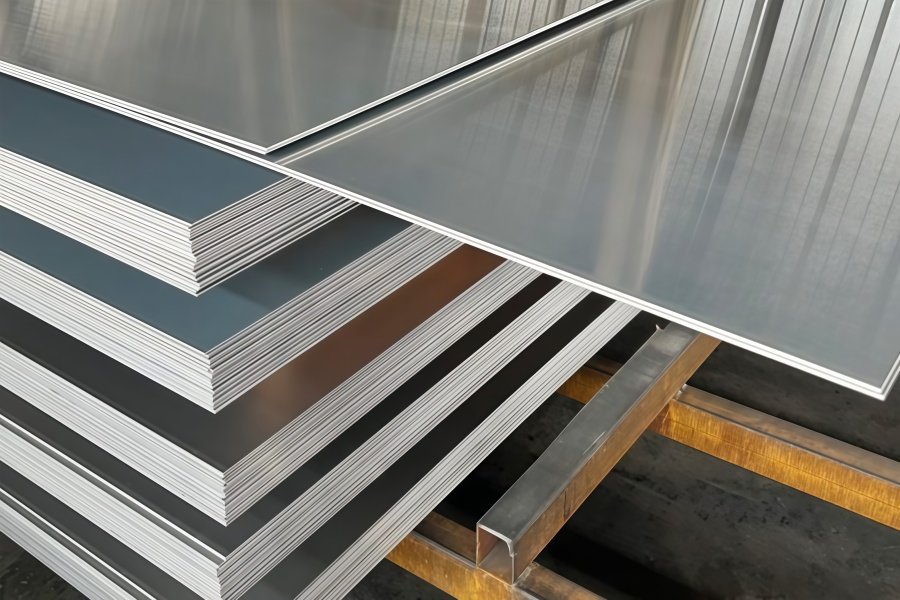
Second, avoid high-speed aggressive cutting for soft aluminum materials. 6063 and 6061 soft aluminum aluminum rotary components must adopt stress-relief processing technology to eliminate hidden deformation risks and ensure long-term stable rotation of finished products.
Third, take surface treatment influence into early tolerance planning. All anodized rotary aluminum turning parts need reserved machining allowance to prevent clearance failure after surface finishing.
Fourth, prioritize suppliers with complete functional testing capabilities. Dimensional inspection cannot replace dynamic rotation testing. Qualified aluminum cnc machining manufacturers must have professional assembly and rotation testing procedures.
Fifth, verify small-batch trial production before full-volume mass production. Trial production can effectively detect process drift and hidden defects, avoiding large-area scrap loss of aluminum cnc machined parts.
Conclusion: Solve rotary aluminum part sticking and wobble via optimized machining
Rotating aluminum turning parts sticking and wobbling are common but solvable manufacturing problems. The fundamental solution is to abandon conventional single-focus aluminum cnc machining modes and adopt systematic precision process optimization covering stress relief, ultra-precision finishing, clearance compensation and standardized testing.
Through our dual-forming process and closed-loop quality control system, we successfully realized stable ±0.01mm tolerance mass production of high-end rotary aluminum cnc machined parts, completely solving the industry pain point of inconsistent rotation performance and low batch yield.
If you are customizing precision rotary aluminum cnc machining components and facing sticking, wobble, unstable mass production or tight-tolerance processing difficulties, our professional team can provide free DFM analysis, process optimization suggestions and customized precision manufacturing solutions. We focus on high-precision, high-consistency aluminum rotary components and aluminum turning parts mass production to help your products achieve superior mechanical performance and market competitiveness.