
Most buyers believe the decisive question is price. It is not. The question that costs the most is who owns the tooling, and by the time most buyers ask it, the answer has already been decided by a purchase order that did not mention it.
The second most expensive question is what happens to a rejected lot, and the third is how busy the shop will be in three months. Neither appears on a quotation, and both determine whether the price you negotiated survives contact with a real delivery.
None of it requires technical depth. It requires asking a sheet metal contractor seven specific questions before the award, in writing, and reading the answers for the three patterns that signal trouble.
What a Sheet Metal Contractor Actually Owes You
A sheet metal contractor owes you parts that conform to the drawing, delivered on the agreed date, with evidence that conformance was checked. What that scope covers in practice is set out under Sheet Metal Fabrication. Everything else is a commercial term that has to be negotiated rather than assumed, and the sheet metal shop that states it plainly is the one worth keeping.
The scope boundary is where disputes start. Does the price include material, cutting, forming, welding, surface finishing, hardware installation, and packaging? A complete sheet metal quote covers all seven. Many include the first three and exclude the rest, with the exclusion buried in a line item rather than stated. A quote that says “finishing not included” in eight-point type is one that will grow by a third at invoice.
Ask for the scope to be written as a list of included operations and a list of excluded ones. A contractor who can produce that list quickly has done this before. A contractor who answers “we do everything” has not thought about it, and will charge you for the thinking later.
The seven questions in order, so you can work down the list in one call:
- Who owns the tooling, and under what condition is it released?
- What tolerance did you measure on the last comparable part, on which machine, by which method?
- How did you handle the last rejected lot — segregation, disposition, and who paid?
- Which instruments and which sampling standard do you inspect to?
- What is the lead time split into quote, setup, first article, and run?
- What happens to price and schedule when a revision arrives after release?
- Which month are you busiest, and how far out are you booked now?
Standalone conclusion: A contractor owes conforming parts with inspection evidence; everything else is a negotiated term. Require the quote to list included and excluded operations explicitly.
Question 1: Who Owns the Tooling?
Ask this of every sheet metal contractor before anything else. If the contractor builds a dedicated die, form tool, or weld fixture and bills it as a one-time charge, that tool is yours only if a document says so.
The default in most purchase orders is silence, and silence favors the party holding the tool. A contractor who paid for the tool from its own margin owns it outright. One who billed you for it may still treat it as shop property unless the order transfers title. When you later move the part to another supplier you discover the tooling is not yours to move, and the new quote includes making it again.
Two sentences fix this: state that tooling charged to the buyer is the buyer’s property, and that it will be released to the buyer or a nominated third party on request. Under most buyer-supplied tooling clauses, title passes on payment, not on delivery of parts.
On custom sheet metal bending work the tool is often a dedicated punch or die rather than a fixture, and the same rule applies to both. Also ask where it is stored and whether it is insured: tools sitting in a shop that later closes are a common way to lose both the tool and the part.
Standalone conclusion: Tooling ownership follows paperwork, not payment intent. State in the purchase order that charged tooling is buyer property and must be released on request.
Question 2: What Tolerance Can You Actually Hold?
Do not ask what tolerance a sheet metal contractor can achieve. Ask what they measured on the last comparable part, on which machine, by which method. The first returns a sales number; the second returns data.
The distinction matters because tolerance in sheet metal is not one capability. Formed features, cut features, and hole positions have different achievable bands on the same part. A shop that says “±0.1 mm” is averaging three capabilities into a number true for none of them. Ask for the three separately: cut profile position is usually the tightest, formed flange height looser because it inherits material thickness variation, and hole-to-bend position loosest because it accumulates both.
Then ask whether the number includes material tolerance. Per ASTM B209, aluminum sheet thickness varies by roughly ±0.0035 in at 0.046–0.060 in, and that variation moves every bend deduction the shop calculates. A tolerance quoted without that caveat will be exceeded on the next heat of material.
This is also why sheet metal design guidelines matter more than they look. Designing sheet metal around the process that will form it — putting a hole far enough from a bend, giving a flange enough width to be gripped — is what keeps all three tolerance bands achievable instead of forcing the shop to chase a drawing that cannot be met.
Standalone conclusion: Ask for measured results on a comparable part, split by cut, formed, and hole-to-bend features. A single tolerance number for a whole sheet metal part is an average that is true for no feature.
Question 3: How Do You Handle a Rejected Lot?
Ask what happened the last time a lot was rejected. The answer tells you whether the contractor has a process or a habit.
A process sounds like this: the lot is segregated, a nonconformance report is raised, the cause is identified, disposition is decided — rework, concession, or scrap — and the buyer is notified before shipment. That is the sequence in ISO 9001:2015 clause 8.7, which requires documented control of nonconforming outputs and prohibits release without verification.
A habit sounds like this: “we fix it before it ships.” That answer is not dishonest, but it means defects are corrected without being recorded, so the cause is never addressed and the next lot repeats it. On sheet metal construction and enclosure work, where a single weld or bend error can scrap an assembly that already carries twenty installed parts, that habit is expensive. The inspection side of that process sits under CNC Machining Services.
The follow-up is who pays. Rework from a supplier process error is a supplier cost; rework from an ambiguous drawing is a shared cost to negotiate. A contractor who cannot distinguish the two will invoice you for both.
Standalone conclusion: A contractor with a process can describe segregation, nonconformance reporting, disposition, and notification in order. A contractor without one says they fix problems before shipping, which means the cause is never recorded.

Question 4: What Is Your Inspection Standard?
“Inspected to drawing” is not a standard. It describes an intention. Ask which instruments, which sampling plan, and which acceptance criteria.
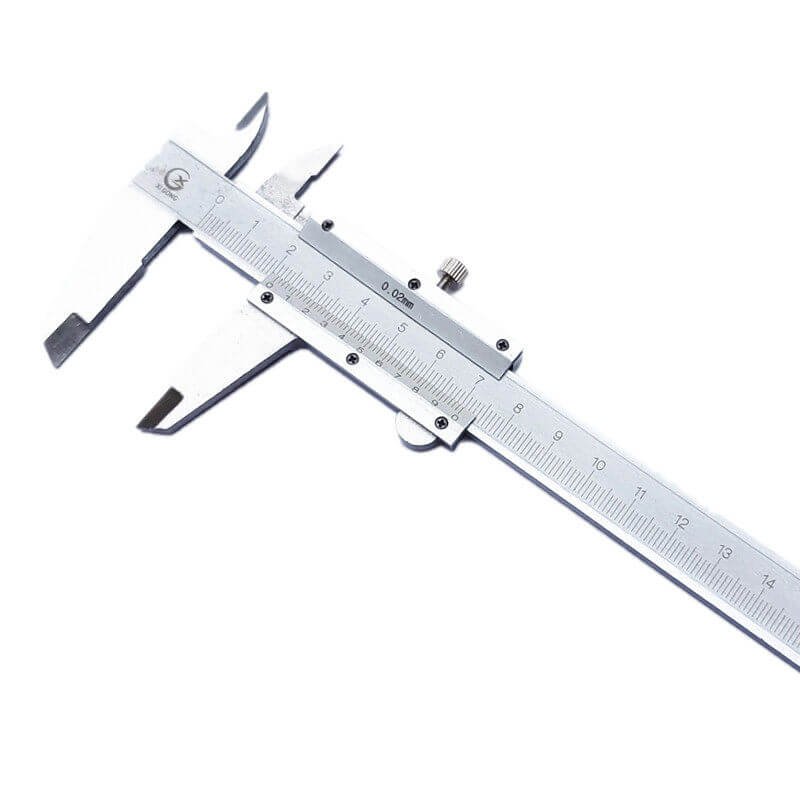
Instrument sets the floor on what can be detected. A caliper reads to 0.02 mm and is adequate for size; it cannot verify a true position callout, while a height gauge or CMM can. If the drawing carries geometric tolerances, the contractor needs equipment that evaluates them.
Sampling matters because zero and 100 percent inspection are both unusual. Most runs use acceptance sampling to ANSI/ASQ Z1.4, which defines sample sizes and acceptance numbers by lot size and inspection level. A contractor who samples at a reduced level on a part with a safety function is telling you something.
Acceptance criteria matter because a part can be measured and still not judged: ask who decides, and against what document.
Standalone conclusion: Ask for instruments, sampling plan, and acceptance criteria separately. A caliper cannot verify true position, and “inspected to drawing” is an intention rather than a standard.
Questions 5 to 7: Lead Time, Change Orders, Capacity
Lead time: ask for it split into quote turnaround, programming and setup, first article, and production run. Our own booking position is published in About Us rather than quoted from memory. Only the first article date reflects capability; the rest is queue, and queue moves when a larger customer arrives. Whether the job is metal bending services, sheet metal bending services, aluminum bending services, or a sheet metal design services package, those four dates are the ones to ask for. An online sheet metal quote built from a photograph is a starting point, not a date you can plan against.
Change orders: ask what happens to price and schedule when a revision arrives after release. A contractor with a written change-order process quotes the delta and confirms the new date; one without it absorbs the change quietly and passes the cost into the next order.
The capacity question most buyers skip
Ask what month they are busiest and how far out they are booked now. Most shops in North America peak in the fourth quarter as budgets close, and a shop booked six weeks out in September will not hold your date in November. This question gets skipped because it feels intrusive, and it is the one a sheet metal contractor is least prepared for — and the only one that predicts a slip caused by someone else’s order.
Standalone conclusion: Split lead time into four dates and ask how far out the shop is booked. The capacity question is the only one that predicts a slip caused by someone else’s order.
Reading the Answers for Red Flags
Three answer patterns are worth acting on, whatever the words say. The first is a range instead of a number: “around ±0.1 mm” or “usually within a week” means the contractor does not measure, or will not commit. The second is a reversal — ask about rejected lots and get a description of how good their quality is. That is a deflection, and deflections cluster around what the contractor least wants examined. The third is enthusiasm substituting for specificity: a long answer with no numbers, no document names, and no process steps is a sales answer, not information.
| Question | Strong answer | Weak answer |
|---|---|---|
| Tooling ownership | Names the clause and the release condition | “Tooling stays with us” |
| Tolerance | Three separate measured values with method | “±0.1 mm on everything” |
| Rejected lot | Segregation, NCR, disposition, notification | “We fix it before it ships” |
| Inspection | Instruments, sampling standard, criteria | “Inspected to drawing” |
| Lead time | Four dates plus current booking | “Four to six weeks” |
| Change orders | Written process, delta quoted, date confirmed | “We’ll handle it” |
| Capacity | Names peak month and weeks booked | “We’re never too busy” |
Standalone conclusion: Three patterns predict trouble: a range instead of a number, a reversal that answers a different question, and enthusiasm with no documents. None of them requires technical judgment to spot.
The seven questions take twenty minutes to put and a day to get answered in writing. Against that, they protect the two things hardest to recover: the tooling you paid for and the date you promised your own customer.
Ask them before the award, not after the first late shipment. A contractor who answers all seven precisely is not necessarily the lowest cost route, but the price you agree with that contractor is the price you will actually pay. The same evaluation logic for other processes is on the Blog Homepage.
If you are evaluating contractors now and want a second set of eyes on a drawing before you commit, send it through our CNC Machining Quote Form and we will return a process route and a tolerance assessment on the features that carry risk.