Introduction
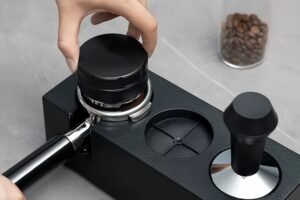
For premium coffee gear brands and sourcing managers, launching an exceptional espresso tamper is a fine balance between ergonomic weight, structural durability, and food-grade chemical safety. In the international B2B supply chain, your metal selection defines your product’s market tier and regulatory compliance.
1. The Base: Why Stainless Steel is Irreplaceable
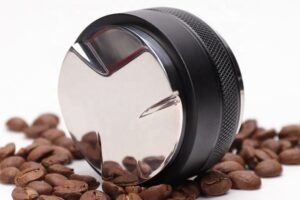
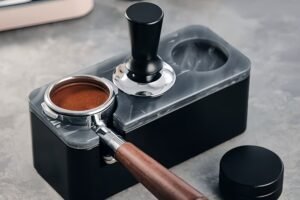
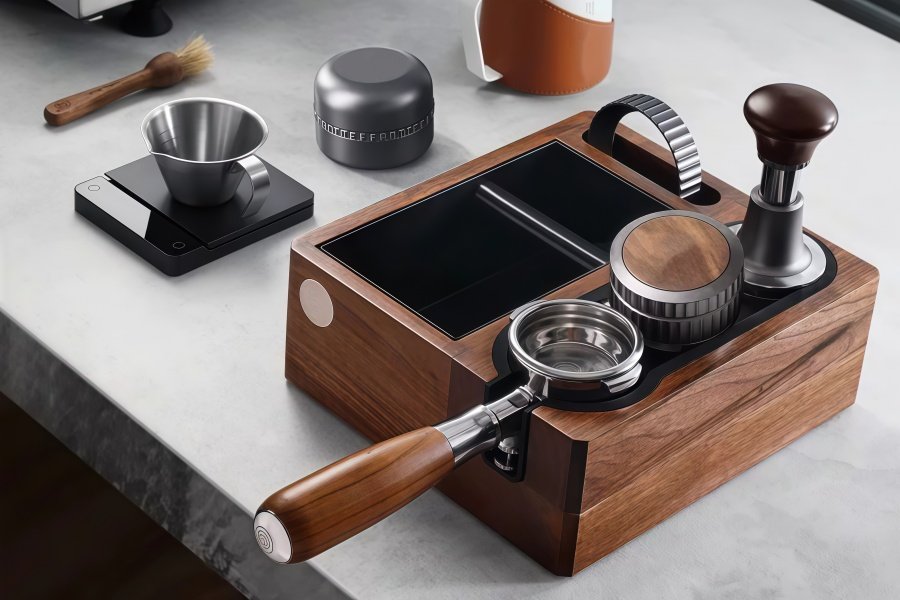
The tamper base is the operational core that bears repetitive mechanical stress. To achieve a level puck and prevent channeling, a barista relies on localized mass rather than pure muscle strain.
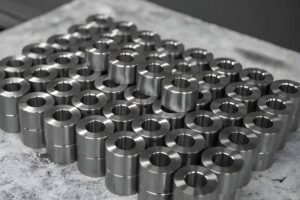
Density and Weight: Food-grade 304 and 316 stainless steel are the industry gold standards. With a high density of 7.93 g/cm³, a standard 58.35 mm precision base easily provides the necessary weight (350g to 500g), keeping the center of gravity low and perfectly perpendicular to the portafilter basket.
Chemical Resistance: Coffee oils are inherently acidic. SUS304 and SUS316 contain high chromium and nickel content, forming a self-healing passive oxide film (Cr₂O₃) that completely resists corrosion from organic acids, preventing microscopic pitting and metallic off-flavors.
2. The Handle: Anodized Aluminum for Ergonomics
While the base must be heavy to compress the coffee grounds, an overweight handle shifts the center of gravity upward, causing severe wrist fatigue during rush hours. The solution is Aircraft-grade Aluminum (6061-T6).
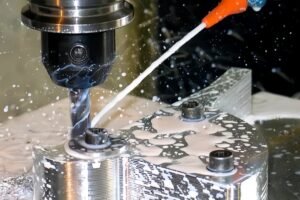
Weight Balancing: At roughly one-third the density of steel (2.70 g/cm³), CNC-machined aluminum handles optimize the tool’s equilibrium, placing the exact balance point right at the user’s thumb-finger pivot.
Type II/III Anodization: Raw aluminum oxidizes and leaves dark residues on hands. We utilize electrochemical baths to grow a sapphire-hard oxide layer (Al₂O₃, 15 to 25 microns thick). This skin provides superior scratch resistance and yields premium finishes like matte black, space gray, or custom metallic colors that will never flake or chip into the coffee cup.
3. Global Food Safety Compliance
Sourcing coffee accessories for regions like the US or the EU requires navigating strict compliance frameworks:
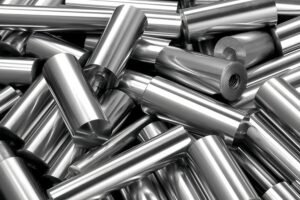
FDA (United States): Our raw material bars come with fully traceable Mill Test Certificates (MTC), guaranteeing zero heavy metal contamination (lead/cadmium) and satisfying GRAS status.
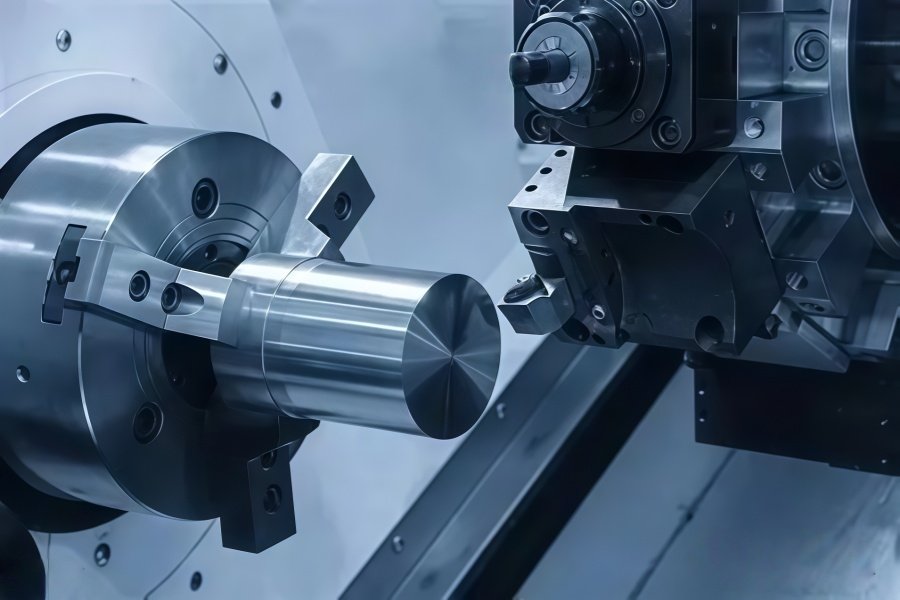
LFGB (Europe/Germany): Precision CNC-machined SUS316 bases easily pass heavy metal specific migration limits (SML), protecting your brand from costly customs rejections or product recalls.
Conclusion
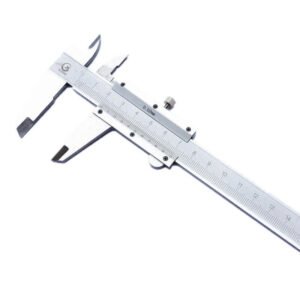
Partner with a trusted manufacturing expert. At XML Tech (xml-cnc.com), we utilize advanced multi-axis CNC machines to deliver tolerances within a tight ±0.005 mm. Ready to eliminate edge channeling and elevate your product line? Upload your 3D CAD blueprints (STEP, IGS) today to receive an instant engineering and DFM quotation!