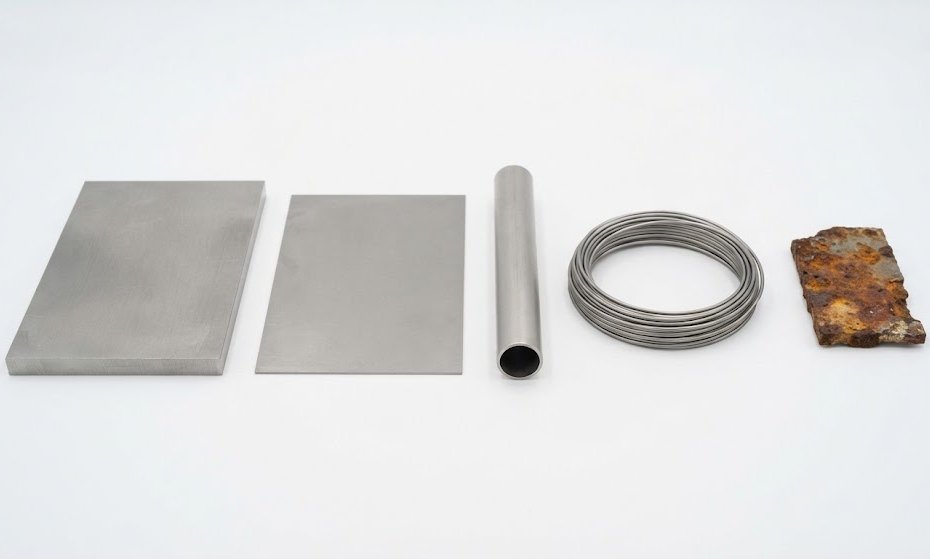
Titanium plate, sheet, tubing and wire show corrosion resistance compared to rusted carbon steel.
If you work in industrial manufacturing, marine engineering, or medical device production, you’ve likely heard the claim that titanium is “rust-proof.” But does titanium rust in real-world conditions? For engineers and procurement teams evaluating titanium plate, titanium sheet, titanium tubing, and titanium wire for critical applications, the answer is more nuanced than a simple yes or no.
Titanium is celebrated across aerospace, chemical processing, and offshore industries for its exceptional durability, high strength-to-weight ratio, and remarkable corrosion resistance. But to call it completely immune to degradation would be misleading. In this guide, we break down exactly how titanium interacts with corrosive environments, answer whether can titanium rust under extreme stress, and compare the rust performance of common titanium product forms. By the end, you’ll have a clear, science-backed understanding of when titanium lives up to its “corrosion-proof” reputation — and when it requires extra protection.
The Science Behind Titanium’s Natural Corrosion Resistance
To understand why does titanium rust so rarely in everyday use, you have to start with its unique passive oxide layer. Unlike carbon steel, which forms flaky, porous iron oxide (rust) that continues to spread and degrade the metal, titanium reacts with oxygen to form a thin, tightly adherent titanium dioxide (TiO₂) film on its surface.
This passive layer forms instantly when titanium is exposed to air or any oxygen-containing environment. At just 1–5 nanometers thick, it is invisible to the naked eye, but it acts as an impermeable barrier that seals the underlying metal from further contact with corrosive agents. The TiO₂ layer exists primarily in the rutile crystal structure at room temperature, which is chemically inert and has extremely low ionic conductivity. This means metal ions cannot easily diffuse outward, and corrosive ions cannot easily diffuse inward — stopping the corrosion reaction in its tracks. In contrast, iron oxide (rust) is porous and electronically conductive, allowing the corrosion cell to continue propagating deep into the metal.
What makes this layer even more remarkable is its self-healing property: if the surface is scratched, abraded, or mechanically damaged, the exposed titanium immediately reacts with available oxygen to reform the protective oxide film. This self-repair happens within milliseconds in normal atmospheric conditions, and even faster in oxygen-rich or aqueous environments.
This natural passivation is the core reason titanium outperforms stainless steel, aluminum, and copper alloys in most corrosive settings. For standard commercial grades like Grade 2 titanium, this oxide layer provides reliable protection against atmospheric corrosion, freshwater, and most organic acids — which is why titanium sheet and titanium plate are staples in architectural cladding and food processing equipment.
However, this passive layer is not indestructible. In environments that chemically break down TiO₂, the metal can and will corrode. This distinction is critical: titanium does not “rust” in the traditional reddish-brown, flaking sense associated with iron and steel, but it can suffer localized corrosion, material degradation, and surface discoloration under specific conditions.
Can Titanium Rust in Harsh Industrial and Natural Environments?
One of the most common questions from material engineers is: can titanium rust or corrode when exposed to extreme temperatures, harsh chemicals, or saltwater? The short answer is that titanium resists corrosion in nearly all natural environments and most industrial chemicals, but there are important exceptions.
Let’s break down performance by environment type:
Marine and Saltwater Environments
Titanium is nearly immune to corrosion in seawater, brackish water, and marine atmospheres. Unlike stainless steel, which suffers from pitting corrosion and crevice corrosion in saltwater, titanium’s oxide layer remains stable even in prolonged, full immersion.
Testing shows that Grade 2 titanium experiences less than 0.001 mm of corrosion per year in flowing seawater — effectively negligible for a 30+ year service life. Even titanium wire used in marine fishing nets and sensor cables retains its strength and surface integrity for decades without rusting or pitting. This is why titanium tubing is the gold standard for seawater cooling systems, desalination plants, and offshore oil and gas risers.
The only marine-related corrosion risk for titanium is crevice corrosion in stagnant, warm chloride environments. When a tight gap (such as between a bolt head and a titanium plate) traps oxygen-depleted fluid, the passive layer cannot maintain itself inside the crevice, and localized acidification can break down the oxide. This risk increases sharply above 70°C; for high-temperature seawater service, alloyed titanium grades are recommended over commercially pure titanium.
Acidic Environments
Titanium’s resistance to acids varies widely by concentration, temperature, and acid type. It excels in oxidizing acids like nitric acid and chromic acid, where the passive layer remains fully intact and even strengthens over time. It also performs well in most organic acids, such as acetic acid and citric acid, making titanium plate a top choice for chemical reaction vessels and food processing tanks.
However, titanium is vulnerable to reducing acids, particularly at elevated temperatures. Hot, concentrated hydrochloric acid, sulfuric acid, and hydrobromic acid can break down the TiO₂ layer and cause rapid general corrosion. Hydrofluoric acid (HF) is especially destructive to titanium, even at low concentrations, because fluoride ions react directly with the oxide film to form soluble titanium fluoride complexes. For these applications, palladium-alloyed titanium grades or polymer-lined equipment may be required.
Alkaline Environments
In alkaline solutions like sodium hydroxide and potassium hydroxide, titanium shows excellent corrosion resistance across a wide range of concentrations and temperatures. Unlike aluminum, which dissolves rapidly in strong bases, titanium’s passive layer remains stable and protective. This makes titanium sheet and titanium tubing suitable for caustic processing, pulp and paper manufacturing, and alkaline waste treatment.
High-Temperature and Oxidizing Conditions
At temperatures below 538°C (1000°F), titanium forms a stable, protective oxide scale that prevents further oxidation and internal oxygen diffusion. Above this temperature, the oxide layer thickens and can become porous, leading to gradual oxygen ingress into the metal substrate and long-term embrittlement.
For high-temperature aerospace applications, alpha-beta alloys like Ti-6Al-4V (Grade 5) offer improved high-temperature strength and oxidation resistance compared to commercially pure titanium. It’s important to note that high-temperature oxidation is not “rusting” in the traditional sense, but it is a form of material degradation that designers must account for. For most industrial applications below 300°C, standard titanium products perform reliably without oxidative breakdown.
How Does Titanium Plate Perform Against Rust and Corrosion?
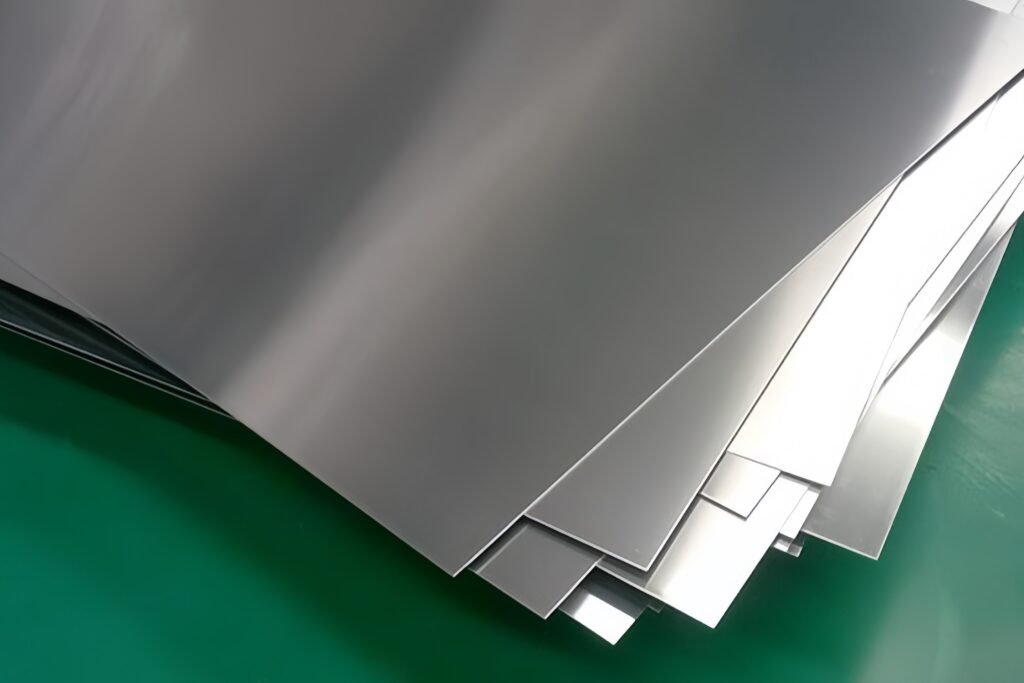
Titanium plate is one of the most widely used titanium product forms, valued for its structural strength and uniform corrosion resistance. From pressure vessel shells to marine bulkheads, titanium plate delivers long-term reliability where steel plates would rust through in just a few years.
Corrosion Performance of Titanium Plate
Commercially pure (CP) titanium plate — primarily Grade 1 and Grade 2 — provides consistent, isotropic corrosion resistance across its entire cross-section. Because the passive oxide layer forms on every exposed surface, even cut edges, drilled holes, and machined surfaces self-passivate and resist rust. This is a major advantage over coated steel plates, where a single chip in the coating leads to widespread under-rust and structural degradation.
Because corrosion in titanium is almost always a surface phenomenon, thicker titanium plate does not necessarily have better corrosion resistance than thinner sheet — it simply has more material to corrode through before structural failure. For most corrosion-focused applications, a 3 mm titanium sheet will provide the same chemical protection as a 50 mm titanium plate; the extra thickness is for structural load capacity, not corrosion performance.
For heavy-duty chemical processing, Grade 7 titanium plate (alloyed with 0.12–0.25% palladium) offers enhanced resistance to reducing acids and crevice corrosion. The palladium addition catalyzes the reformation of the passive layer in low-oxygen environments, making it ideal for flue gas desulfurization systems and acidic waste handling. Grade 12 titanium plate, with molybdenum and nickel additions, also provides improved crevice corrosion resistance at a lower cost than palladium-alloyed grades.
Common Applications Where Titanium Plate Prevents Rust
- Chemical processing reactors and tanks: Resists corrosion from acidic process fluids, eliminating product contamination from rust and reducing maintenance shutdowns.
- Offshore platform components: Withstands constant salt spray and seawater splash without protective coatings, reducing lifecycle maintenance costs.
- Power plant condenser tubesheets: Prevents galvanic corrosion and rust buildup in cooling water systems, maintaining heat transfer efficiency over decades.
- Architectural facade panels: Maintains a clean, metallic finish for decades in urban and coastal atmospheres, with no need for repainting or rust treatment.
Key Considerations for Titanium Plate Selection
While titanium plate does not rust in most service environments, it is susceptible to crevice corrosion in stagnant, warm chloride solutions — for example, under gaskets or bolt heads in seawater service. For these critical joints, using Grade 7 or Grade 12 titanium plate, or applying a noble metal gasket, can mitigate the risk. Proper design to avoid stagnant fluid pockets also extends service life significantly.
Titanium Sheet vs. Other Metals: Rust Resistance Comparison
Titanium sheet — thin-gauge titanium under 6.35 mm thick — is prized for applications where lightweighting and corrosion resistance are equally important. When comparing rust performance across common sheet metals, titanium stands out dramatically.
Titanium Sheet vs. Stainless Steel Sheet
Stainless steel relies on chromium to form a passive oxide layer, but it is prone to pitting and crevice corrosion in chloride environments. 304 stainless steel will begin to show rust spots in coastal atmospheres within 1–2 years, while 316 stainless steel fares better but still fails in prolonged seawater immersion. Weld zones on stainless steel are even more vulnerable to rust, as chromium depletion during welding weakens the passive layer.
Titanium sheet, by contrast, shows no measurable corrosion in the same environments. Even after 10+ years of coastal exposure, titanium sheet retains its original surface finish and mechanical properties. Welds on titanium sheet re-passivate immediately upon cooling, so weld zones have identical corrosion resistance to the base metal. For thin-gauge applications like heat exchanger fins and roofing panels, this means titanium delivers a far longer service life with zero rust-related maintenance.
Titanium Sheet vs. Aluminum Sheet
Aluminum forms a protective aluminum oxide layer and resists atmospheric corrosion well, but it corrodes rapidly in alkaline environments and suffers from pitting in saltwater. It also has much lower strength than titanium, requiring thicker gauges to achieve the same structural performance.
Titanium sheet offers superior corrosion resistance across a wider pH range, plus higher strength at elevated temperatures. For aerospace and automotive lightweighting, this allows engineers to use thinner titanium sheet without sacrificing durability or rust protection, resulting in overall weight savings.
Titanium Sheet vs. Carbon Steel Sheet
Carbon steel rusts rapidly in any moist environment, requiring paint, galvanizing, or powder coating to slow degradation. Even with protection, scratches and edge damage lead to hidden rust and structural failure over time. Maintenance costs for steel sheet — including repainting, rust removal, and replacement — often exceed the initial material cost many times over.
Titanium sheet requires no protective coatings and self-heals minor surface damage. While the upfront material cost is higher, the total cost of ownership is often lower due to eliminated maintenance, repainting, and replacement costs over the product lifecycle.
Typical Titanium Sheet Applications That Benefit From Rust Resistance
- Heat exchanger plates and fins for chemical and marine systems
- Aerospace fuselage skins and engine nacelle components
- Food processing conveyor belts and equipment housings
- Medical device enclosures and surgical instrument components
- Decorative metalwork and luxury product casings
Is Titanium Tubing Immune to Rust and Corrosion?
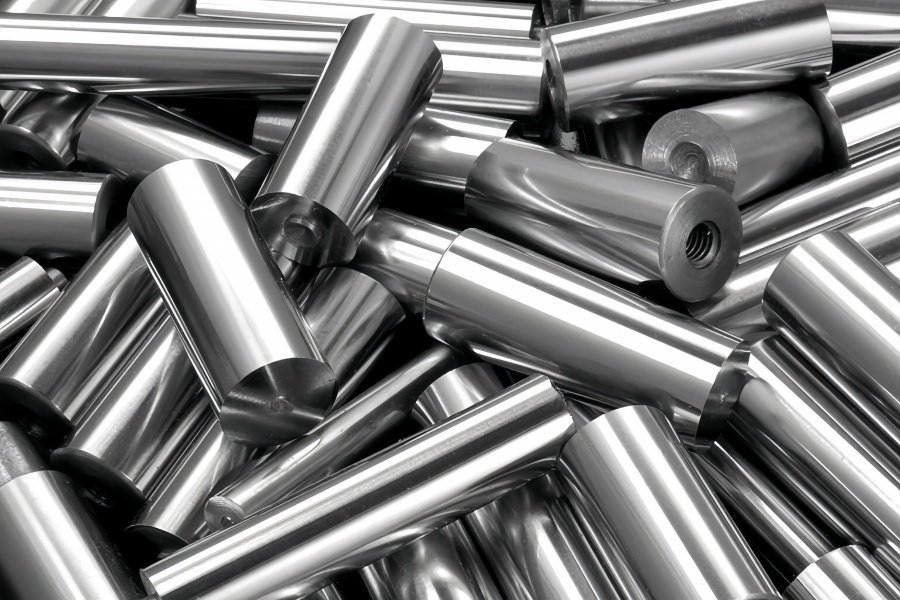
Titanium tubing is the go-to choice for fluid transport systems where contamination from rust is unacceptable, or where corrosive fluids would destroy steel or copper tubing. From medical implants to oil and gas production, titanium tubing delivers unmatched corrosion performance.
Corrosion Advantages of Titanium Tubing
Unlike welded steel tubing, which often suffers from rust and corrosion at weld seams, titanium welds retain the same corrosion resistance as the base metal. This is because the weld pool immediately re-passivates upon cooling under inert gas shielding, forming a continuous protective oxide layer across the entire weld bead and heat-affected zone.
Seamless titanium tubing offers even greater uniformity, with no weld zone to act as a potential corrosion initiation site. This makes seamless titanium tubing preferred for high-pressure chemical processing and subsea applications where failure is not an option.
Performance in Critical Industries
- Medical industry: Titanium tubing used in surgical instruments, implantable devices, and pharmaceutical processing does not rust or leach ions into bodily fluids or medications. Its biocompatibility and corrosion resistance make it the only safe choice for many life-saving applications.
- Oil and gas: Downhole titanium tubing resists corrosion from sour crude, brines, and hydrogen sulfide (H₂S) that would cause sulfide stress cracking and rust failure in steel tubing.
- Desalination: Titanium tubing in reverse osmosis systems handles high-salinity feedwater and corrosive cleaning chemicals without pitting or rust buildup, maintaining consistent flow rates over decades of service.
- HVAC and cooling: Seawater-cooled HVAC systems use titanium tubing to eliminate rust-related clogging and ensure consistent heat transfer efficiency, with no need for chemical rust inhibitors.
Limitations of Titanium Tubing
While titanium tubing does not rust in most service conditions, it can experience hydrogen embrittlement if exposed to cathodic protection currents or if it is in galvanic contact with more active metals in acidic environments. Proper electrical isolation and material pairing prevent this issue. Additionally, titanium tubing should not be used with hydrofluoric acid or hot concentrated hydrochloric acid, as these chemicals cause rapid general corrosion.
Titanium Wire Rust Resistance: What You Need to Know
Titanium wire may be the smallest titanium product form, but its corrosion resistance is just as critical. From fine medical suture wire to heavy industrial welding wire, titanium wire maintains its integrity in environments where steel wire would rust and break.
Why Titanium Wire Does Not Rust
Like all titanium products, titanium wire forms a self-passivating TiO₂ layer on its surface. For fine wire diameters (as thin as 0.025 mm), this protective layer is proportionally just as effective as it is on thick titanium plate. Even under tension, repeated flexing, or cyclic loading, the oxide layer remains intact and self-repairs micro-scratches and surface defects.
Applications Dependent on Titanium Wire’s Rust Resistance
- Medical sutures and orthopedic implants: Titanium alloy wire does not corrode inside the human body, avoiding inflammation and implant failure caused by rust or metal ion release. Its biocompatibility is unmatched among structural metals.
- Industrial filters and screens: Titanium wire mesh filters resist corrosion in acidic and marine filtration systems, maintaining precise pore sizes without rust contamination of process fluids.
- Spring and fastener applications: Titanium wire springs used in marine and chemical equipment retain their elasticity and strength over time, unlike steel springs that rust, weaken, and break.
- Welding filler wire: Titanium welding wire produces welds with matching corrosion resistance to the base metal, ensuring no weak points for rust or corrosion to start.
Grade Selection for Titanium Wire
Commercially pure titanium wire (Grade 1, Grade 2) is standard for general corrosion-resistant applications. For higher strength requirements, Grade 5 (Ti-6Al-4V) titanium wire offers superior tensile strength while retaining excellent rust resistance. For extreme reducing acid environments, Grade 7 titanium wire with palladium alloying provides the highest level of corrosion protection available.

Common Misconceptions About Titanium and Rust
There are many persistent myths about titanium’s corrosion behavior. Let’s clear up the most common ones:
Myth 1: Titanium Is 100% Rust-Proof and Corrosion-Proof
Reality: Titanium is highly corrosion-resistant, not corrosion-proof. As we’ve covered, it can corrode in hydrofluoric acid, hot concentrated reducing acids, and under specific crevice conditions. It also experiences oxidation and hydrogen embrittlement under extreme conditions. The key takeaway is that does titanium rust in typical industrial and natural environments? No — but it is not indestructible.
Myth 2: Titanium Never Needs Maintenance
Reality: While titanium requires far less maintenance than steel, it benefits from periodic cleaning to remove surface deposits that can cause crevice corrosion or discoloration. In industrial settings, regular rinsing and inspection ensure long-term performance. For titanium sheet used in architectural applications, occasional cleaning preserves the aesthetic finish.
Myth 3: All Titanium Grades Have the Same Rust Resistance
Reality: Commercially pure grades have excellent general corrosion resistance, but alloyed grades are formulated for specific harsh environments. Grade 7 and Grade 12 offer better crevice corrosion resistance than Grade 2, while Grade 5 prioritizes strength over maximum corrosion resistance. Selecting the right grade for your application is critical to long-term performance.
Myth 4: Titanium Can’t Rust Because It Doesn’t Contain Iron
Reality: While titanium does not form iron oxide (the reddish-brown substance we call “rust”), it can form titanium oxide corrosion products. In severe corrosion, the surface may discolor, develop pits, or experience material loss. This is technically corrosion, not rust, but it still degrades the material. This is why the question “can titanium rust” depends on how you define “rust” — in the common sense of flaky iron oxide, no; in the broader sense of metal degradation, yes, under specific conditions.
How to Protect Titanium Products From Premature Corrosion
Even though titanium plate, titanium sheet, titanium tubing, and titanium wire are inherently rust-resistant, a few best practices will maximize their service life and preserve their corrosion performance:
- Proper Material Pairing: Avoid galvanic corrosion by isolating titanium from more active metals (like steel, aluminum, and zinc) in conductive environments. Use non-conductive gaskets, plastic spacers, or dielectric coatings to separate dissimilar metals.
- Avoid Stagnant, Hot Chloride Traps: Design systems to promote fluid flow and prevent stagnant pockets in chloride-containing solutions. This eliminates the most common cause of crevice corrosion in titanium equipment.
- Surface Passivation Treatment: For critical applications, perform a nitric acid passivation treatment after fabrication to ensure a uniform, thick oxide layer across all surfaces, including welds, machined edges, and formed features.
- Regular Cleaning: Remove salt deposits, process residues, and biological growth from titanium surfaces. For marine applications, periodic freshwater rinsing prevents buildup that can initiate localized corrosion and discoloration.
- Avoid Contact With Fluoride-Containing Substances: Never use titanium equipment with hydrofluoric acid or cleaning products that contain fluoride ions, as these rapidly break down the protective oxide layer and cause irreversible corrosion.
Final Verdict: Does Titanium Rust?
So, does titanium rust in the way we commonly think of rust? No — titanium will never develop the flaky, reddish-brown iron oxide that destroys steel structures. Its self-healing titanium dioxide passive layer provides outstanding protection against atmospheric corrosion, saltwater, most chemicals, and biological degradation. For the vast majority of industrial, marine, medical, and architectural applications, titanium offers effectively rust-free performance for decades.
But can titanium rust or corrode under extreme, specific conditions? Yes. In hot concentrated reducing acids, fluoride solutions, and certain high-temperature environments, titanium’s protective layer breaks down and corrosion can occur. These scenarios are well-documented and avoidable with proper grade selection and system design.
When selecting titanium products, remember that form matters as much as grade. Titanium plate delivers structural strength with uniform corrosion resistance for heavy-duty applications; titanium sheet offers lightweight, thin-gauge protection for heat transfer and architectural uses; titanium tubing provides reliable fluid transport without rust contamination; and titanium wire maintains integrity even in fine diameters and demanding mechanical applications.
For engineers and buyers, the real value of titanium lies in its total cost of ownership. While the upfront material cost is higher than steel or aluminum, its unmatched rust resistance eliminates maintenance, reduces downtime, and extends service life — often making it the most economical choice over the long term.