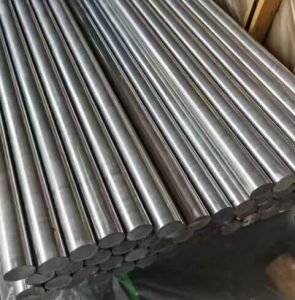
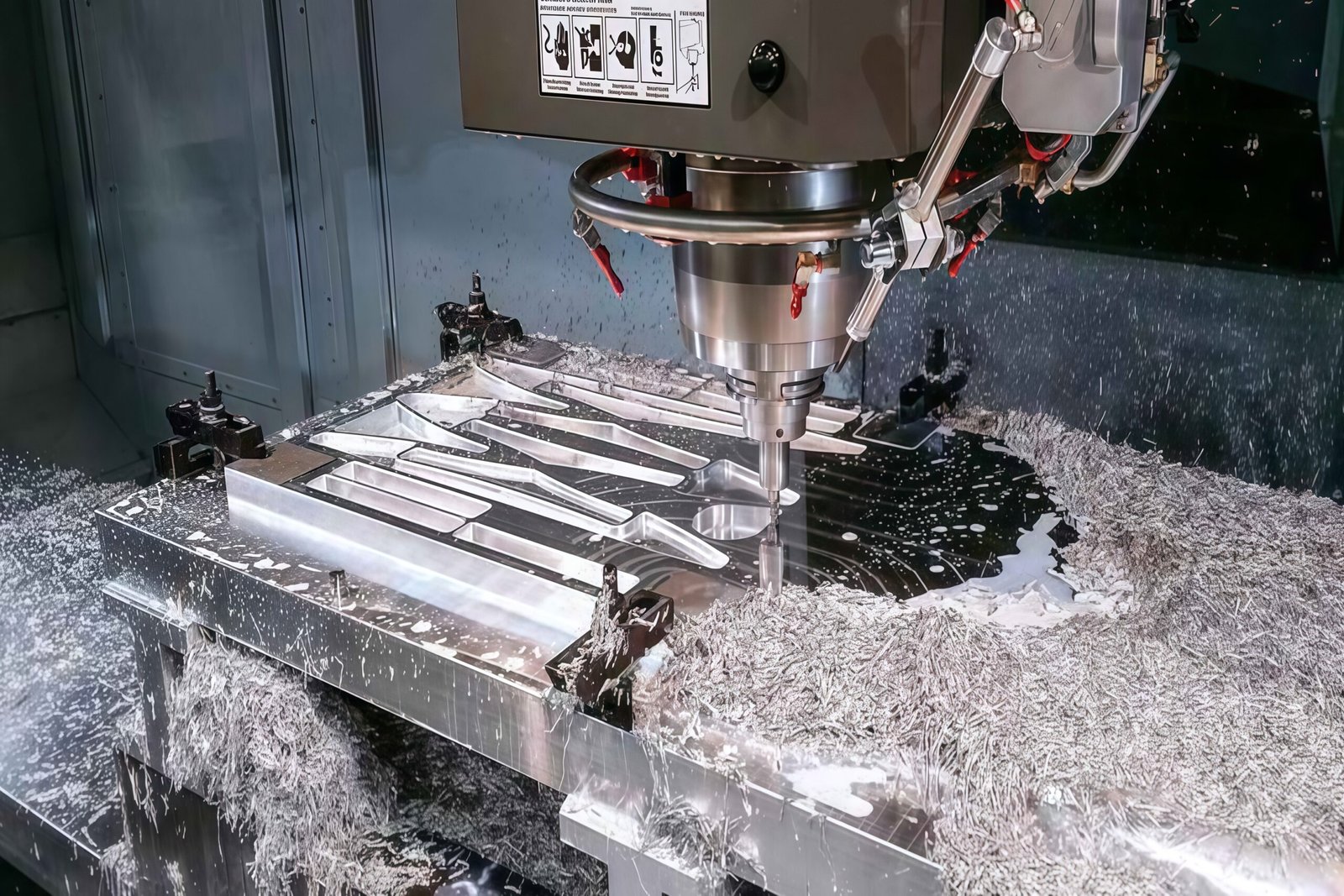
In the world of modern manufacturing and custom CNC machining, the term milling machine appears in nearly every project discussion. For product engineers, procurement managers, and startup teams exploring custom part production, questions like what is the milling machine and how it differs from other machine tools often come up early in the sourcing process.
Many people hear about milling alongside turning, drilling, and EDM, but few fully understand how a milling machine operates, what variants exist, and why it is the backbone of most precision CNC machining workshops. Whether you are evaluating a new supplier, designing a part for manufacturability, or simply expanding your manufacturing knowledge, this guide will explain milling machine fundamentals, break dow
n its core components, compare common machine types, and demonstrate how CNC milling delivers the complex, tight-tolerance parts used across aerospace, medical, automotive, and industrial automation.
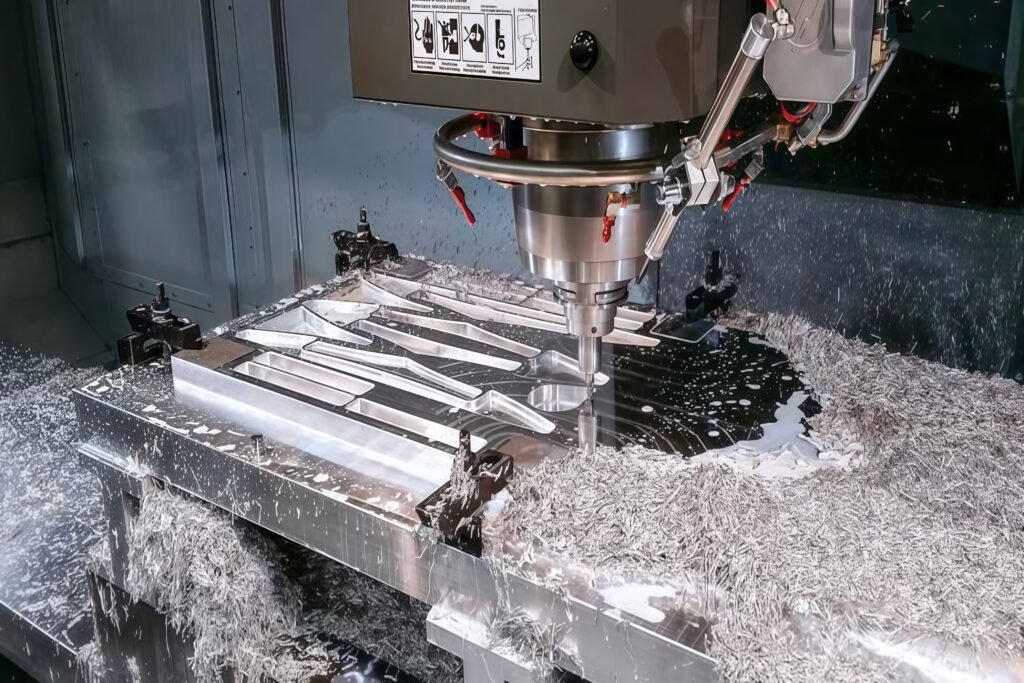
By the end of this article, you will have a complete answer to what is a milling machine, know the difference between a manual milling machine, desktop milling machine, and industrial CNC mill, and understand how to match the right equipment to your project needs.
What Is a Milling Machine? A Formal Industry Definition
To start at the foundation, we first define a milling machine as it is understood in the modern machining industry. The standard definition milling machine references describe it as a subtractive machine tool that uses one or more rotating multi-point cutting tools to remove material from a stationary workpiece, producing custom geometries, flat surfaces, slots, pockets, holes, and contoured profiles.
Unlike a lathe, which spins the workpiece against a fixed cutting tool, a milling machine holds the workpiece firmly on a worktable and moves it along multiple axes against a spinning cutter. This fundamental difference is what makes milling uniquely capable of producing complex 2D and 3D shapes that cannot be created with turning alone.
Breaking Down the Definition of a Milling Machine
When you look at the full description of milling machine specifications and capabilities, several defining characteristics set it apart from other fabrication equipment:
- It operates on the principle of subtractive manufacturing, removing chips of material rather than forming or adding material.
- It supports multiple axes of movement, typically 3-axis, 4-axis, or 5-axis configurations on industrial models.
- It can perform a wide range of operations in a single setup, including facing, slotting, pocketing, drilling, boring, and threading.
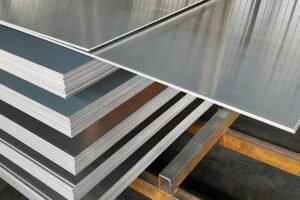
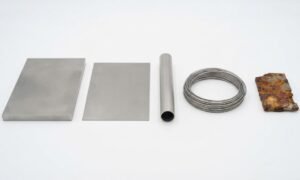
- It works with nearly all engineering materials, from aluminum and mild steel to titanium, stainless steel, brass, and engineering plastics.
For anyone asking what is a milling machine in the context of custom part production, the simplest answer is this: it is the primary machine tool that turns a solid block of material into a precisely shaped finished part by cutting away everything that does not belong.
Core Components in the Description of a Milling Machine
A complete description of milling machine anatomy includes several key subsystems that work together to deliver accurate, repeatable cuts. Understanding these components helps explain why machine quality directly impacts part quality:
- Spindle: The rotating assembly that holds the cutting tool. Industrial milling machines have high-rigidity spindles driven by servo motors, with RPM ranges from a few hundred to tens of thousands.
- Worktable: A flat, rigid platform where the workpiece is clamped, usually with T-slots for fixturing. The table moves along the X and Y axes to position the part under the cutter.
- Column and Knee: The heavy cast-iron frame that supports the spindle and table, providing the structural rigidity needed to resist cutting forces and maintain tight tolerances.
- Control System: On a CNC milling machine, this is the digital interface that reads G-code programs and directs all axis movements, spindle speeds, and tool changes automatically.
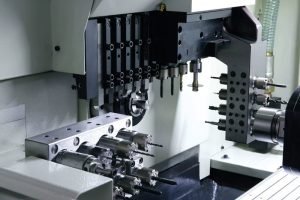
- Tool Holder and Tool Magazine: On automated machines, a tool carousel stores multiple cutters and swaps them during a program, enabling uninterrupted multi-operation machining.
- Coolant System: Delivers cutting fluid to the cutting zone to reduce heat, flush away chips, and extend tool life.
Every component contributes to the overall performance of the machine. Low-cost machines with thin frames and low-quality spindles cannot hold tight tolerances or produce smooth surface finishes, which is why professional CNC machining shops invest in heavy-duty industrial milling centers.
How Does a Milling Machine Actually Work?
To explain milling machine operation in practical terms, we can break the process down into basic physics and common cutting modes. At its core, a milling machine works by rotating a sharp, multi-tooth cutter at high speed while slowly feeding the workpiece into it. Each tooth on the cutter takes a small chip of material with every pass, gradually shaping the workpiece to match the programmed geometry.
The Basic Material Removal Principle
The milling process follows three core mechanical steps:
- Setup and Fixturing: The raw workpiece (usually a bar, block, or plate) is securely clamped to the worktable using vises, clamps, or custom fixtures. Proper fixturing is critical—any movement during cutting will ruin dimensional accuracy.
- Tool Engagement: The spindle lowers the rotating cutter into the workpiece at a programmed depth and feed rate. As the cutter rotates, each cutting edge shears off a thin layer of material, producing chips that are carried away by coolant.
- Axis Movement: The worktable moves along the X and Y axes to trace the desired shape, while the Z axis controls cutting depth. On 4-axis and 5-axis machines, the table or head can also rotate, allowing the cutter to reach angled surfaces and undercuts without re-fixturing the part.
Because the cutter has multiple teeth, each tooth takes a light cut at high frequency, resulting in a smooth, consistent surface finish and predictable material removal rates. Programmers adjust feed rate, spindle speed, and depth of cut based on the material, tool type, and desired finish to optimize both speed and quality.
Up Milling vs. Down Milling: Key Differences
When discussing how a milling machine operates, machinists distinguish between two primary cutting modes, each with distinct advantages and use cases:
- Up Milling (Conventional Milling): The cutter rotates against the direction of the table feed. The cut starts with a light chip load that increases as the tooth exits the material. This method is gentler on older machines with backlash, but produces more tool wear and a poorer surface finish.
- Down Milling (Climb Milling): The cutter rotates in the same direction as the table feed. Each tooth enters the material with a full chip load and exits cleanly. This method produces better surface finishes, longer tool life, and higher material removal rates on modern CNC machines with rigid ways and zero-backlash ball screws.
Nearly all modern CNC milling operations use down milling for better efficiency and part quality. Understanding this difference is one of the quickest ways to gauge whether a machining shop is using modern equipment and best practices.
Primary Types of Milling Machines Used Today
Not all milling machines are built for the same purpose. From small bench-top units to large 5-axis machining centers, the market includes a wide range of configurations. For anyone evaluating manufacturing options, it is important to understand the three most common categories and their appropriate use cases.
Manual Milling Machine: Features and Limitations
A manual milling machine is the traditional, operator-controlled variant where all table movements, spindle speeds, and depth adjustments are controlled by hand wheels and levers. The operator reads a blueprint and guides the cutter through the part by turning cranks and dials.
Key characteristics of manual mills:
- Low upfront cost and simple operation for basic tasks
- Dependent entirely on the skill and attention of the machinist
- Suitable for one-off prototypes, simple flat parts, and repair work
- Limited accuracy, typically holding tolerances no tighter than ±0.05 mm
- Slow for complex geometries and unsuitable for batch production
In professional CNC machining shops, manual milling machines are mostly used for secondary operations, fixture building, and quick prototyping of very simple parts. They are rarely used for production-grade components due to their inconsistency and low throughput.
Desktop Milling Machine: Use Cases and Constraints
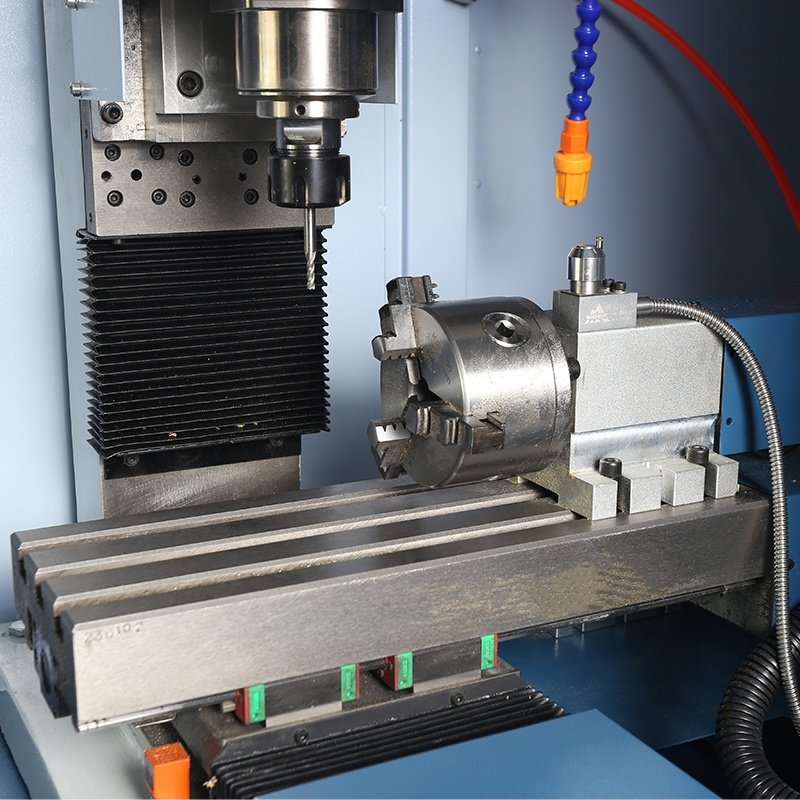
A desktop milling machine is a compact, small-format mill designed to sit on a workbench, popular with hobbyists, makerspaces, and small engineering labs. These machines are much smaller and lighter than industrial equipment, and many entry-level models are aimed at educational or personal use.
What a desktop milling machine offers:
- Small footprint and low power requirements
- Lower cost compared to industrial CNC mills
- Ability to machine small, soft parts in aluminum, plastic, and wood
- Basic 3-axis capability for simple prototypes and educational projects
Important limitations to consider:
- Low rigidity leads to chatter, poor surface finish, and wider tolerances
- Cannot reliably cut hard metals like steel or titanium
- Small work envelope limits part size
- Shorter machine lifespan under continuous production use
- Inconsistent repeatability for batch manufacturing
For product teams evaluating suppliers, it is important to confirm that your manufacturing partner uses full-size industrial milling machines, not desktop units. Desktop milling machines have their place in education and hobby use, but they cannot deliver the precision, surface quality, and consistency required for functional industrial parts.
CNC Milling Machine: The Standard for Precision Work
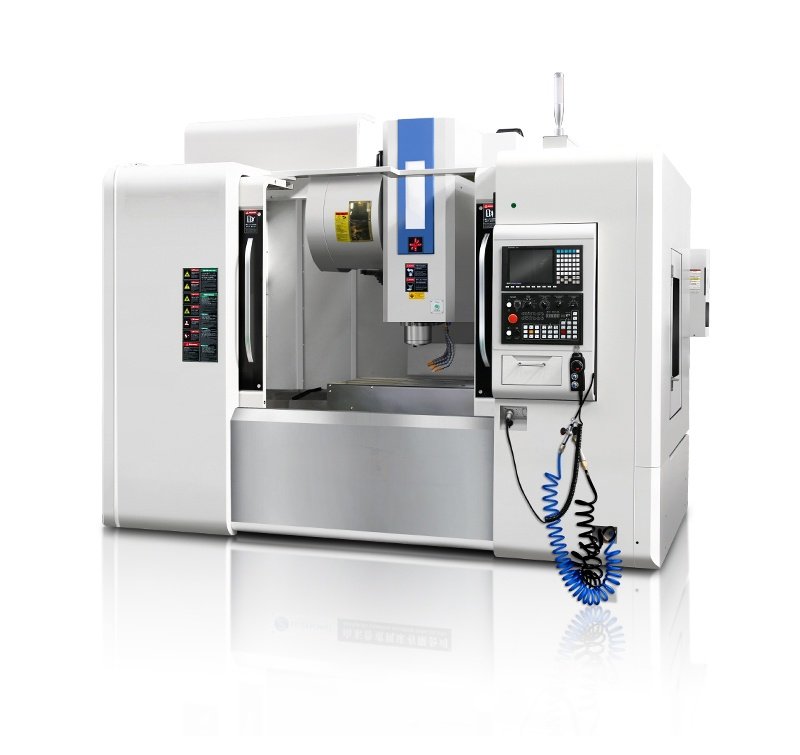
A CNC (Computer Numerical Control) milling machine is the industrial-grade, automated version that powers modern contract manufacturing. Instead of hand wheels, all movements are controlled by a computer running G-code programs generated from CAD models.
Advantages of CNC milling machines:
- Extreme precision, with standard tolerances of ±0.01 mm or tighter
- High repeatability, producing identical parts across batch sizes from 1 to 10,000+
- Ability to execute complex 3D geometries that would be impossible manually
- Unattended operation once the program is set up, reducing labor cost and lead time
- Support for 4-axis and 5-axis configurations for highly complex parts
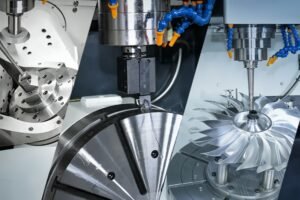
For professional custom CNC machining services, 3-axis and 5-axis CNC milling centers are the primary production equipment. They deliver the accuracy, consistency, and efficiency that industrial customers demand.
Common Milling Operations in CNC Machining
One reason the milling machine is so universally used is its versatility. A single CNC mill can perform dozens of different operations without changing the workpiece setup, reducing handling time and improving accuracy. Below are the most common operations used in custom part production.
Face Milling: Creating Flat and Smooth Surfaces
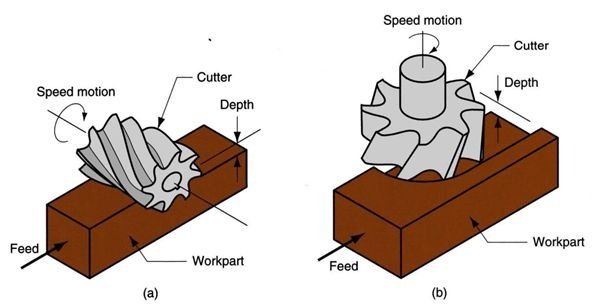
Face milling is the process of cutting a flat, perpendicular surface on the top of the workpiece using a face mill cutter with multiple inserts. It is typically the first operation performed on a raw block of material to create a flat reference surface. Face milling produces a smooth, uniform finish and can remove large volumes of material quickly.
Peripheral Milling: Machining Deep Slots and Profiles
Peripheral milling uses the sides of an end mill cutter to machine vertical walls, slots, pockets, and outer profiles. This is the operation used to create most of the geometric features on a milled part, including channels, ribs, bosses, and intricate cutouts. Programmers use specialized CAM software to generate toolpaths that follow the exact contours of the 3D model.
Drilling, Boring, and Tapping Secondary Operations
Beyond shaping the outer geometry, milling machines also handle hole-making operations:
- Drilling: Creating circular holes using twist drills
- Boring: Enlarging and finishing drilled holes to very tight diameters using a single-point boring bar
- Tapping: Cutting internal threads using a tap tool
- Counterboring and Countersinking: Creating recessed seats for fastener heads
Consolidating all these operations on one milling machine eliminates the need to move the part between multiple machines, reducing setup error and shortening overall lead time.
What Milling Machine Matches Your Project Requirements?
When sourcing custom machined parts, one of the most common questions is what milling machine type is right for the job. The answer depends on your part complexity, required tolerance, material, batch size, and budget. Below is a practical framework to help you evaluate your needs.
When Manual or Desktop Milling Is Sufficient
For very simple, low-stakes projects where tight tolerances and perfect surface finish are not critical, a manual or desktop milling machine may be adequate. Examples include:
- Early concept prototypes made from plastic or soft aluminum
- Non-functional display models and test fixtures
- Simple flat brackets with loose tolerances
- Low-volume, one-off repair parts
Keep in mind that while these options may have lower upfront cost, they also carry higher risk of dimensional error and inconsistency. For functional parts that need to fit and perform as designed, industrial CNC milling is almost always the better investment.
When Industrial CNC Milling Is Required
For the majority of engineering and production applications, a full-size CNC milling machine is the correct choice. You should always specify CNC milling if your project has any of the following requirements:
- Tolerances tighter than ±0.05 mm
- Complex 3D contours, angled features, or intricate pockets
- Batch quantities of 5 or more parts that must be identical
- Functional components used in structural, motion, or fluid systems
- Materials harder than aluminum, such as steel, stainless steel, or titanium
- Certified quality documentation and traceability
Professional CNC machining shops will select the appropriate machine size and axis configuration based on your part geometry. Simple prismatic parts run on 3-axis mills, while parts with compound angles and undercuts require 4-axis or 5-axis machining centers.
Advantages of CNC Milling for Custom Part Production
Now that we have covered what is a milling machine and how it works, it is worth examining why CNC milling is the preferred manufacturing method for so many industries. The combination of precision, flexibility, and scalability makes it uniquely valuable for custom part development and production.
Unmatched Dimensional Accuracy and Repeatability
The biggest advantage of CNC milling over manual methods is consistency. Once a proven G-code program is loaded, the machine will produce virtually identical parts run after run, with variation measured in microns. This level of repeatability is essential for assemblies where parts must fit together interchangeably.
Ability to Produce Complex Geometries
With 3-axis, 4-axis, and 5-axis capability, CNC milling machines can create shapes that would be impossible or prohibitively expensive with any other method. From organic curved surfaces to internal lattice structures and angled mounting features, CNC milling gives design engineers enormous freedom to optimize part form and function.
Broad Material Compatibility
CNC milling works with virtually every engineering material available, including:
- Lightweight metals: aluminum 6061, 7075, magnesium
- Structural steels: 1018, 4140, 4340
- High-performance alloys: stainless steel 304/316, titanium grade 5, Inconel
- Engineering plastics: PEEK, Delrin, nylon, UHMW, acrylic
- Specialty materials: brass, copper, graphite, ceramics
This versatility means a single milling machine shop can support everything from lightweight consumer electronics components to heavy industrial equipment parts.
Fast Lead Times and Scalability
CNC milling has short setup times relative to other manufacturing processes like injection molding or die casting. There are no custom tooling fees and no long lead times for mold fabrication. For low to medium production volumes, CNC milling is often the fastest and most cost-effective way to get production-quality parts.
Superior Surface Finish and Material Integrity
Because milling is a controlled chip-removal process, it produces excellent surface finishes with no porosity, layer lines, or internal stress issues common in additive manufacturing and cast parts. With proper tool selection and finishing passes, CNC mills can achieve surface roughness as low as Ra 0.8 μm without secondary polishing.
How to Optimize Your Milling Machining Project
To get the best results from your CNC milling project, there are several design and sourcing best practices you can follow. Small adjustments to your part design and documentation can dramatically reduce cost, improve quality, and shorten lead time.
Design for Manufacturability (DFM) Tips
- Keep internal corner radii at least 1 mm, preferably larger. Smaller radii require smaller tools and much longer machining time.
- Avoid deep, narrow pockets where possible. The deeper the pocket relative to its width, the more tool deflection and chatter you will get.
- Specify realistic tolerances. Only call out tight tolerances on features that actually need them. Over-specifying tolerances across the entire part increases cost significantly.
- Use standard hole sizes wherever possible to avoid custom tooling.
- Minimize the number of setups required. Parts that can be fully machined from two sides are cheaper than parts that require four or five setups.
Working With Your Machining Supplier
- Provide native CAD files (STEP, SolidWorks) rather than just PDFs. This eliminates redrawing errors and speeds up programming.
- Specify material grade and temper clearly, along with any certification requirements.
- Communicate your end use and critical performance requirements upfront. A good machining partner will suggest material and process improvements that you may not have considered.
- Ask for a DFM review before finalizing your design. Most reputable shops will provide manufacturability feedback at no charge.
Final Thoughts
The milling machine is one of the most important and versatile tools in all of manufacturing. From simple manual knee mills to advanced 5-axis CNC machining centers, milling technology has evolved over decades to become the foundation of modern precision engineering.
We started this guide by asking what is a milling machine, and by now the answer should be clear: it is far more than just a cutting tool. It is the machine that turns digital designs into physical reality, enabling the innovation we see across aerospace, medical technology, automotive engineering, and every other advanced industry.
For product teams and procurement professionals, understanding how milling works and what equipment your supplier uses is critical to making good sourcing decisions. A shop relying on old manual mills or small desktop milling machine units simply cannot deliver the same quality, consistency, and reliability as a shop with modern industrial CNC milling centers.
If you have a custom part project that requires precision CNC milling, our team is ready to help. We operate a full lineup of 3-axis and 5-axis CNC milling machines, staffed by experienced machinists and programmers, and we support projects from prototype through production. Send us your CAD files and project specifications, and we will provide a detailed quote and DFM review within 24 hours.