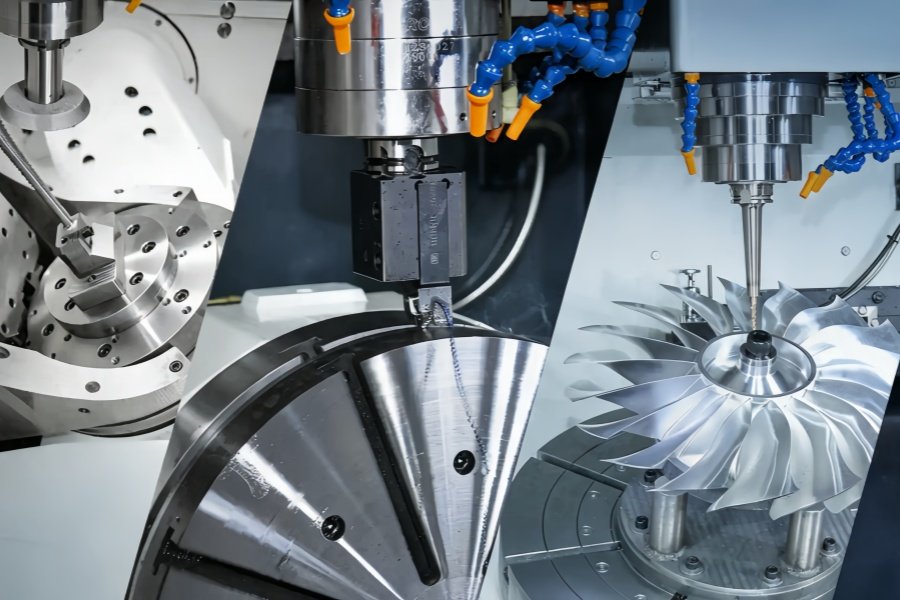
In high-end manufacturing fields such as aerospace, new energy vehicles, high-end medical equipment and precision molds, the demand for processing precision parts with special-shaped structures, free-form surfaces and deep cavity undercuts continues to grow. Restricted by the fixed tool cutting posture, traditional 3-axis and 4-axis CNC machine tools can no longer balance the processing accuracy, surface quality and production efficiency of complex workpieces, failing to meet the upgrading needs of high-end manufacturing. As a core representative of high-end CNC equipment, the 5-axis simultaneous machining center completely breaks the processing limitations of traditional machine tools by virtue of multi-dimensional spatial movement advantages. It can complete the integrated cutting of multi-surface and complex surfaces of workpieces in a single clamping, and has become an indispensable core equipment for current precision intelligent manufacturing. This article comprehensively analyzes the core value and practical application points of 5-axis machine tools from six dimensions: core principle of 5-axis machining, process advantages, equipment structure classification, industrial application, application pain points and selection strategies, providing professional references for manufacturing enterprises to upgrade equipment and optimize processes.
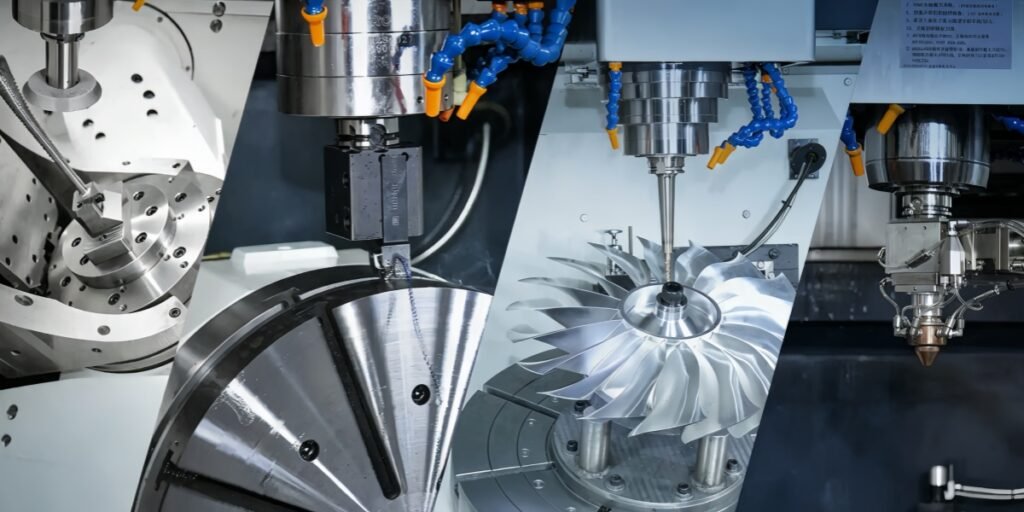
1. Core Principles and Two Main Process Modes of 5-Axis Machining
Based on the conventional linear movement of X, Y and Z axes, 5-axis machine tools are equipped with two additional rotary and swing axes (combined forms of A, B and C axes), allowing the tool to adjust the cutting angle and posture arbitrarily in 3D space. It abandons the fixed processing mode where the tool is perpendicular to the workpiece surface, realizing multi-angle and all-round flexible cutting in space. At present, there are two mainstream process modes in the industry, adapting to different processing scenarios and production needs.
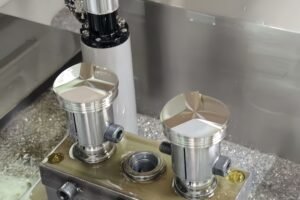
The 3+2 indexed 5-axis, also known as indexing 5-axis, is an economical and practical process mode. During operation, the rotary axis is adjusted to a specified angle and locked, and only the X, Y and Z axes complete the cutting movement. This mode has low programming difficulty, strong process stability and moderate equipment investment cost. It is mainly suitable for processing medium and low complexity parts such as polyhedral
workpieces, conventional molds and inclined hole surfaces. With extremely high cost performance, it is the most popular 5-axis processing method widely adopted by small and medium-sized manufacturing enterprises.
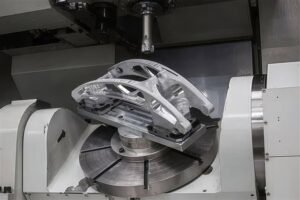
Full simultaneous 5-axis machining is a high-end precision process mode. When the equipment is running, all five axes can perform synchronous real-time interpolation movement, and the tool posture adjusts dynamically and continuously with the trend of the workpiece surface without processing dead angles or posture faults. This process has extremely high requirements for CNC system performance, machine tool rigidity, post-processing accuracy and programming technology. It is specially used for the precision machining of ultra-high complexity free-form surface parts such as aerospace blades, integral blisks, human orthopedic implants and high-end impellers, and is a core symbol of measuring enterprises’ high-end manufacturing capabilities.
2. Four Core Process Advantages of 5-Axis Machine Tools
2.1 One-time Clamping Forming Eliminates Cumulative Positioning Errors
When processing multi-surface and special-shaped workpieces with traditional multi-axis equipment, multiple disassembly, re-alignment and repeated clamping are required. Each clamping will produce inevitable positioning deviation. Cumulative errors will greatly reduce the dimensional accuracy and consistency of parts, and consume a lot of tooling preparation and debugging time. Relying on the posture adjustment capability of the rotary swing axis, the 5-axis machine tool can complete all processing procedures of all side surfaces, inclined cavities, undercuts and inclined holes after one-time clamping and fixing of the workpiece, without secondary disassembly and alignment. Actual test data shows that this process can reduce repeated positioning errors by more than 60%, significantly improve the qualified rate of part dimensions, and shorten the working hours of tooling fixture preparation and debugging by 50%-75%, greatly improving production efficiency.
2.2 Optimize Cutting Posture to Improve Workpiece Surface Quality
When machining curved surfaces with ball-end cutters on 3-axis machine tools, the cutting linear speed at the center of the tool tip is close to zero, which is prone to tool vibration, rough tool marks and uneven curved surfaces. A large number of manual polishing repairs are required in the later stage, which not only increases production costs, but also easily causes workpiece dimensional deviation. 5-axis machining can dynamically tilt the tool axis to avoid the low-efficiency cutting area of the tool tip and use the effective side edge of the tool for cutting, resulting in more uniform cutting force and more stable processing. At the same time, short tools can be used to greatly improve tool rigidity, effectively suppress cutting vibration marks, and significantly improve the accuracy of workpiece surface roughness. Most precision workpieces can be directly formed by finish milling without subsequent polishing procedures, balancing accuracy and efficiency.
2.3 Break Through Structural Limitations to Solve Complex Special-Shaped Machining Problems
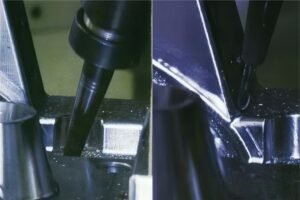
The core parts of high-end manufacturing generally have special structures such as deep cavities, narrow cavities, undercut structures and complex free-form surfaces. 3-axis and 4-axis machining is prone to interference and collision between tools, tool holders and workpieces/fixtures, making it impossible to complete full processing. It can only be produced by splitting workpiece structures and segmented processing and splicing, which not only destroys the integrity of parts, but also reduces structural strength and accuracy. The 5-axis machine tool can dynamically adjust the tool axis direction in real time to accurately avoid processing interference, complete the overall milling of deep cavity inner walls, undercut structures and special-shaped surfaces at one time, and realize integrated forming of parts, which perfectly adapts to the processing needs of various ultra-high complexity precision workpieces.
2.4 Simplify Tooling Adaptation to Meet Flexible Production Needs
The current manufacturing industry presents a production trend of “multiple varieties, small batches and rapid iteration”. Traditional processing technology requires customized special fixtures for different special-shaped workpieces. The design, manufacturing and debugging cycle of fixtures is long, and the production cost is high, making it impossible to quickly switch production categories. Relying on posture adjustment capability, 5-axis machine tools do not need customized special tooling. Most special-shaped and polyhedral workpieces can complete the whole processing procedure with simple universal fixtures, which greatly simplifies the tooling system, shortens the production changeover cycle, significantly improves the flexible adaptation capability of the production line, and accurately adapts to the flexible production trend of discrete manufacturing.
3. Mainstream 5-Axis Machine Tool Structure Types and Adaptable Scenarios
According to the different layout structures of rotary axes, mainstream 5-axis machine tools on the market are mainly divided into four types. The rigidity, stroke, load, accuracy and cost of different structures are significantly different. Enterprises need to select models according to their own workpiece parameters instead of blind selection.
The dual swivel head 5-axis machine tool is equipped with two rotary axes at the spindle end, and the worktable remains fixed. Its core advantage is that the worktable has no stroke limit and can carry large-size and long-stroke workpieces, which is mainly suitable for processing large aerospace structural parts, large molds, large wind power parts and other heavy large workpieces. The shortcoming is that the load capacity of the swivel head structure is limited, and it is not suitable for heavy cutting with heavy tools.
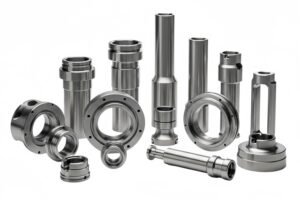
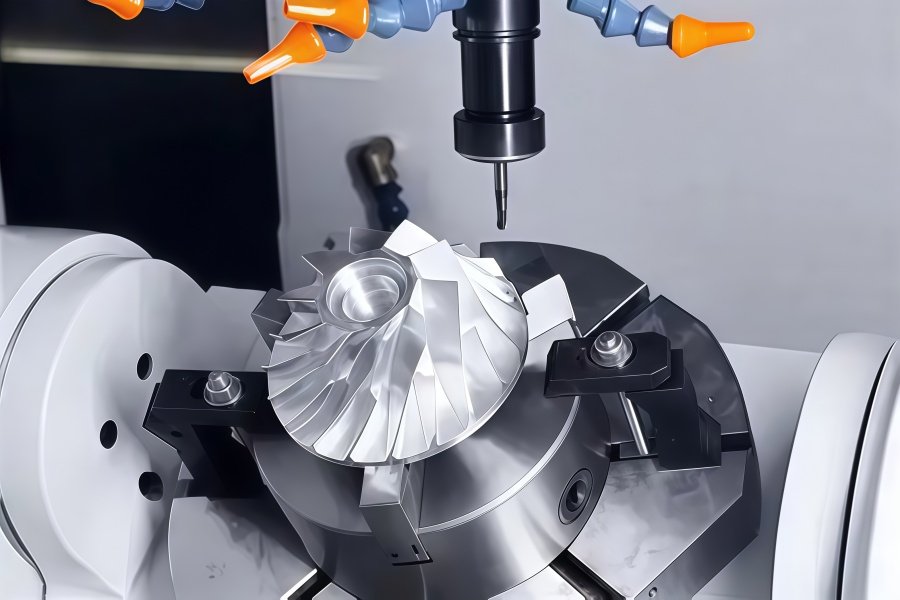
The dual rotary table 5-axis machine tool integrates dual rotary axes at the worktable end, and the spindle is fixed. The equipment has extremely high overall rigidity, high repeated positioning accuracy and good movement stability, and is the preferred structure for precision machining. However, limited by the size of the worktable, the size and bearing weight of workpieces are limited, and it is only suitable for small and medium-sized precision parts such as impellers, blades, medical implants and small precision molds.
The swivel head + rotary table 5-axis machine tool adopts a combined structure of one swivel head and one rotary table, which balances the angular flexibility of the swivel head and the rigidity and stability of the rotary table. It has balanced stroke, load and accuracy performance and strong universality without obvious processing shortcomings. It is widely used in multi-category processing such as mold manufacturing, auto parts and general precision mechanical parts, and is the most adaptable mainstream model in the market.
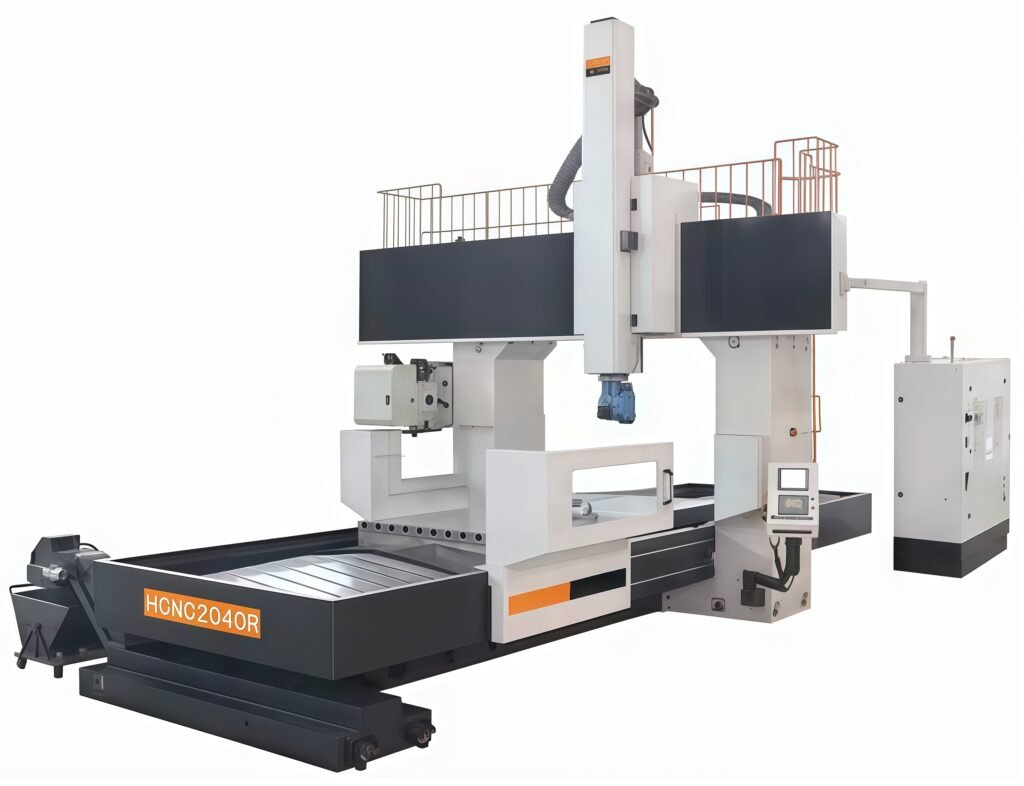
The gantry-type 5-axis machine tool relies on a gantry frame structure equipped with a swinging spindle. It has an ultra-large stroke and strong bearing capacity, and is specially developed for ultra-large and heavy workpieces. It is mainly used for the precision machining of ultra-large workpieces such as ship parts, large wind power structural parts and giant die-casting molds. The disadvantage is that the equipment covers a large area and has high procurement and maintenance costs.
4. Core Application Industries of 5-Axis Machine Tools
4.1 Aerospace Manufacturing
Aerospace parts are mostly made of difficult-to-process materials such as titanium alloy and superalloy. The workpieces are mainly integral blisks, impellers, wing ribs and fuselage structural parts, featuring complex curved surfaces, strict tolerances and high structural strength requirements. 5-axis simultaneous machining can realize one-time forming of integral components without welding and splicing, effectively improving the structural integrity of parts and the reliability of the whole machine, and is the core equipment for the manufacturing of high-end aerospace parts.
4.2 High-End Medical Implant Devices
Medical implants such as artificial joints, spinal fusion devices, orthopedic plates and dental abutments are all bionic free-form surface structures with irregular contours, extremely high accuracy requirements, and strict requirements on workpiece surface finish and biocompatibility. 5-axis machining can realize high-precision and flawless integrated forming, reduce secondary processing procedures, avoid secondary pollution, and fully meet the production standards of medical precision parts.
4.3 Precision Mold Manufacturing
Automotive interior molds, precision plastic molds and die-casting molds generally have deep cavities, special-shaped curved surfaces and undercut structures. Traditional processing technology has cumbersome procedures, heavy polishing workload and long delivery cycle. 3+2 5-axis and full 5-axis processes can efficiently complete the precision milling of mold cavities and surfaces, greatly reduce manual polishing procedures, improve mold surface accuracy, shorten mold R&D and delivery cycle, and help mold enterprises improve market competitiveness.
4.4 New Energy Vehicle Parts
New energy vehicle motor housings, battery structural parts, cooling channel components and electronic control parts are mostly equipped with inclined flow channels, special-shaped cavities and multi-inclined surface structures, with fast product iteration, various categories and flexible batches. The flexible processing capability of 5-axis machine tools can quickly adapt to the processing of various special-shaped parts, efficiently complete the precision forming of complex flow channels and cavities, and perfectly adapt to the production characteristics of multiple varieties, small batches and rapid iteration of new energy parts.
5. Core Pain Points of 5-Axis Machine Tool Application
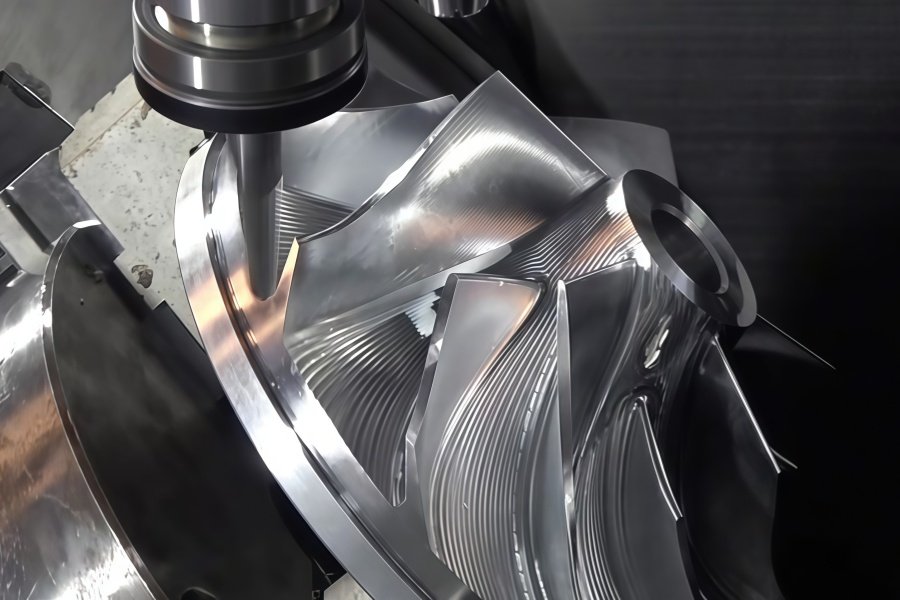
Many manufacturing enterprises often face problems such as insufficient production capacity and substandard accuracy after purchasing 5-axis machine tools. The core reason is not the hardware defects of the equipment, but the imperfect supporting system, mainly concentrated in four major pain points.
First, the threshold of programming and post-processing is high. Full 5-axis simultaneous programming has complex logic and numerous parameters. The accuracy and adaptability of special post-processors directly determine the safety of tool paths and processing accuracy. Poor post-processing is prone to chaotic tool paths and machine collision risks. Most enterprises lack professional 5-axis programming and post-commissioning capabilities.
Second, there is a shortage of professional compound technical talents. 5-axis operation not only requires basic CNC programming capabilities, but also requires technicians to be familiar with machine tool structure, tool axis interference inspection and process optimization strategies. There is a huge gap in the industry for professional talents with both theoretical and practical capabilities, restricting the release of equipment efficiency.
Third, the equipment maintenance cost is relatively high. The rotary and swing axes of 5-axis machine tools are high-precision core components, which have strict requirements for sealing, lubrication, temperature and calibration accuracy, requiring regular professional maintenance. Compared with traditional 3-axis equipment, the maintenance process is more complex and costly.
Fourth, there are blind selection and application misunderstandings. Some enterprises blindly purchase high-end full 5-axis equipment regardless of workpiece types. For basic parts such as simple flat plates and regular blocks, 3-axis equipment can complete processing efficiently and at low cost, while 5-axis equipment will cause resource waste and idle production capacity.
6. Practical Suggestions for Enterprise 5-Axis Machine Tool Selection and Application
To help enterprises select equipment accurately and use 5-axis equipment efficiently to avoid investment and process risks, five core suggestions are summarized based on industry practical experience.
First, sort out core workpiece parameters. Count the maximum size, weight, processing material and structural complexity of the enterprise’s main products in advance, distinguish conventional polyhedral parts from complex continuous curved surface parts, accurately determine the required process mode, and select 3+2 indexed 5-axis or full simultaneous 5-axis as needed to avoid excess functions or insufficient performance.
Second, match the machine tool structure type. Priority should be given to dual swivel head 5-axis for large and heavy workpieces; dual rotary table 5-axis for small and medium-sized precision curved surface parts; composite 5-axis with swivel head + rotary table for mixed product categories, taking into account universal and precision processing; gantry 5-axis for ultra-large heavy components.
Third, strictly control core configuration parameters. Prioritize high-end CNC systems with mature 5-axis functions, and must be equipped with RTCP tool center point follow-up core function, which is the basis for ensuring 5-axis processing accuracy and realizing dynamic posture adjustment. It is forbidden to omit or downgrade this function.
Fourth, attach importance to supporting service capabilities. Equipment selection should not only compare procurement prices, but also investigate the manufacturer’s CAM programming scheme, post-processing adaptation, process commissioning and after-sales technical support capabilities. Perfect supporting services are the key to long-term stable and efficient operation of equipment.
Finally, reasonably control investment costs. Enterprises with limited budgets and mainly processing conventional molds and polyhedral parts can give priority to cost-effective 3+2 5-axis equipment, which can meet more than 90% of conventional complex processing needs and effectively reduce investment risks.
7. Conclusion
The 5-axis simultaneous machining center is not a simple upgrade of 3-axis machine tools, but a high-end precision manufacturing solution integrating hardware equipment, CNC system, programming technology, professional talents and operation and maintenance system. Its core value lies in solving the complex, precise and integrated processing problems that cannot be completed by traditional equipment, helping enterprises break through process bottlenecks, improve product quality, shorten production cycles and enhance core competitiveness. When deploying 5-axis processes, manufacturing enterprises need to select equipment accurately according to their own product characteristics, improve the supporting process system, cultivate professional technical teams, maximize the production capacity value of 5-axis equipment, and truly realize the upgrading of high-end manufacturing quality and efficiency.