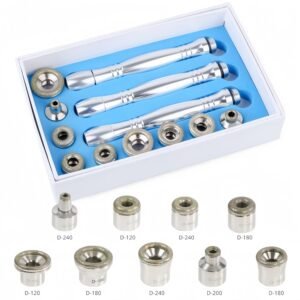
In the rapidly expanding global medical aesthetic market, the line between a flawless skin treatment and a severe adverse reaction is often measured in micrometers. For procurement managers, supply chain directors, and product engineers at medical aesthetic brands, sourcing the right components for a microdermabrasion machine is a high-stakes endeavor.
You are likely reading this because your current supply chain is broken. You might be dealing with the nightmare of batch-to-batch inconsistency, where a new shipment of diamond tips arrives with microscopic burrs that cause epidermal tearing. Perhaps you are fighting with suppliers over non-medical-grade material substitutions, uneven suction caused by poor hole tolerances, or rigid factories that demand exorbitant MOQs and months of lead time for a simple custom logo or modified hole pattern.
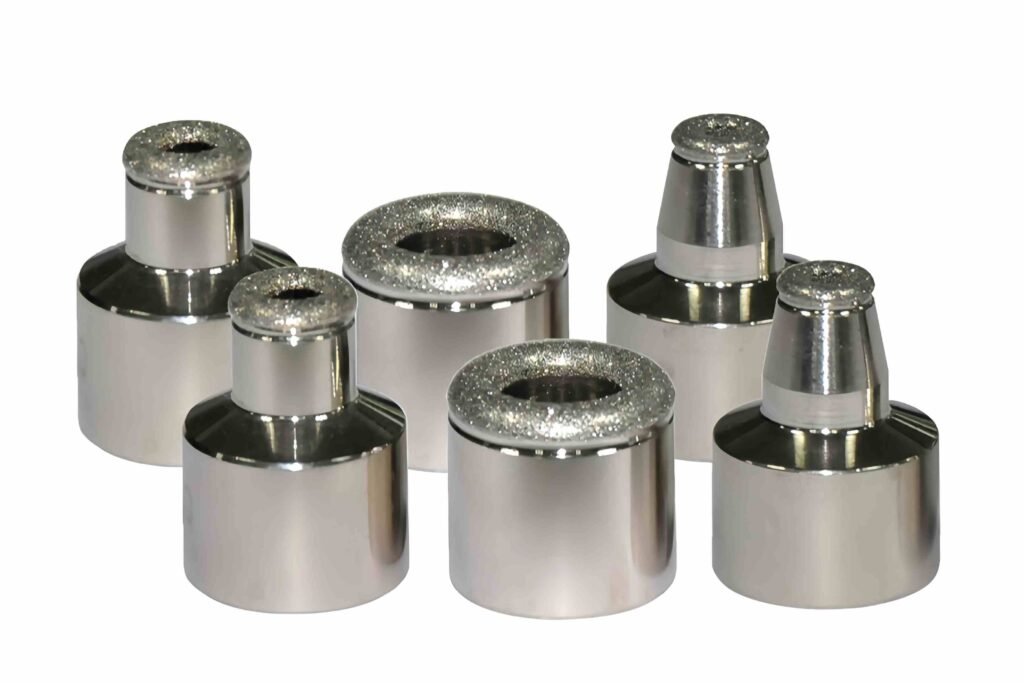
The tip is the sole component of a microdermabrasion device that makes physical contact with the patient’s stratum corneum. If the tip fails, the machine fails, your brand’s reputation plummets, and patient safety is compromised. Whether your target demographic is seeking premium treatments in Beverly Hills or searching for advanced mikrodermabrazyon therapies in emerging transcontinental markets, the universal language of aesthetic equipment is precision.
To fully realize the advantages of microdermabrasion—which include controlled exfoliation, collagen stimulation, and hyperpigmentation reduction—the hardware must be engineered with absolute perfection. This comprehensive guide deconstructs why Swiss-type CNC machining is the only viable manufacturing method for microdermabrasion tips, and how partnering with a specialized CNC source factory solves your most critical supply chain pain points.
The Manufacturing Showdown—Why Swiss CNC Machining is Non-Negotiable
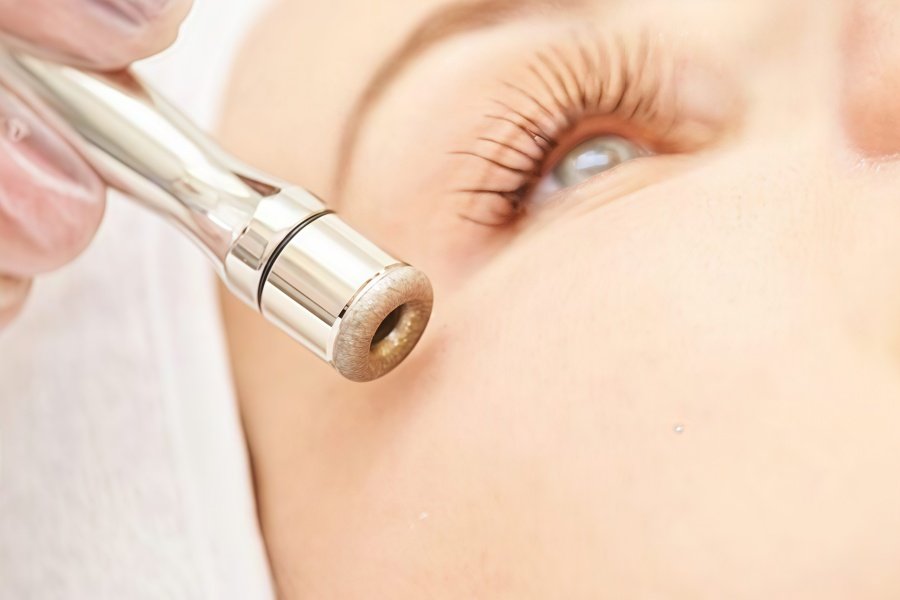
A common pitfall for procurement teams looking to cut costs is migrating to manufacturers who utilize injection molding, metal stamping, or die-casting for abrasive tips. Even among metal-cutting factories, standard lathes fall short when handling ultra-small, complex medical components.
Why must microdermabrasion tips be manufactured using Swiss-type CNC machining? The answer lies in the uncompromising physical demands of the procedure, broken down into four critical dimensions:
1. The Eradication of Hole Burrs (Micro-Trauma Prevention)
When metal is stamped or cast, the physical shearing or cooling process inevitably leaves behind microscopic burrs (jagged metal protrusions) at the edges of the vacuum holes. In a stamping process, the punch creates a “breakaway” zone that is inherently rough. When a tip with hole burrs is dragged across human skin under negative vacuum pressure, these burrs act like microscopic serrated knives. Instead of exfoliating dead skin cells, they tear the healthy epidermis, leading to linear scratches, erythema (severe redness), and a high risk of post-inflammatory hyperpigmentation (PIH).
The Swiss CNC Advantage: Precision Swiss CNC milling and drilling, utilizing bespoke micro-tools and optimized spindle speeds, shear the metal cleanly. Followed by advanced deburring and polishing protocols (such as centrifugal barrel finishing or electropolishing), Swiss machining ensures hole edges are pristine under a 50x microscope.
2. Strict Hole Diameter Tolerances (±0.02mm)
The vacuum holes on a tip govern the fluid dynamics of the device. If you are manufacturing a tip with a specified 1.2mm hole, a stamping or casting process might yield variances ranging from 1.10mm to 1.30mm within the same batch due to mold wear or thermal shrinkage. If the holes are too large, the suction drops, and the abrasion is ineffective. If the holes are too small, the suction concentrates too aggressively, causing hematomas (bruising) on the patient’s skin.
The Swiss CNC Advantage: High-precision Swiss-type CNC equipment maintains hole diameter tolerances as tight as ±0.02mm. This absolute mathematical precision guarantees that every single tip provides the exact same calculated airflow and negative pressure, ensuring uniform suction across the entire treatment surface.
3. Absolute Concentricity via Swiss-Type Guide Bushing Technology
Many microdermabrasion wands require the tip to be threaded or press-fit onto the handpiece with an O-ring seal. Traditional lathes struggle with small, slender parts because the material bends under cutting pressure (known as “letting go” or deflection), creating an imperceptible angle mismatch. If the outer diameter (OD) is not perfectly concentric with the inner diameter (ID), the tip sits unevenly, causing local vacuum leaks and asymmetrical clinical pressure.
The Swiss CNC Advantage: Swiss-type CNC turning centers feature a sliding headstock and a guide bushing. The cutting tool operates millimeters away from the material support bushing, completely eliminating material deflection. Furthermore, Swiss machines perform high-precision turn-mill operations in a single setup (one-hit machining), eradicating secondary-operation errors and achieving concentricity tolerances of less than 0.01mm.
4. Edge R-Angle (Radius) Precision
The outer circumference of the tip that glides across the skin cannot be a sharp 90-degree corner. It requires a specific, smooth curvature—an R-angle (Radius)—to glide effortlessly. Injection molding and casting struggle to maintain consistent micro-radii due to mold degradation. Stamped parts often require secondary tumbling that results in unevenly worn edges.
The Swiss CNC Advantage: Swiss CNC programming defines the precise R-angle (e.g., exactly R0.5mm) using a specifically profiled cutting tool. This guarantees that the transition from the flat abrasive face to the vertical wall is uniform, allowing the aesthetician to tilt and glide the wand without the edge biting into the patient’s skin.
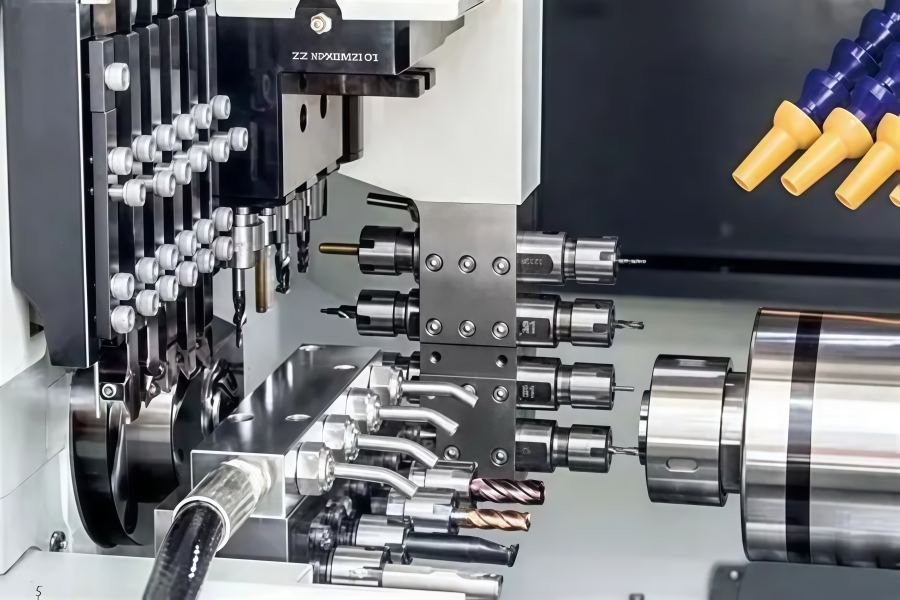
Medical-Grade Material Selection—The Foundation of Safety
Procurement managers often face the hidden danger of “material substitution” from unreliable suppliers. A quote for 316L stainless steel might mysteriously be fulfilled with inferior 200-series steel to pad margins. In the medical aesthetic realm, material chemistry dictates skin biocompatibility, sterilization resistance, and overall product lifespan.
When manufacturing premium Swiss CNC microdermabrasion tips, only three materials should be considered:
| Property | 304 Stainless Steel | 316L Stainless Steel | Ti-6Al-4V (Grade 5) |
| Material type | Austenitic stainless steel (UNS S30400) | Austenitic stainless steel, low carbon (UNS S31603) | Alpha-beta titanium alloy (UNS R56400) |
| Key composition (wt%) | Fe bal.; Cr 18–20; Ni 8–10.5; C ≤ 0.08 | Fe bal.; Cr 16–18; Ni 10–14; Mo 2–3; C ≤ 0.03 | Ti bal.; Al 5.5–6.75; V 3.5–4.5; Fe ≤ 0.40 |
| Density (g/cm³) | 7.93 | 8.00 | 4.43 (~45% lighter) |
| Tensile strength (MPa) | 515 min | 485 min | 895–950 |
| Yield strength 0.2% (MPa) | 205 min | 170 min | 828–880 |
| Elongation (%) | ~40 | ~40 | 10–14 |
| Hardness | ≤ 201 HBW / 92 HRB | ≤ 217 HBW / 95 HRB | 30–36 HRC (~330 HBW) |
| Young’s modulus (GPa) | ~193 (stiff) | ~193 (stiff) | ~114 (more flexible) |
| Specific strength (UTS/density, kN·m/kg) | ~65 | ~61 | ~214 (~3.3× steel) |
| Corrosion resistance | Good; prone to chloride pitting & stress-corrosion cracking (PREN ≈ 19) | Superior; Mo addition resists chlorides & marine environments (PREN ≈ 24) | Excellent; passive TiO₂ film, immune to chloride pitting/SCC in seawater |
| Magnetic | Essentially non-magnetic (slight magnetism after cold work) | Essentially non-magnetic (slight magnetism after cold work) | Non-magnetic |
| Biocompatibility | Limited; not implant-grade | Good; implant-grade 316LVM available for implants | Excellent; industry standard for medical implants (ASTM F136 ELI) |
| Machinability | Good | Good (slightly harder than 304) | Difficult (low thermal conductivity, work hardening) |
| Weldability | Excellent | Excellent (low C reduces sensitization) | Good with inert-gas shielding |
| Relative raw-material cost (304 = 1) | 1 (lowest) | ~1.5–2 | ~8–12 (highest) |
| Typical applications | Food & beverage, kitchenware, architectural, general industry | Marine hardware, chemical/pharma processing, medical devices, surgical instruments | Aerospace structures, medical implants, marine/offshore, motorsport, chemical |
Surface Roughness (Ra) and The Microscopic Battlefield
When evaluating a new supplier, procurement teams often check dimensional tolerances but overlook surface finish. For a microdermabrasion tip, the surface roughness of the non-abrasive areas (internal vacuum channels, outer walls, and mating interfaces) is a direct measure of clinical hygiene.
Surface roughness is measured in Ra (Roughness Average), typically expressed in micrometers (μm).
The Danger of High Ra (Roughness > 0.8μm)
If a factory runs machines too fast to save cycle time, they leave behind deep tool marks.
Bacterial Harbors: At a microscopic level, a rough surface looks like a mountain range. Dead skin cells, sebum, and blood instantly pack into these microscopic valleys during a treatment.
Cleaning Failure: Standard ultrasonic cleaning or manual brushing cannot penetrate these deep micro-crevices.
Cross-Contamination: Even after passing through an autoclave, organic bio-burden trapped in rough valleys can insulate bacterial spores from heat, leading to cross-contamination risks.
The Swiss CNC Requirement: Ra ≤ 0.4μm
A qualified medical CNC manufacturer programs finishing passes with high spindle speeds, low feed rates, and precision-ground inserts to achieve an Ra of 0.4μm or better (often paired with electropolishing).
The Result: A mirror-like, ultra-smooth surface where bio-debris cannot adhere. When placed in an ultrasonic cleaner, biological matter effortlessly falls away.
Patient Sensation: A low Ra on the outer radius of the tip ensures a luxurious, frictionless glide across the skin, distinguishing a premium device from a cheap knockoff.
Fluid Dynamics—Hole Design and Suction Uniformity
The true advantages of microdermabrasion are not achieved by the abrasive surface alone; they are achieved by the synergy of abrasion and vacuum suction. The design, size, and layout of holes on the Swiss CNC tip directly dictate this fluid dynamic.
Many brands rely on generic, off-the-shelf tips. However, the exact CFM (Cubic Feet per Minute) rating of your specific microdermabrasion machine requires a precisely matched tip geometry.
Hole Diameter: A larger central hole (e.g., 2.5mm) moves a high volume of air but lowers velocity, resulting in gentle suction suitable for sensitive skin. Smaller micro-holes (e.g., 0.8mm) increase air velocity, creating a sharp, localized vacuum pinch ideal for extracting comedones on the nose or chin.
Hole Distribution Arrays: Instead of one large central hole, premium designs utilize a “flower” or “ring” array of 4 to 6 smaller holes. Swiss CNC machining allows for complex polar coordinate drilling, distributing vacuum pressure evenly across the abrasive disk so skin is pulled flat rather than sucked into a single central void (which causes bruising).
Hole Angles: Advanced tips do not just have holes drilled straight down. Through multi-axis Swiss turning and milling, holes can be drafted at precise angles (e.g., 15 degrees outward) to optimize the aerodynamic flow of exfoliated skin cells up into the filter, preventing clogs.
Statistical Process Control (Cpk) vs. Single-Batch Precision
Perhaps the most agonizing pain point for a procurement manager is the “Bait and Switch.” A supplier sends 10 flawless prototypes, you sign the contract, and the first mass-production run of 10,000 units is a disaster of inconsistent tolerances.
This happens because producing one perfect part is easy; producing 10,000 identical parts requires rigorous Statistical Process Control (SPC).
Why Cpk Matters More Than Blueprint Tolerances
Cpk (Process Capability Index) is a statistical measurement of how well a manufacturing process can produce parts within specified tolerance limits.
Cpk < 1.0: The factory is producing defects, with dimensions drifting outside your ±0.02mm tolerance.
Cpk = 1.33: The industry standard for acceptable mass production (yields a 99.99% pass rate).
Cpk > 1.67: World-class precision manufacturing.
How Top Swiss CNC Factories Guarantee High Cpk
Maintaining batch consistency over time requires systemic control:
Automated Tool Wear Compensation: CNC cutting tools dull slightly with every part they cut. Advanced factories use in-line laser tool probes. When a drill bit wears down by 0.005mm, the machine automatically offsets coordinates to ensure the 10,000th hole matches the 1st.
Thermal Stability: Machining metals generates heat, causing thermal expansion. Premium Swiss CNC floors are strictly temperature-controlled to ensure parts machined in the morning match those machined in the afternoon.
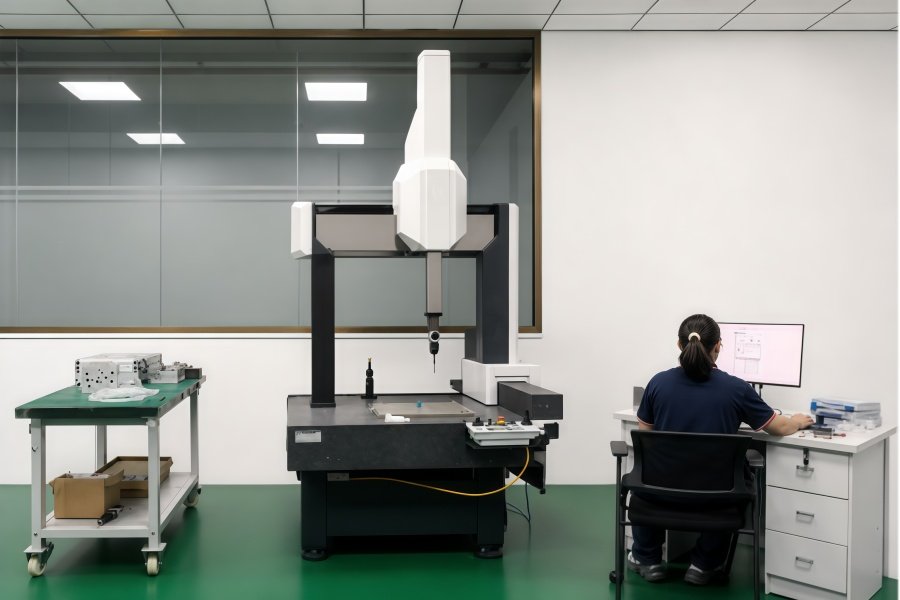
CMM Inspection: Quality control is not done with basic hand calipers. First-Article Inspection (FAI) and random batch sampling are conducted on Coordinate Measuring Machines (CMM) accurate to a single micron.
When you secure a supplier with a high Cpk, your incoming QA inspection failures drop to zero, and your brand’s end-user reviews skyrocket due to unwavering reliability.
Solving the OEM/ODM Equation—Your Ideal Source Factory
Transitioning to a new, highly capable Swiss CNC source factory shouldn’t mean facing insurmountable barriers to entry. Medical aesthetic brands need agility to respond to market trends. Here is what a true strategic CNC partner provides:
DFM (Design for Manufacturability) Support: You bring the vision; the factory brings engineering reality. Proactive CNC partners provide DFM feedback, showing you how to optimize geometries to maintain design intent while cutting machining costs.
Rapid Prototyping & Customization: Dedicated Swiss CNC facilities can take CAD models (STEP/IGES) and turn around physical prototypes in 3 to 5 days. Need a custom laser-etched logo on the stainless steel collar or specific knurling for grip? A true source factory integrates this in-house.
Flexible MOQs: High-mix, low-volume (HMLV) manufacturing is a core competency of advanced Swiss shops utilizing quick-change workholding, allowing reasonable MOQs without crippling setup fees.
Absolute Traceability: Top-tier factories maintain strict ISO-compliant ERP systems. If a field issue occurs years later, the factory can trace the exact production batch, raw material MTR, machine operator, and CMM inspection report.
Conclusion: Stop Compromising on the Core of Your Technology
The tip of your microdermabrasion machine is not a generic commodity; it is a highly engineered medical instrument. It is the interface where your brand’s promise meets the patient’s skin.
When you settle for inferior manufacturing methods—stamping, casting, or low-tier machining—you invite burrs that scratch skin, tolerances that ruin suction, and rough surfaces that harbor bacteria. You alienate aestheticians, anger clinical directors, and damage your brand equity.
By migrating your procurement to a dedicated, precision Swiss CNC source factory, you eliminate these pain points instantly. You secure medical-grade material integrity, micron-level dimensional stability, and the OEM agility needed to dominate the market.
Whether you are consolidating your supply chain, scaling up for global distribution, or developing the next generation of aesthetic technology, demand the unmatched precision of Swiss CNC machining. Your patients, your clients, and your bottom line deserve nothing less.
Partner with a Certified Swiss CNC Source Factory Today
Stop losing clients to inconsistent quality and rigid suppliers. Whether you need rapid custom prototyping, precise OEM manufacturing with high Cpk guarantees, or strict medical-grade material certification, our precision Swiss CNC facility is ready to support your supply chain.
Ready to upgrade your medical aesthetic component line?
Get a DFM Review: Upload your CAD files (STEP/IGES) for a free design-for-manufacturability evaluation.
3-to-5 Day Prototyping: Fast turnaround on custom logo laser-etching, tailored hole patterns, and material samples.