What is CNC Milling?
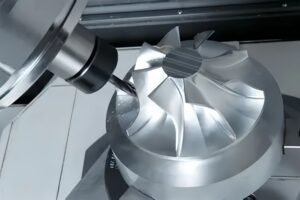
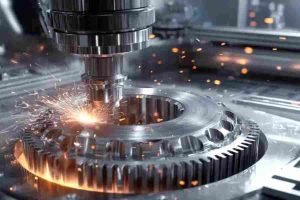
CNC Milling (Computer Numerical Control Milling Machine) is a digitized method of controlling mill machinery, standing as one of the most widely used machine classes in modern manufacturing. CNC milling processes seamlessly integrate computer technology, automatic control systems, and precision mechanical engineering. CNC milling is a computer-controlled manufacturing process where rotating cutting tools selectively remove material from a raw block. If you are looking for production partners, you can explore our specialized CNC milling services for high-end optical or electronic components.
By using computer software instead of traditional hardware logic circuits, a CNC mill can automatically execute data storage, processing, arithmetic operations, and logical reasoning via pre-stored control programs. This allows for highly accurate, flexible, and automated machining of complex planes, internal cavities, slots, and 3D curved profiles.
1. Structural Characteristics of CNC Milling Machines
Based on spindle layout, mechanical structures, and the number of controlled axes, CNC milling machines are primarily categorized into the following distinct types:
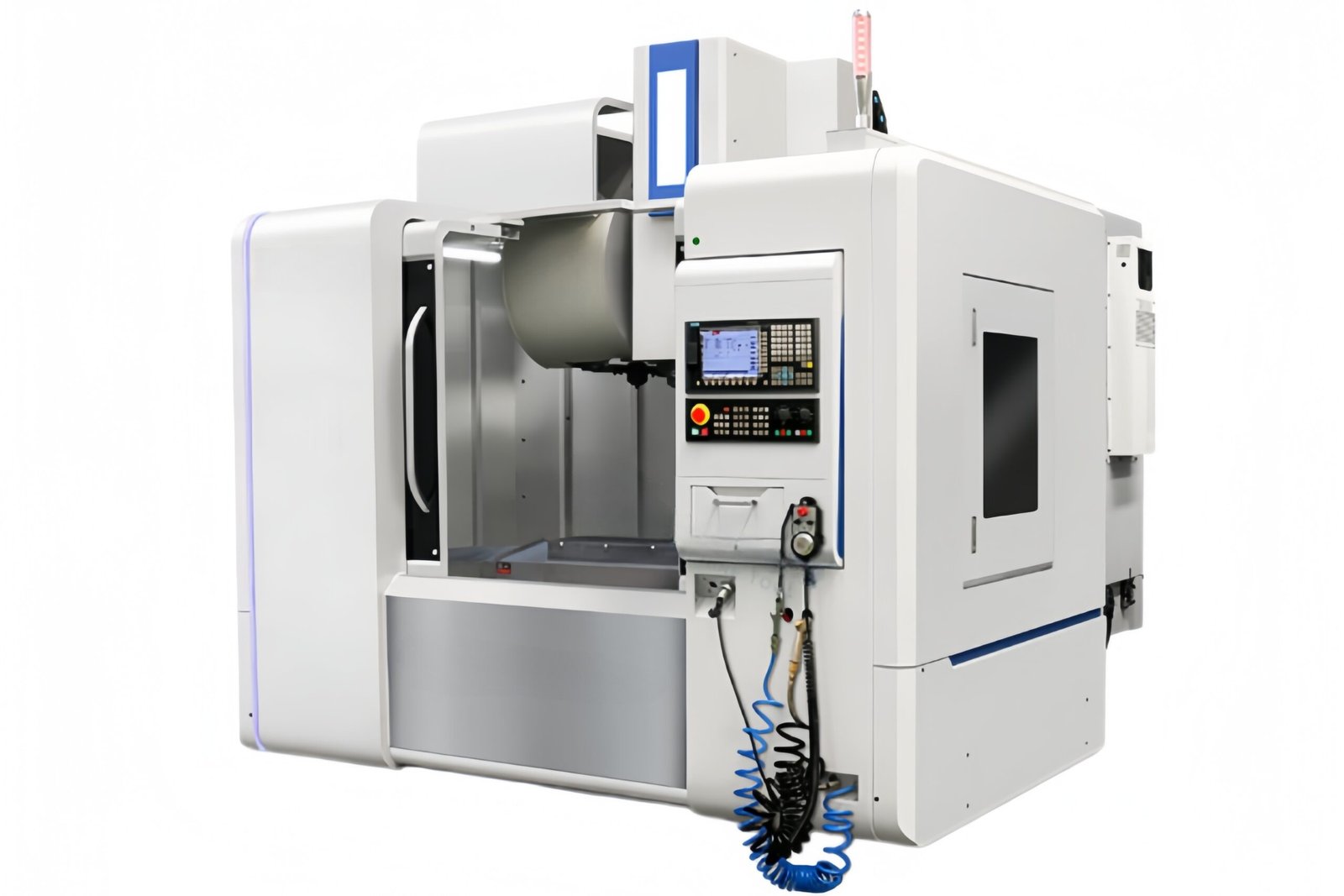
A. Vertical CNC Milling Machines
Structural Feature: The spindle axis is oriented perpendicularly to the horizontal plane. This is the most common configuration in production environments.
Applications: Ideal for processing plates, discs, molds, and small shell-like components.
Sub-categories:
CNC Knee-and-Column Type: The worktable can move vertically (up and down) to adjust the depth of cut.
CNC Bed-Type: The worktable does not move vertically; instead, the spindle head travels along the column’s vertical guideways. This offers superior rigidity for heavy-duty workpiece milling.
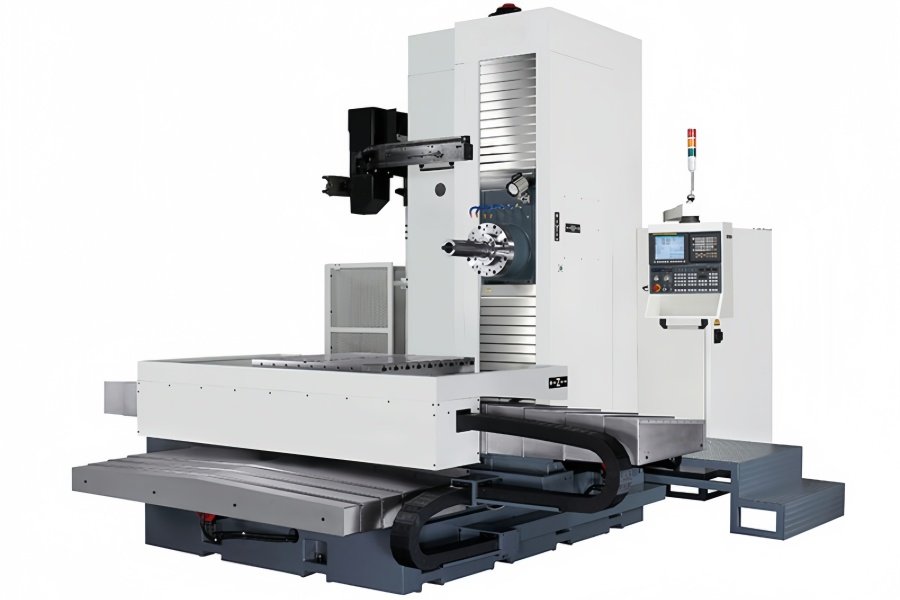
B. Horizontal CNC Milling Machines
Structural Feature: The spindle axis runs parallel to the horizontal plane.
Applications: Predominantly utilized for box-type parts, housings, or complex parts requiring multi-sided machining. To expand capabilities, they often feature a CNC rotary table to facilitate multi-angle index positioning.
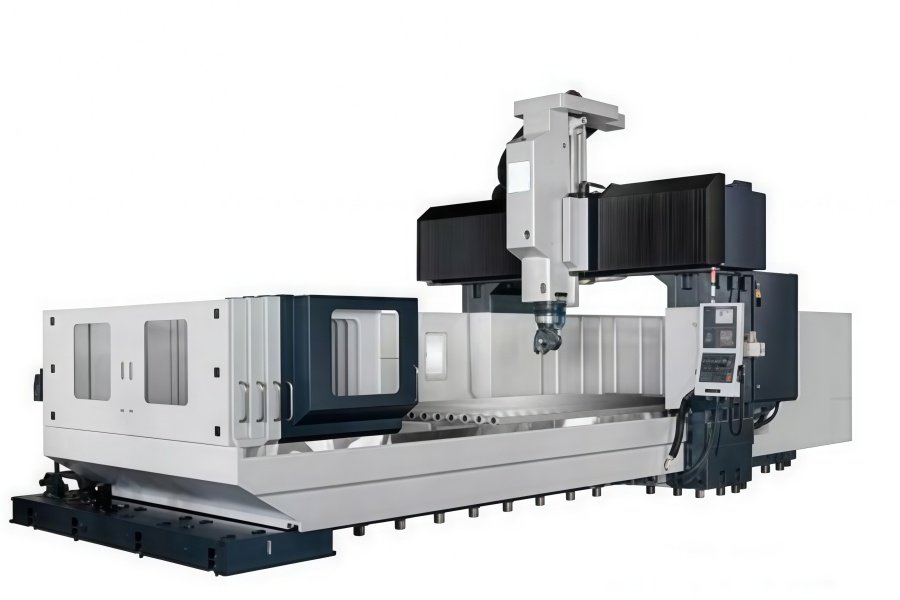
C. Gantry-Type CNC Milling Machines
Structural Feature: The spindle is mounted on a crossbeam supported by left and right columns, forming a heavy, highly rigid gantry frame.
Applications: Purpose-built for heavy-duty, high-power milling of exceptionally massive or bulky parts, such as large engine blocks and heavy mold bases.
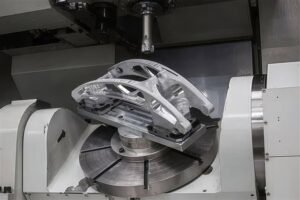
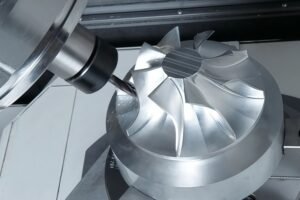
D. 5-Axis Simultaneous CNC Milling Machines
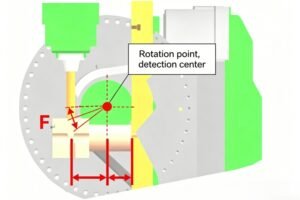
Structural Feature: Beyond the traditional linear X, Y, and Z axes, it introduces two rotational axes (such as A, B, or C axes).
Applications: It is built for ultra-precision complex profiles, contoured surfaces, and aerospace components. To support these demanding applications, our [precision CNC milling services] utilize advanced multi-axis machining centers to achieve exact architectural shapes with strict quality control.
2. Core Functions and Process Sequencing in CNC Milling
Achieving peak efficiency on a CNC mill relies entirely on utilizing its native functions and employing systematic sequencing principles:
Core Operational Functions
Point-to-Point Control & Linear Interpolation: Used for high-precision hole-making patterns (such as center drilling, deep drilling, boring, reaming, and tapping) as well as straight-line face milling.
Continuous Contour Control (Circular Interpolation): Simultaneously controls two or more axes to machine smooth lines, arcs, or non-circular mathematical curves.
Automatic Tool Compensation: Features Tool Radius Compensation (G41/G42) and Tool Length Compensation (G43/G44). This frees the programmer from constant recalculations regarding tool wear and actual cutter diameters, simplifying calculation workloads.
Automatic Tool Changer (ATC) & Machining Centers: When a CNC milling machine integrates a tool magazine and an ATC, it transitions into a CNC Machining Center. It can sequentially perform milling, drilling, boring, and tapping operations within a single setup.
3. Advantages of CNC Milling Operations
Compared to old-school manual milling machines, CNC milling has taken over the manufacturing landscape for several defining reasons:
High Flexibility & Swift Turnarounds: Switching production batches only requires loading a new program and swapping minimal fixturing, making flexible automation highly achievable.
Stable, High Precision: Excellent pulse increments and a complete lack of human fatigue mean every part in a large batch remains identical and highly interchangeable.
Reduced Labor Intensity: Maintenance-friendly design allows automatic tool changes and shortens production lead times significantly. Leverage these structural benefits for your projects by partnering with our expert [CNC milling manufacturing factory] for optimized pricing and reliable delivery.
Conclusion
From the early days of punched metal tapes to modern multi-axis simultaneous machining centers, CNC milling technology has radically reshaped manufacturing. In real-world machine shops, whether you choose a streamlined tool-concentrated setup or deploy rough-to-finish sequencing for fragile components, mastering these structural features and process principles is your gateway to generating elite, efficient CNC programs.