What Is Titanium Machining?
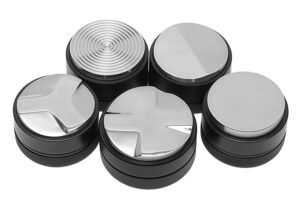
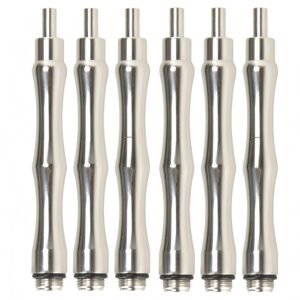
Titanium machining is the process of cutting, shaping, and finishing titanium and titanium alloy parts using CNC (Computer Numerical Control) equipment such as mills, lathes, and grinders. As one of the most sought-after engineering materials in aerospace, medical, automotive, and marine industries, titanium offers an unmatched combination of high strength, low weight, and exceptional corrosion resistance.
But here is the catch: titanium is notoriously difficult to machine. It does not cut like aluminum or even stainless steel. The material has properties that make it highly desirable for end-use applications but a challenge for machine shops, leading many engineers and procurement managers to ask the same question: Why is titanium machining so expensive?
In this guide, we break down every factor that drives up titanium machining costs, compare different machining processes, and share practical strategies to reduce your project expenses without compromising quality. Whether you are sourcing titanium components for the first time or looking to optimize an existing supply chain, this article gives you a clear picture of where your money goes and how to spend it more wisely.
Why Is Titanium Machining So Expensive?
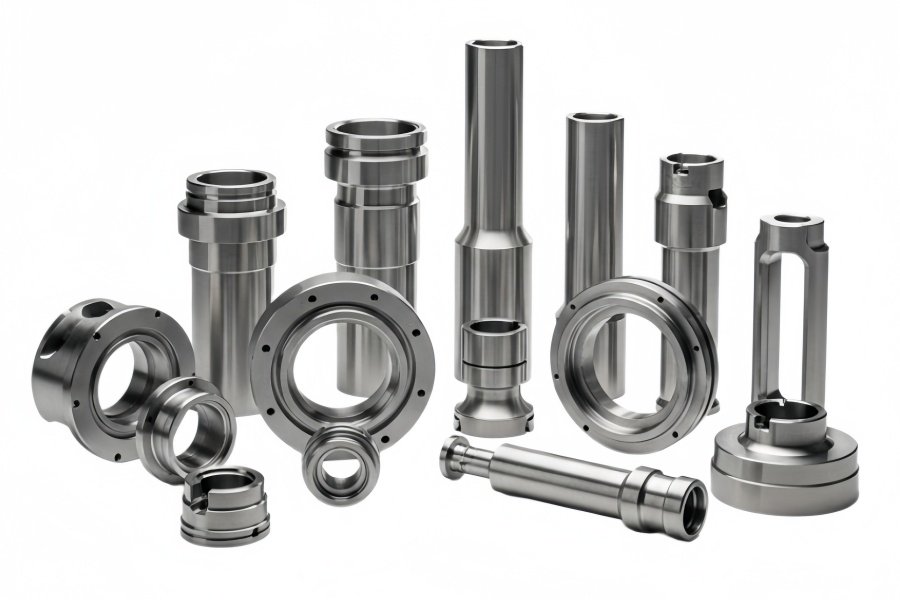
If you have ever requested a quote for titanium parts and nearly fallen out of your chair, you are not alone. A titanium CNC machined part can cost 2 to 5 times more than the same part made from 6061 aluminum or even 304 stainless steel. The premium is not arbitrary, it comes from four fundamental cost drivers.
Material Cost: Titanium Is Not Cheap to Begin With
The raw material itself is the first and most obvious cost factor. Titanium ore (ilmenite or rutile) must go through the Kroll process, a complex, energy-intensive chemical extraction and refinement process, to produce pure titanium sponge. That sponge is then melted into ingots, forged into billets or bars, and finally rolled or drawn into the stock shapes used in machining.
Compare raw material prices per kilogram:
| Material | Approx. Price (per kg) | Relative Cost |
| 6061 Aluminum | $3 to $5 | 1x |
| 304 Stainless Steel | $4 to $7 | 1.2x |
| Grade 2 Titanium | $30 to $50 | 8 to 10x |
| Grade 5 Titanium (Ti-6Al-4V) | $40 to $70 | 10 to 14x |
Grade 5 titanium bar stock can cost 10 times more than aluminum. And this is just the starting point, before a single chip is cut off.
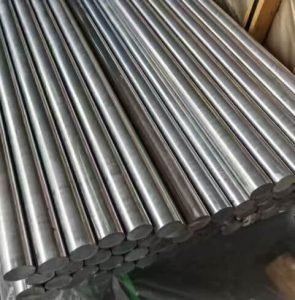
There is more. Titanium is typically purchased as precision-ground bar or tube, which adds further cost compared to hot-rolled steel or extruded aluminum. And because titanium has poor thermal conductivity (only about one fifth that of stainless steel and one fifteenth that of aluminum), you cannot cut it fast, meaning more material ends up as chips that need to be recycled, and the machine spends more time on each part.
Tool Wear: Why Titanium Kills Cutting Tools
This is where the real money disappears. Titanium machining is tough on cutting tools. The reason lies in titanium’s combination of low thermal conductivity and high chemical reactivity at cutting temperatures.
When you cut titanium, the heat does not dissipate into the chip or the workpiece, it stays concentrated right at the cutting edge. At typical cutting speeds, the temperature at the tool tip can easily exceed 1,000 degrees Celsius. On top of that, titanium tends to weld itself to the cutting tool (a phenomenon called built-up edge), which further accelerates tool wear.
The result: A carbide end mill that might last 2 hours cutting steel will often be completely worn out after 15 to 30 minutes of titanium milling. In some cases, especially with interrupted cuts or deep pockets, tool life can be as short as 5 minutes.
Let us do the math. A solid carbide end mill suitable for titanium might cost $50 to $150. If you are running a production batch of 500 parts and changing tools every 20 parts, that is 25 tool changes per run. At $80 per tool on average, that is $2,000 just in cutting tool costs, before you even account for the labor and machine time.
For this reason, many titanium machining services invest in expensive tool materials like polycrystalline diamond (PCD) inserts or advanced coated carbides (TiAlN, AlCrN coatings). These tools cost 2 to 3 times more than standard carbide but can extend tool life by 3 to 5x. Even with these premium tools, however, tooling remains one of the largest cost components in any titanium machining project.
Low Machinability: The Slow Milling Problem
Here is another way titanium impacts your budget: you simply cannot cut it fast.
Machinability is a measure of how easily a material can be cut with a given tool. The higher the machinability rating, the faster you can run your machine. The benchmark is B1112 free-cutting steel, which has a rating of 100%.
| Material | Machinability Rating |
| 6061 Aluminum | 300 to 600% |
| 304 Stainless Steel | 40 to 60% |
| Grade 2 Titanium | 20 to 40% |
| Grade 5 Titanium (Ti-6Al-4V) | 10 to 20% |
Grade 5 titanium is roughly 5 to 10 times harder to machine than aluminum. That means for the same part, your CNC mill will take 5 to 10 times longer to complete the job. And machine time is expensive.
Let us say your CNC machine shop charges $85 to $120 per hour for 3-axis milling. If an aluminum version of the same part takes 20 minutes to machine, the titanium version might take 2 to 3 hours. That is a difference of $170 to $340 per part in machine time alone.
The slow cutting speeds required for titanium are not just about tool life, they are also about surface finish and dimensional accuracy. Push too hard, and you risk work hardening, chatter, or even surface damage that can render the part unusable. Skilled machinists who know how to optimize feeds, speeds, and tool paths for titanium command premium hourly rates, and for good reason.
Quality Control: Tighter Tolerances Mean More Time
Titanium parts are rarely off-the-shelf components. They are almost always precision-machined for demanding applications where failure is not an option: aerospace turbine blades, medical implants, automotive racing components, marine hardware.
This means every part must pass rigorous inspection. Depending on the application, tolerances might be as tight as plus or minus 0.005 mm (plus or minus 0.0002 inches). Surface finish requirements can call for Ra 0.8 micrometers or better. Every critical dimension must be measured with CMM (Coordinate Measuring Machine), optical comparators, or other precision metrology equipment.
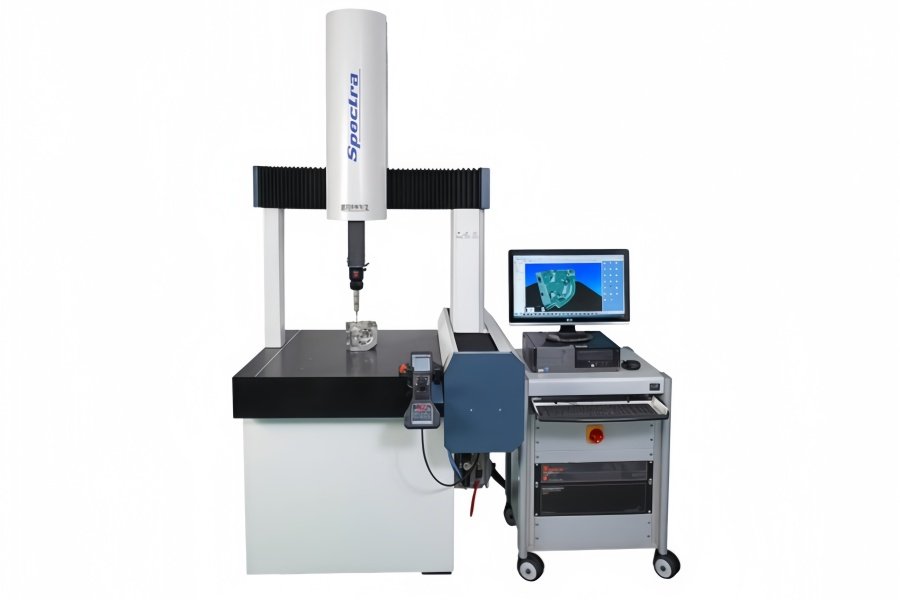
Quality control adds hidden costs:
- Setup inspection: First-article inspection (FAI) for every new production run
- In-process inspection: Stopping the machine every 10 or 20 parts to check critical dimensions
- Final inspection: Full dimensional report for every part in high-precision runs
- Material certification: Mill test reports (MTRs) verifying the titanium alloy grade and composition
For complex titanium components, quality control can add 15 to 30% to the total machining cost. And that is before any secondary operations: deburring, anodizing, passivation, welding, or assembly.
Titanium Milling vs. Other Machining Processes
Not all titanium machining is created equal. The process you choose has a significant impact on both cost and lead time.
Titanium Milling
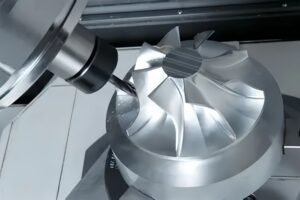
CNC milling is the most common process for titanium parts, especially when you need complex geometries, pockets, slots, or custom profiles. Titanium milling uses rotating cutting tools to remove material from a solid workpiece.
Cost considerations:
- 3-axis milling is the most affordable option
- 4-axis and 5-axis milling allow for more complex parts but increase hourly rates by 30 to 50%
- Deep pockets and thin walls increase cycle time and tool wear
- Climb milling (as opposed to conventional milling) is preferred for titanium but requires rigid machine setups
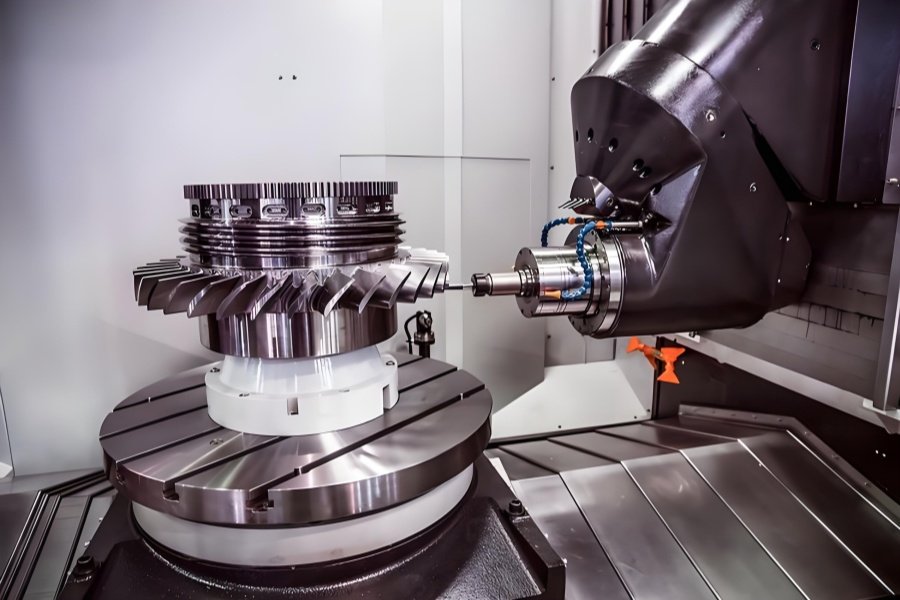
When people search for titanium milling services, they are usually looking for shops that specialize in milling titanium alloys, because generic machine shops often lack the expertise, tooling, or equipment to do it efficiently.
Titanium Turning (CNC Lathe)
Turning is used for cylindrical or round parts: shafts, bushings, rings, fittings. Titanium turning is generally faster and less expensive than milling because the cutting action is more continuous and tool wear is more predictable.
Cost considerations:
- CNC turning centers are often cheaper to run than milling machines
- Tool life in turning is longer than in milling because of continuous cutting
- Complex geometries still require live tooling or secondary milling operations
Titanium Grinding
For ultra-precision surfaces or very tight tolerances, surface grinding or cylindrical grinding may be required. Titanium grinding is slow and generates a lot of heat, making it one of the most expensive secondary operations.
Wire EDM (Electrical Discharge Machining)
For extremely complex internal geometries or very hard titanium alloys, wire EDM can be used. It is slow but produces burr-free, stress-free parts with tight tolerances. However, it is also one of the most expensive machining processes, expect to pay a premium.
In summary: If you can design your part to be turned instead of milled, you will save money. If you can simplify the geometry to avoid deep pockets, thin walls, or tight tolerances, you will save even more. Designing for manufacturability (DFM) is the single most effective way to reduce titanium machining costs.
How to Reduce Titanium Machining Costs
Now that you understand what drives the cost up, let us talk about how to bring it down. These strategies are used by experienced engineering teams and procurement professionals to get the most value from titanium machining services.
Design Tips: Design for Manufacturability (DFM)
The cheapest titanium part is the one that takes the least time to machine. Here are the most impactful DFM principles:
Avoid deep pockets and thin walls.
Deep pockets require long, slender tools that vibrate and wear quickly. Thin walls are prone to chatter and deformation. If your design allows, add corner radii that match standard tool diameters (for example, use 3 mm or 6 mm radii instead of 0.5 mm).
Use the largest possible tolerances.
Every decimal place you tighten costs you money. If a dimension only needs to be plus or minus 0.1 mm, do not specify plus or minus 0.01 mm. Work with your machinist to identify which dimensions are truly critical and relax everything else.
Minimize the number of setups.
A part that can be fully machined in one setup on a 3-axis mill is much cheaper than a part that requires 5 setups across multiple machines. Where possible, design features so they can all be reached from one side.
Standardize hole sizes and threads.
Using standard drill sizes and standard thread pitches reduces tool changes and eliminates the need for custom tooling. If you are designing a family of parts, try to reuse the same hole sizes across all of them.
Consider 3D printing for complex geometries.
For very complex internal channels, lattice structures, or lightweighting features, additive manufacturing (3D printing) in titanium can actually be cheaper than CNC machining. The tradeoff is surface finish and accuracy, but for many aerospace and medical applications, it is worth considering.
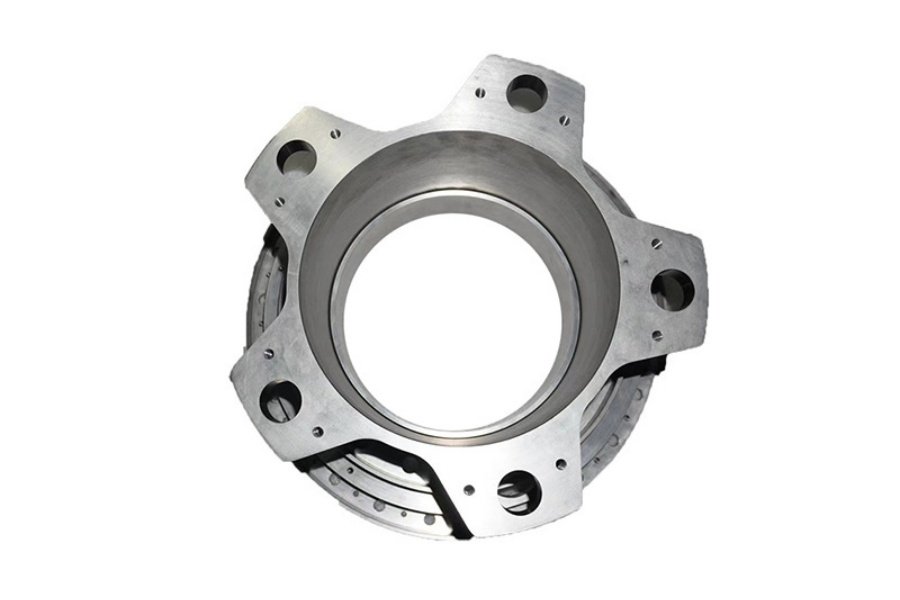
Choose the Right Titanium Alloy
Not all titanium alloys are equally expensive or equally difficult to machine. Choosing the right alloy for your application can save you 20 to 40% on material and machining costs.
| Alloy | Typical Use | Machinability | Relative Cost |
| Grade 2 (Commercially Pure) | Corrosion-resistant parts, medical | Better than Grade 5 | Lower |
| Grade 5 (Ti-6Al-4V) | Aerospace, automotive, general | Poor (hardest to machine) | Higher |
| Grade 7 (Ti-0.15Pd) | Chemical processing | Similar to Grade 2 | Higher (premium alloy) |
| Grade 23 (Ti-6Al-4V ELI) | Medical implants, fracture fixation | Similar to Grade 5 | Higher |
If your application does not require the full strength of Grade 5, Grade 2 titanium is significantly cheaper and easier to machine. For many marine, chemical, and decorative applications, Grade 2 is more than sufficient.
Work with Experienced Titanium Machining Services
This might sound like a sales pitch, but it is true: working with shops that specialize in titanium saves you money. Here is why:
They know the right cutting parameters. A shop that machines titanium every day knows exactly what feeds, speeds, and coolant strategies work best for each alloy. They will not waste hours experimenting or scrapping parts because they used the wrong settings.
They have the right equipment. Titanium machining requires rigid machines with high torque spindles, through-tool coolant delivery, and powerful chip evacuation systems. A generic machine shop trying to run titanium on a light-duty mill will struggle with tool life, surface finish, and cycle time.
They can optimize your design. Experienced titanium machining services offer DFM feedback as part of the quoting process. They will flag features that are unnecessarily expensive and suggest alternatives that meet your functional requirements at lower cost.
They buy material in bulk. Specialist shops purchase titanium bar and sheet in large quantities, which means they get better material pricing, and pass some of that savings to you. Smaller shops that only buy titanium occasionally pay premium prices for small orders.
When evaluating titanium machining services, ask these questions:
- How many years have you been machining titanium?
- What titanium alloys do you regularly work with?
- Do you have in-house CMM inspection?
- Can you provide mill test reports (MTRs) with every order?
- What is your typical lead time for titanium parts?
The right partner will not just machine your parts, they will help you engineer them to be more cost-effective.
Is Titanium Machining Worth the Cost?
After all this talk about expense, you might be wondering: Is titanium even worth it?
The answer depends on your application. Titanium is expensive, but it is also irreplaceable in certain use cases.
When Titanium Is Worth Every Penny

- Aerospace components: The strength-to-weight ratio of titanium is unmatched. Every kilogram saved in an aircraft translates to millions of dollars in fuel savings over its service life.
- Medical implants: Titanium is biocompatible, osseointegrative, and corrosion-resistant. No other material can match its performance in the human body.
- Marine and offshore applications: Titanium resists saltwater corrosion better than any stainless steel, making it ideal for propellers, heat exchangers, and underwater housings.
- High-performance racing: In Formula 1, MotoGP, and aerospace racing, weight reduction is everything. Titanium valve springs, connecting rods, and fasteners are standard.
- Chemical processing: Titanium’s resistance to chloride and acid corrosion makes it essential for heat exchangers, reactors, and piping in chemical plants.
When You Might Want to Choose a Cheaper Alternative
- If weight is not critical: If your part does not benefit from titanium’s low density, stainless steel or aluminum might be more cost-effective.
- If corrosion resistance is moderate: For mild environmental conditions, coated steel or marine-grade aluminum may be sufficient.
- If volume is high: For mass-produced consumer products, titanium’s material cost may be prohibitive. Consider aluminum, magnesium, or engineering plastics instead.
- If strength requirements are low: Decorative or non-structural parts rarely need titanium’s mechanical properties.
The key is to evaluate total cost of ownership, not just upfront machining cost. A titanium part that weighs 50% less than a steel equivalent might save your customer thousands of dollars in operating costs over the product’s lifetime.
Conclusion
Titanium machining is expensive, there is no way around it. The material itself costs 10 times more than aluminum, tool life is a fraction of what you get with steel, and the slow cutting speeds required for titanium turn every project into a test of patience.
But expensive does not mean wasteful. By understanding the cost drivers, optimizing your design for manufacturability, choosing the right alloy, and partnering with experienced titanium machining services, you can significantly reduce your project costs while still benefiting from titanium’s unique properties.
The most important takeaway: Start the conversation early. Do not wait until your drawings are finalized to involve your machining partner. The earlier they can provide DFM feedback, the more money you will save. A 10-minute conversation during the design phase can save you thousands of dollars in machining costs later.
If you are planning a project that involves titanium, reach out to a specialist machining service today. They will help you navigate the material selection, optimize your design, and give you an accurate quote that reflects the true cost of titanium machining, no surprises, no hidden fees.
Ready to start your titanium machining project? Contact XML CNC today for a free quote and DFM review.