In modern precision manufacturing, CNC mass production, automotive parts, aerospace, and electronic heat dissipation industries, aluminum blocks (including aluminum alloy sheets, bars, and pre-cut blanks) are one of the most widely used foundational raw materials.
However, procurement managers and design engineers often find aluminum block prices highly volatile. Costs fluctuate daily with commodity market trends, and quotations for different alloy grades, tempers (such as T6 vs T651), and suppliers can vary multiple times. The simple “price per kilogram” quotation hides a complex cost system involving smelting processes, alloy ratios, heat treatment, stress relief, and supply chain premiums.
This article thoroughly analyzes the underlying pricing logic and professional procurement strategies for aluminum blocks from five core dimensions: upstream commodity pricing mechanisms, alloy grade performance matrix, heat treatment and stress relief processes, recycled aluminum economics, and comprehensive CNC machining cost optimization.
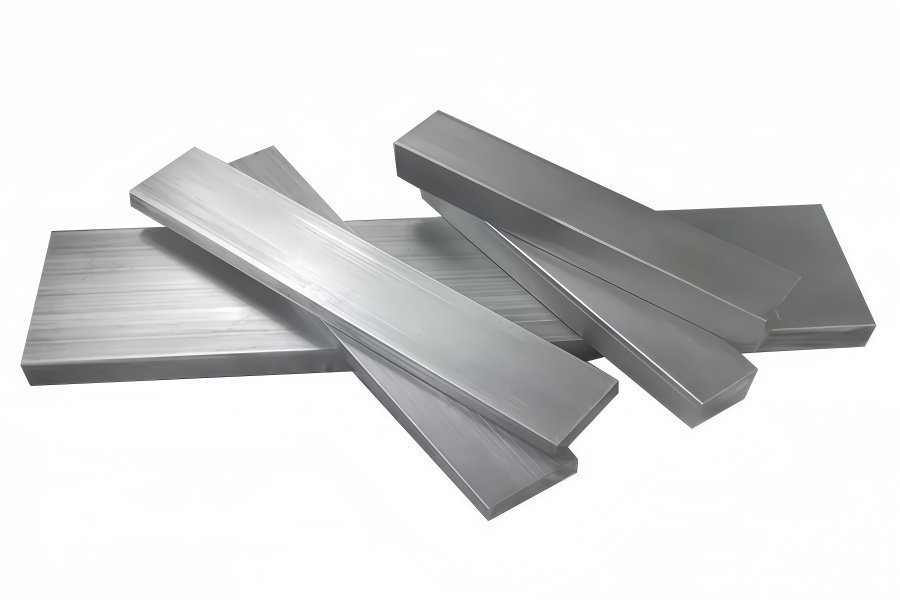
1. Core Formula for Aluminum Block Procurement Cost Breakdown
In B2B procurement and component machining pricing, the final unit cost of industrial aluminum blocks follows a clear structural formula:
Aluminum Block Unit Price (USD/kg) = (Primary Aluminum Spot Benchmark Price + Alloy/Temper Premium + Heat Treatment & Processing Fee) × (1 + Cutting Loss Rate) + Logistics & Packaging Cost
Full Composition of Aluminum Block Total Cost
Spot Benchmark Price: Linked to real-time LME, SHFE, SMM, and Yangtze Nonferrous Metal spot prices
Alloy & Ingot Premium: Additional cost for customized alloy composition and casting difficulty
Temper & Heat Treatment Cost: Fees for T6/T651 processing, UT non-destructive testing, and stress relief
Logistics, Loss & Management Fees: Sawing, transportation, packaging, and tax expenses
1.1 Primary Aluminum Spot Benchmark Price
The base price of electrolytic aluminum is determined by global and regional commodity exchanges, including the London Metal Exchange (LME), Shanghai Futures Exchange (SHFE), and domestic spot platforms such as SMM and Yangtze Nonferrous Network.
Energy Cost Transmission: Electrolytic aluminum production is extremely energy-intensive, consuming approximately 13,000 to 13,500 kWh of electricity per ton. Therefore, fluctuations in coal, natural gas, and hydropower prices (affected by wet and dry seasons in Yunnan, Qinghai, and other hydropower bases) directly and rapidly drive changes in aluminum benchmark prices.
Carbon Emission & Green Aluminum Premium: With the implementation of the EU CBAM (Carbon Border Adjustment Mechanism), “green aluminum” electrolyzed by clean energy (hydropower, photovoltaic power) carries an additional low-carbon premium compared with traditional coal-powered aluminum.
1.2 Alloying & Melting Premium
Pure 1xxx series aluminum has extremely low strength and requires additional alloying elements such as copper, magnesium, zinc, silicon, and manganese for industrial applications. The market price of additive elements and casting difficulty form the secondary cost premium:
High-zinc and high-copper alloys (7xxx series) increase raw material costs significantly. Meanwhile, these grades are prone to segregation and cracking during smelting and casting, resulting in low yield rates and substantial price premiums.
Magnesium-silicon alloys (6xxx series) feature mature production technology, large capacity, and relatively low alloy premiums.
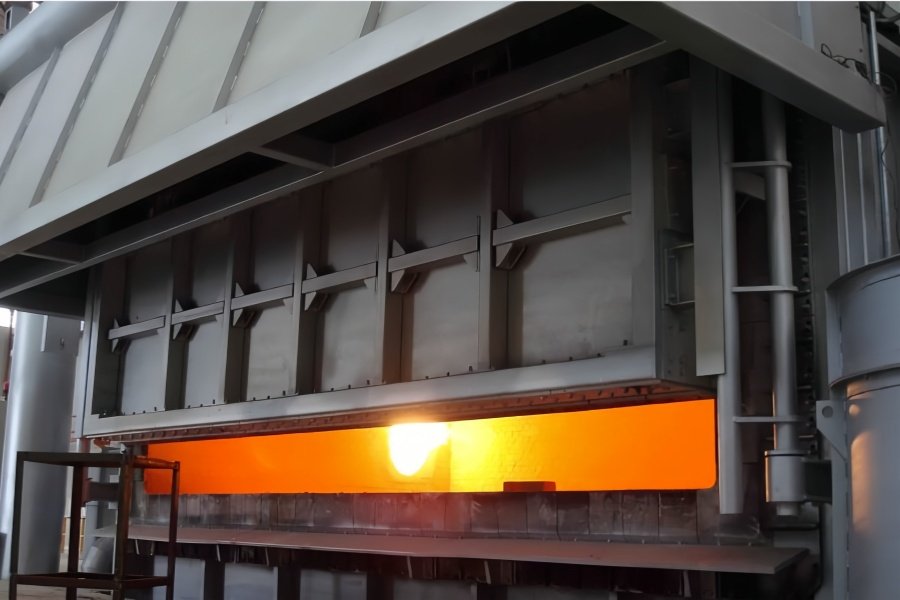
1.3 Rolling, Forging & Stress Relief Heat Treatment
Temper Processing Differences: Annealed (O-state) aluminum requires further solution heat treatment and artificial aging to achieve T6 temper, increasing equipment and energy consumption costs.
T651 / T7451 Pre-Stretching Stress Relief: This is the core distinguishing feature of precision CNC-grade aluminum blocks. Quenched aluminum sheets retain high internal residual stress. Without 1.5%–3% permanent pre-stretching deformation, aluminum blocks will severely warp and deform during hollow CNC machining. Although T651 material costs 5%–8% more per kilogram than standard T6, it reduces machining scrap rates by over 20%.
UT Ultrasonic Testing: Aerospace and semiconductor-grade aluminum blocks require Grade A/B ultrasonic non-destructive testing to eliminate internal pores, inclusions, and shrinkage cavities, adding professional inspection costs.
2. Common Aluminum Alloy Grades: Price, Performance
Different aluminum grades feature huge price gaps. The following matrix compares the core performance, machinability, surface effect, price premium, and typical applications of six mainstream industrial aluminum alloys:
1060 / 1100 (Pure Aluminum)
Main Elements: Pure aluminum (purity ≥99.0%)
Tensile Strength: 75–105 MPa | Yield Strength: 35–55 MPa
CNC Machinability: Poor (easy tool adhesion) | Anodizing Effect: Good
Price Index: Benchmark (1.0x) | Applications: Electrical busbars, heat sinks, chemical containers
5052-H32 / 5083 (Al-Mg Alloy)
Main Elements: Aluminum-Magnesium (Mg 2.5%–4.5%)
Tensile Strength: 210–300 MPa | Yield Strength: 110–200 MPa
CNC Machinability: Average | Anodizing Effect: Excellent (superior corrosion resistance)
Price Index: Low-Medium (1.15x–1.3x) | Applications: Marine structures, liquid tankers, automation enclosures
6061-T6 / T651 (Al-Mg-Si Alloy)
Main Elements: Aluminum-Magnesium-Silicon
Tensile Strength: 290–310 MPa | Yield Strength: 240–270 MPa
CNC Machinability: Excellent | Anodizing Effect: Perfect
Price Index: Cost-performance King (1.25x–1.4x) | Applications: CNC precision parts, automation jigs, mechanical structural components
6082-T6 (High-Silicon Al-Mg-Si-Mn Alloy)
Main Elements: Aluminum-Magnesium-Silicon-Manganese (high silicon content)
Tensile Strength: 310–340 MPa | Yield Strength: 260–290 MPa
CNC Machinability: Good | Anodizing Effect: Good
Price Index: Medium (1.3x–1.5x) | Applications: European standard high-load structural parts, automotive axles
7075-T651 (Al-Zn-Mg-Cu Alloy)
Main Elements: Aluminum-Zinc-Magnesium-Copper
Tensile Strength: 530–570 MPa | Yield Strength: 470–500 MPa
CNC Machinability: Excellent | Anodizing Effect: Medium (prone to color difference)
Price Index: High Premium (1.8x–2.5x) | Applications: Aerospace, high-strength molds, military parts, high-end bicycle frames
2024-T3 / T4 (Al-Cu-Mg Alloy)
Main Elements: Aluminum-Copper-Magnesium
Tensile Strength: 430–470 MPa | Yield Strength: 280–320 MPa
CNC Machinability: Good | Anodizing Effect: Average
Price Index: High Premium (1.7x–2.2x) | Applications: Aircraft skin structures, high-fatigue-resistance fasteners
3. Primary Aluminum vs Recycled Aluminum: Cost & Quality Trade-off
Primary aluminum and recycled aluminum have essential differences in cost, purity, and mechanical performance, directly affecting part quality and service life.
Primary Aluminum (Virgin Aluminum)
Produced from electrolytic aluminum ingots
100% standard energy consumption for production
High purity, zero internal inclusions
Stable anodizing performance and consistent mechanical properties
Suitable for precision appearance parts, aerospace components, and high-reliability structural parts
Recycled Aluminum (Secondary Aluminum)
Remelted from waste aluminum materials
Remelting energy consumption is only 5% of primary aluminum
10%–20% lower raw material cost
Prone to accumulated impurity elements (Fe, Si)
Unstable anodizing, easy to form black spots and streaks
Mainly used for die casting and ordinary non-appearance structural parts
Procurement Selection Rules
Must use primary aluminum: Precision CNC appearance parts, anodized components, aerospace load-bearing parts (prefer T651 tempered sheets from top-tier aluminum factories).
Optional recycled aluminum: Hidden internal structural parts, ADC12 die-casting parts, ordinary brackets, reducing procurement costs by 10%–15% reasonably.
4. Hidden Costs From Aluminum Blanks to Finished CNC Parts
Most procurement teams only focus on raw material prices while ignoring hidden engineering costs in the machining process, including material removal loss, deformation scrap, and surface treatment failure.
4.1 Material Removal Rate & Chip Recycling Value
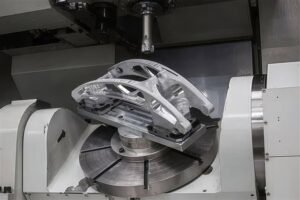
Precision hollow cavities and box parts often have a material removal rate of 70%–80%. For example, a 10kg aluminum blank may only produce a 2kg finished part, generating 8kg of aluminum chips.
Clean, single-grade aluminum chips without mixed grease can be recycled at 60%–70% of the original material price. Standardized chip classification and recycling systems can reduce net material costs by 5%–10% indirectly.
4.2 Residual Stress & Warpage Scrap Risk
Untempered ordinary aluminum blocks retain massive internal residual stress. After large-area deep CNC cutting, stress balance breaks, causing severe distortion and arching. This leads to dimensional out-of-tolerance scrap and additional manual leveling processes.
Optimization Solution: Specify T651 for aluminum sheets and T6511 for aluminum bars during procurement. The 5%–8% higher unit price reduces machining scrap rates by over 20%.
4.3 Surface Treatment Adaptation Cost
7xxx series alloys with high copper and zinc content cannot form dense and uniform anodized films like 6061. Hard anodizing costs are significantly higher. Blindly selecting 7075 for ordinary anti-corrosion protection will increase both material and processing costs unnecessarily.
5. B2B Procurement & Material Selection Optimization Strategies
Strategy 1: Precise Selection Based on Working Conditions, Avoid Over-Engineering
Non-load-bearing covers & housings: Choose 5052-H32, with sufficient strength, excellent bending performance, and lower cost than 6061.
General automation jigs & structural parts: Standard 6061-T651, featuring excellent machinability and flat anodized surface.
High-load & high-frequency moving parts: Adopt 7075-T651; replace with cost-effective 6082-T6 for medium-strength scenarios with limited budget.
Strategy 2: Optimize Blank Specifications to Reduce Cutting Loss
Confirm standard sheet and bar specifications (10mm, 12mm, 15mm, 20mm thickness) with machining suppliers before procurement. Design part thickness to match standard blank sizes with a 1–2mm machining margin, avoiding purchasing over-thick blanks for thin parts and reducing redundant cutting time and material waste.
Strategy 3: Hedge Aluminum Price Fluctuation Risks for Bulk Orders
For large-batch and long-delivery-cycle projects, adopt a contract pricing mechanism based on real-time SMM/Yangtze aluminum spot prices. Set a ±5% fluctuation buffer range; prices remain unchanged within the range and adjust proportionally beyond the range, effectively avoiding market price surge risks.
Strategy 4: Verify Supplier Certifications & Factory Reports
For high-grade aluminum procurement, require suppliers to provide official MTC (Mill Test Certificate) and ultrasonic testing reports. Verify chemical composition ratios (Si, Mg, Cu, Zn) and mechanical tensile/yield properties to prevent counterfeit non-stress-relieved blanks.
6. FAQ
Q1: Why do quotations for the same grade (e.g., 6061-T651) vary by more than 20% among different suppliers?
A1: Three core factors cause the price gap: 1. Raw material source: top-tier primary aluminum ingot smelting vs small-factory recycled remelting; 2. True T651 full-plate pre-stress stretching vs ordinary aging treatment; 3. Internal compactness: high-quality plates have no internal shrinkage cavities, while low-cost materials easily produce sand holes during deep CNC cutting and cause scrap.
Q2: Why is 7075 much more expensive than 6061?
A2: First, 7075 contains high proportions of expensive metal elements (Zn 5.1%–6.1%, Mg 2.1%–2.9%, Cu 1.2%–2.0%). Second, 7075 is prone to casting and heat treatment cracks, with a much lower production yield than 6061. Third, aerospace and high-precision mold applications require strict flaw detection and consistent mechanical performance, increasing overall production and quality control costs.
Q3: How to visually verify whether an aluminum block has completed professional T651 stress relief?
A3: Perform single-sided large-area grooving (removing over 50% of the blank thickness) on a CNC machine. If the blank shows obvious concave or convex warpage (warpage > 0.5mm) after cutting, the internal residual stress is not completely eliminated, indicating unqualified or insufficient pre-stretching treatment.
Q4: Which pricing method is more cost-effective, per kg or per piece?
A4: Standard large sheets/complete bars: Priced per kg is more cost-effective, allowing flexible nesting and residual material reuse. Small-batch, special-shaped, extra-thick blanks: Priced per piece is better, avoiding the capital occupation of purchasing full-size plates and bearing supplier sawing loss costs.
Conclusion
Aluminum block pricing is not determined by a single commodity spot price but is a comprehensive result of material science, heat treatment technology, manufacturing tolerance standards, and supply chain competition. For enterprise procurement and engineering teams, mastering aluminum cost composition and performance differences avoids over-engineering or insufficient quality in material selection, reduces CNC machining scrap rates from the source, and optimizes the total cost of ownership (TCO) of precision manufacturing.