The aerospace industry operates on the strictest standards of precision, reliability and safety in all of manufacturing. Every component inside an aircraft, rocket or satellite must survive extreme temperature swings, intense vibration, high pressure and repeated cyclic loading over decades of service. For these parts, even the smallest dimensional error, surface defect or material weakness can lead to catastrophic failure.
This is why 5-axis CNC machining has evolved from a niche premium process into an indispensable manufacturing method for critical aerospace components. While basic 3 axis cnc mill equipment remains widely used for simple parts, it cannot meet the geometric complexity, tight tolerance and material performance demands of modern aerospace engineering.
In this comprehensive guide, we break down exactly why aerospace parts depend on five-axis technology, how it outperforms 3-axis and 4-axis alternatives, which components require it, the materials it processes, and the quality standards that govern its use. Whether you are an aerospace design engineer, procurement specialist or product developer, understanding the role of 5-axis machining is essential to selecting the right manufacturing partner for your project.
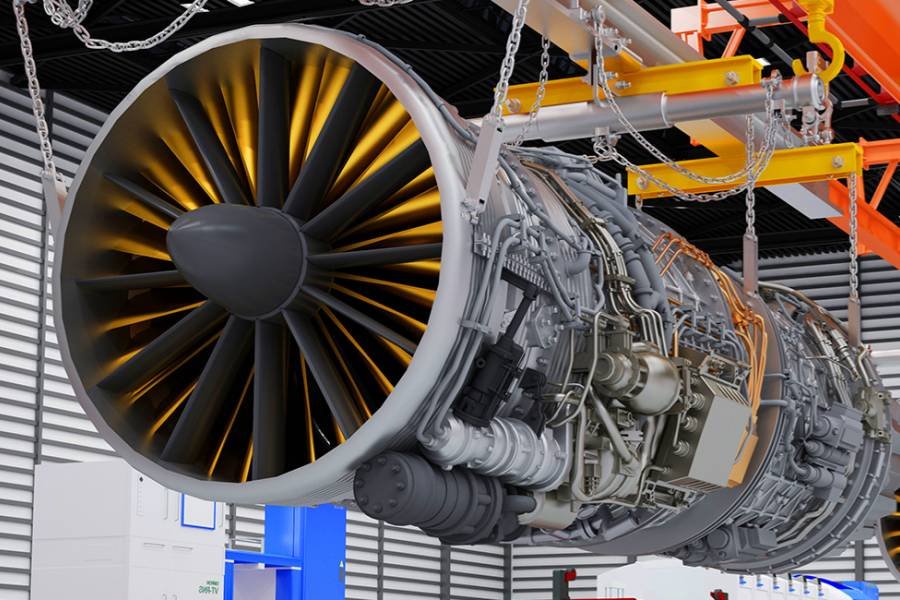
What Is 5-Axis CNC Machining, and How Does It Work?
To understand why aerospace parts rely on this technology, we first need to define what sets it apart from standard CNC equipment.
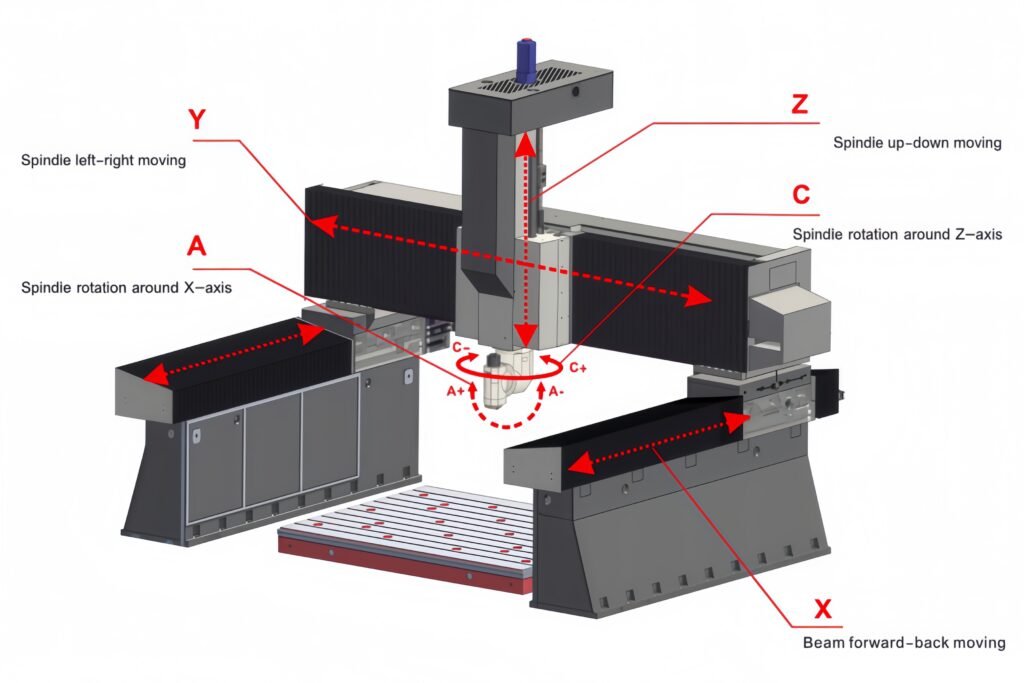
A conventional 3 axis cnc mill moves the cutting tool along three linear axes: X, Y and Z. This configuration works well for flat parts, simple pockets and 2.5D features, but it cannot reach angled surfaces, undercuts or complex curved geometries without repositioning the workpiece multiple times.
A 4 axis cnc machine adds a single rotary axis (typically the A-axis), which rotates the part around the X axis. This is useful for cylindrical parts, circumferential drilling and simple curved features, but it still has severe limitations when it comes to full 3D complex geometries.
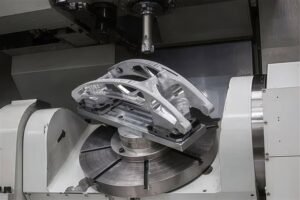
True 5-Axis CNC Machining adds two independent rotary axes (commonly A and C, or B and C) that work simultaneously with the three linear axes. There are two primary operating modes:
- 3+2 axis (positional 5-axis): The rotary axes tilt the workpiece or tool to a fixed angle, then the linear axes perform milling. This is ideal for multi-sided drilling, tapping and pocketing, and replaces multiple setups on a 3-axis machine.
- Simultaneous 5-axis machining: All five axes move continuously during cutting. This allows the tool to follow complex 3D contours without interruption, producing smooth, accurate surfaces with no witness lines between setups.
It is this simultaneous capability that makes the technology irreplaceable for aerospace. Unlike incremental upgrades from 3 axis cnc to 4 axis cnc, 5-axis machining unlocks an entirely new category of part geometries that were previously impossible or prohibitively expensive to manufacture.
What Aerospace Parts Require 5-Axis Machining?
Virtually every complex structural and rotating component in modern aircraft and spacecraft requires five-axis production. Below are the most common 5 axis cnc parts in aerospace that cannot be reliably manufactured any other way.
Turbine Blades and Vanes
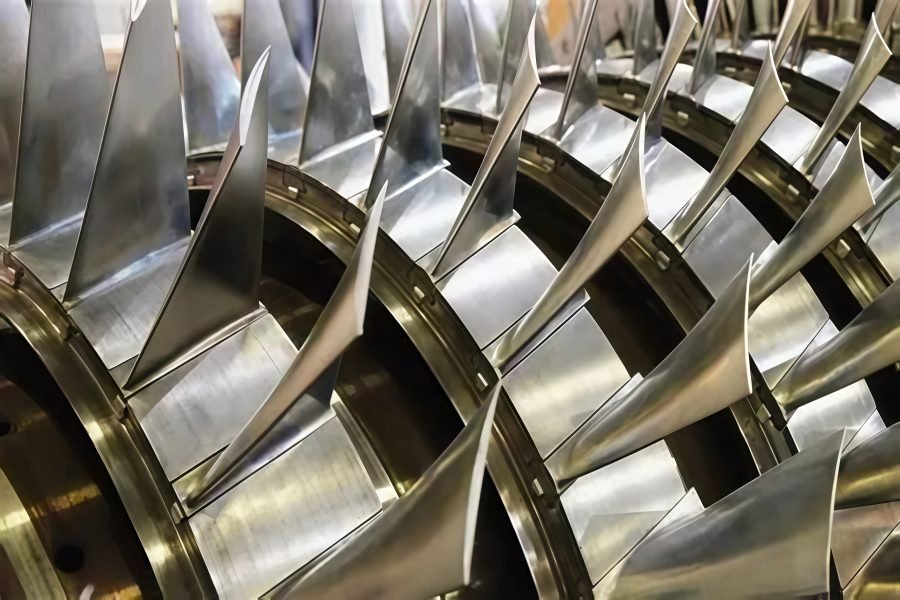
Gas turbine engine blades operate at temperatures exceeding 1,000°C while rotating at thousands of RPM. Their complex airfoil shapes, thin trailing edges and internal cooling channels require continuous, smooth 3D machining. Simultaneous 5-axis machining produces the precise aerodynamic profiles and surface finishes required for optimal engine efficiency and fatigue life.
Blisks (Integrally Bladed Rotors)
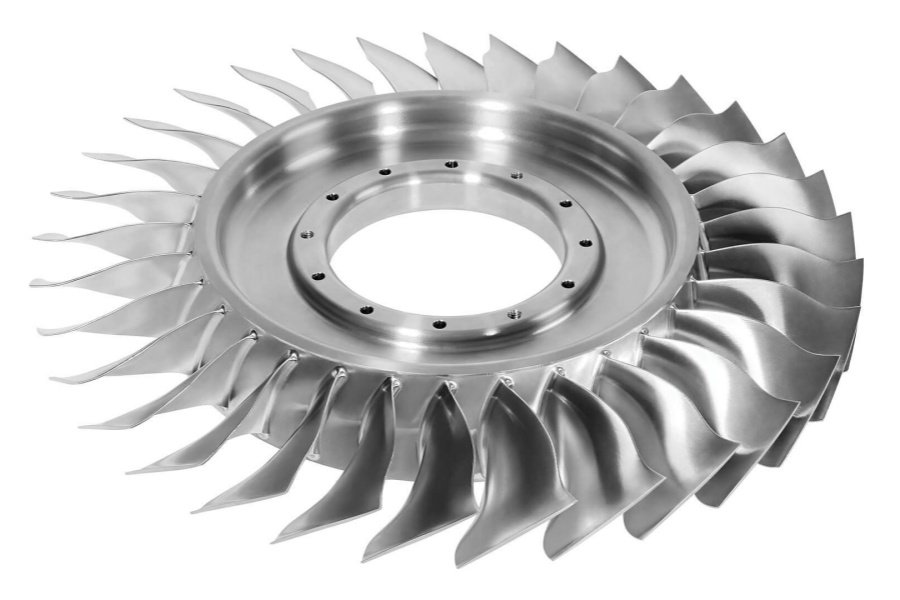
A blisk combines the disk and blades into a single monolithic component, eliminating the weight and assembly risk of separate blade attachments. Manufacturing blisks requires machining deep, narrow channels between tightly packed airfoils. Only aerospace blisk 5-axis machining can reach these recessed surfaces while maintaining consistent wall thickness and surface quality.
Impellers and Diffusers
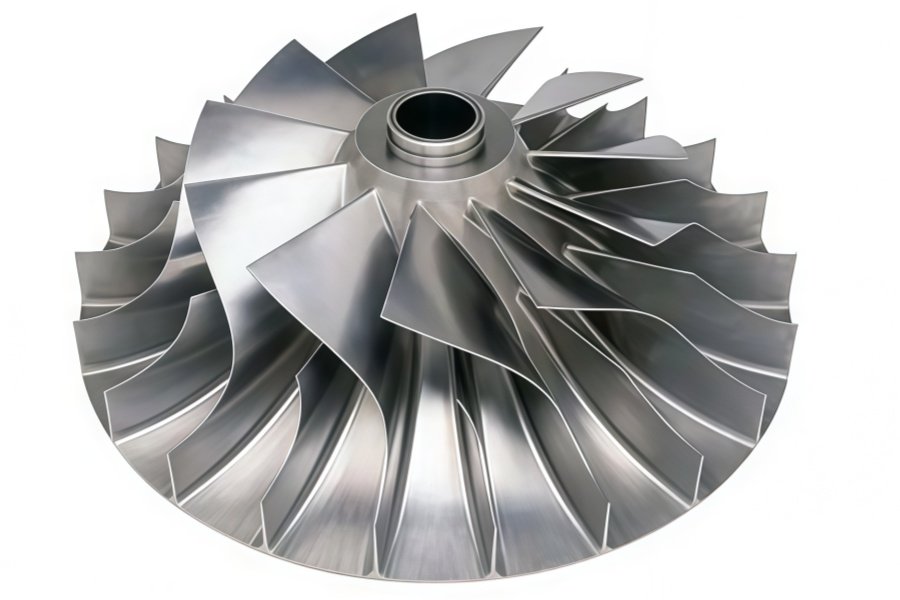
Centrifugal impellers used in auxiliary power units, environmental control systems and fuel systems feature complex curved blades and twisted flow paths. aerospace impeller 5-axis machining delivers the hydrodynamic accuracy these parts demand, with smooth blade surfaces that maximize efficiency and minimize turbulence.
Monolithic Structural Components
Large integrated airframe structures — such as wing ribs, bulkheads and fuselage frames — are increasingly machined from a single solid block of metal instead of being assembled from many smaller parts. These monolithic components reduce weight, eliminate fasteners and improve structural integrity. Producing them requires machining deep pockets, thin walls and angled features on all sides of the part, a job only 5-axis equipment can complete in a single setup.
Thin-Wall Aerospace Housings and Casings
Many aerospace enclosures, sensor housings and hydraulic casings feature extremely thin walls (often 0.5–2 mm) combined with complex internal features. thin wall aerospace parts 5-axis machining minimizes cutting forces and part deflection, preserving dimensional accuracy and avoiding the distortion that plagues 3-axis machining of thin-walled components.
Precision Brackets, Mounts and Manifolds
Even small aerospace parts — such as avionics brackets, sensor mounts and hydraulic manifolds — often have holes, ports and sealing surfaces at multiple compound angles. On a 3-axis machine, these would require dozens of setups and custom fixtures. 5-axis machining completes all features in one clamping, delivering perfect alignment between features and drastically reducing lead time.
Core Advantages of 5-Axis Machining for Aerospace Components
The reason the aerospace industry has universally adopted five-axis technology goes far beyond simply “making complex shapes.” It delivers measurable, mission-critical improvements in quality, consistency, performance and cost.
1. Single-Setup Machining Eliminates Cumulative Error
Every time a part is unclamped, repositioned and re-fixtured on a machine, small positioning errors are introduced. On a 3-axis mill, a complex aerospace part might require 5–10 separate setups. Each setup adds a few microns of error, and over many operations the total error can easily exceed aerospace tolerance limits.
single setup 5-axis machining aerospace components are machined completely in one clamping. This eliminates stacking error, ensures perfect feature-to-feature alignment, and produces parts that consistently meet GD&T requirements. For aerospace parts where concentricity, perpendicularity and position tolerances are measured in microns, this reduction in cumulative error is non-negotiable.
2. Full Access to Complex Geometries and Undercuts
Aerospace design is driven by aerodynamics, structural efficiency and thermal performance — not by manufacturing convenience. This results in parts with compound curves, undercuts, deep cavities and angled surfaces that are impossible to reach with a fixed 3-axis spindle.
5-axis machines tilt the tool or workpiece to maintain optimal cutting access across the entire part geometry. The tool can approach the workpiece from virtually any angle, machining undercuts, back faces and internal features that would be completely inaccessible on a 3 or 4 axis machine. This design freedom is why complex geometry aerospace components are almost exclusively produced on five-axis equipment.
3. Unmatched Tight-Tolerance Consistency
Aerospace parts routinely require dimensional tolerances of ±0.005 mm, surface finishes better than Ra 0.8 μm, and strict compliance with geometric dimensioning and tolerancing (GD&T) specifications. Achieving this level of precision consistently across production batches is extremely difficult with multi-setup 3-axis machining.
tight tolerance aerospace CNC machining on 5-axis equipment delivers far greater process stability. Continuous 5-axis motion maintains constant chip load and optimal cutting conditions, reducing tool deflection and variation. The result is tighter, more repeatable tolerances part after part — an absolute requirement for interchangeable aerospace components.
4. Superior Thin-Wall Part Integrity
Thin-walled components are notoriously difficult to machine because cutting forces cause the part to deflect, resulting in dimensional errors, chatter marks and even part breakage. This is a major challenge in aerospace, where lightweight thin-wall structures are used extensively to save weight.
5-axis machining solves this problem by allowing the tool to engage the workpiece at the ideal angle, reducing radial cutting forces and minimizing deflection. Advanced 5-axis strategies also support high-speed trochoidal milling and constant engagement cutting, which further reduce heat and distortion. For thin wall aerospace parts 5-axis machining is the only reliable way to meet both weight and precision requirements.
5. Shorter Lead Times and Lower Total Cost
At first glance, 5-axis machine hourly rates are higher than 3-axis rates. But when you look at total production cost, five-axis machining is almost always more economical for complex aerospace parts.
By consolidating multiple setups, eliminating custom fixturing, reducing secondary operations and improving first-pass yield, 5-axis production cuts total lead times by 30–60% compared to 3-axis routing. Fewer setups also mean less labor, less inspection time and fewer opportunities for scrap. For low-to-medium volume aerospace production — the industry norm — the total cost per part is frequently lower with 5-axis machining.
Why 3-Axis and 4-Axis Machining Fall Short for Aerospace Parts
A common question is Can 3-axis CNC machine make aerospace parts? The answer is yes — but only for very simple, non-critical components. When it comes to performance-critical aerospace hardware, 3-axis and even 4-axis equipment have fundamental limitations.
Limitations of 3-Axis Machining
- Multiple setups = error and delay: Complex parts require many re-fixturing steps, introducing alignment errors and extending lead times.
- No undercut capability: Any feature with a draft angle or undercut cannot be machined without special fixtures or hand work.
- Poor surface finish on curves: 3-axis contouring uses step-over passes that create visible scallops on curved surfaces. These require manual polishing, which adds cost, introduces dimensional variation and can compromise fatigue strength.
- Thin wall distortion: Fixed-axis cutting creates high lateral forces that bend thin walls, making it nearly impossible to hold tight tolerances.
Limitations of 4-Axis Machining
4 axis cnc machines are a step up, but they still cannot match 5-axis capability:
- Only one rotary axis: 4-axis machines rotate around a single axis, making them suitable for cylindrical parts but not for full 3D contoured geometries.
- Limited angular access: Compound angles and multi-sided features still require multiple setups.
- Cannot machine blisks, impellers or blades: These parts require simultaneous motion in two rotary axes plus three linear axes — something a 4-axis machine cannot do.
The Clear Verdict for Aerospace
When comparing 5-axis vs 3-axis for aerospace parts, the distinction is not one of degree but of capability. 3-axis and 4-axis machines have their place for simple brackets, flat plates and secondary operations. But for any component with complex 3D geometry, tight tolerances or critical performance requirements, 5-axis machining is not a luxury — it is a technical necessity.
Key Aerospace Materials Processed by 5-Axis CNC Machining
Aerospace materials are chosen for their exceptional strength-to-weight ratio, high-temperature performance and corrosion resistance. Many of these materials are notoriously difficult to machine, and 5-axis technology plays a crucial role in processing them effectively.
Titanium Alloys (Ti-6Al-4V)
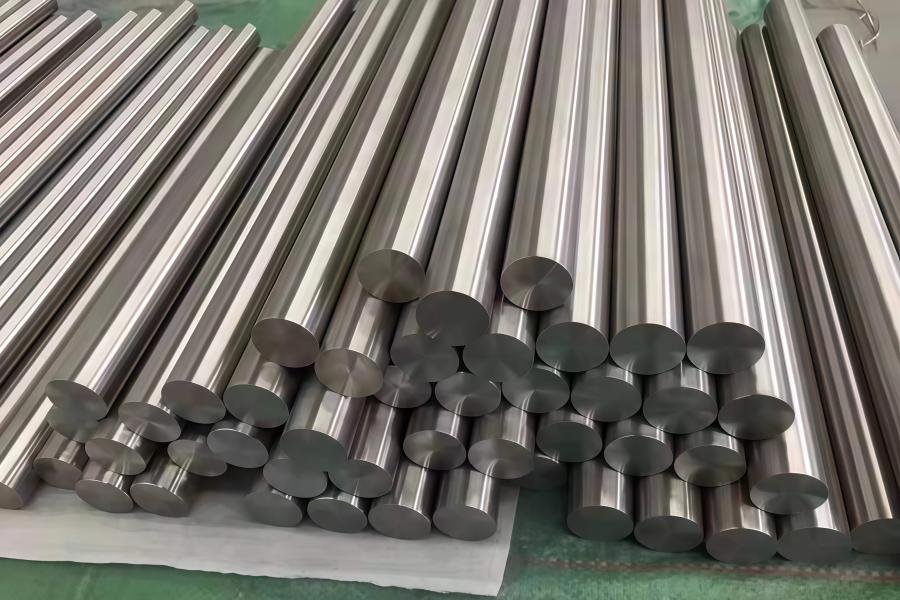
Titanium is the workhorse material of aerospace structural and engine components. It offers outstanding strength, corrosion resistance and fatigue performance at roughly half the weight of steel. However, titanium’s low thermal conductivity and high chemical reactivity cause rapid tool wear and work hardening during machining.
5-axis titanium machining aerospace applications benefit from optimized tool engagement angles. By continuously adjusting the cutting tool orientation, 5-axis machines maintain ideal chip thickness and reduce heat buildup, extending tool life and producing superior surface finishes. For Ti-6Al-4V 5-axis CNC machining aerospace components, this translates to lower tooling cost and higher part quality.
High-Strength Aluminum Alloys (7075, 6061)
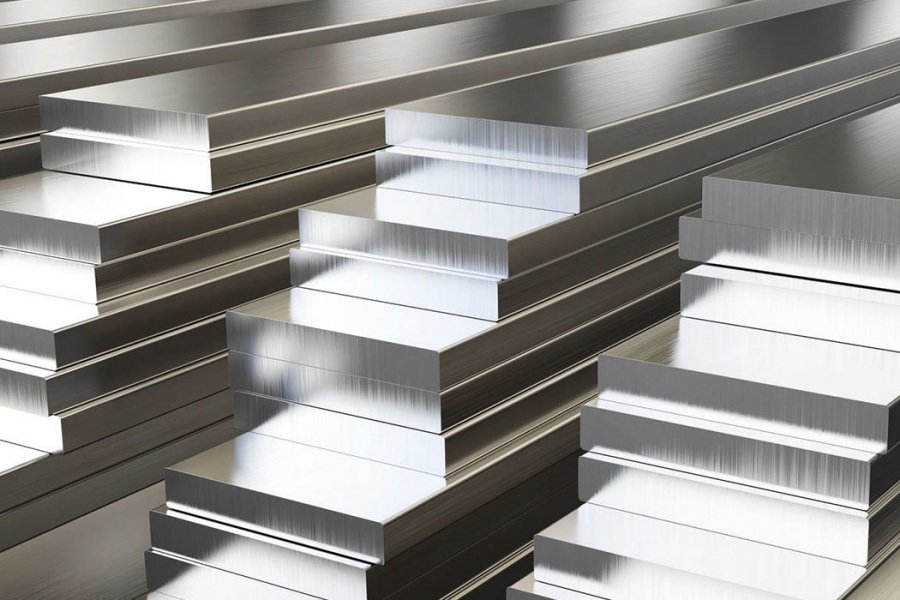
Aluminum alloys — especially 7075-T6 — are widely used for airframe structures, wing components and internal fittings due to their light weight and excellent machinability. Many of these parts are large monolithic structures with thin walls and deep pockets.
aerospace aluminum 7075 5-axis machining leverages high-speed spindle technology and simultaneous 5-axis motion to remove material quickly while minimizing part distortion. Large structural components that would require weeks of work on multiple 3-axis machines can be completed in a single setup on a large-format 5-axis mill.
Nickel-Based Superalloys (Inconel, Hastelloy)
Nickel-based superalloys such as Inconel 718 and Hastelloy X are designed for the hottest sections of gas turbine engines. They retain their strength at temperatures approaching their melting point, making them extremely difficult to cut.
Inconel aerospace 5-axis machining requires rigid machine construction, specialized tooling and precise control of cutting parameters. 5-axis simultaneous motion ensures consistent cutting engagement and avoids tool dwell marks that would cause premature part failure. This capability is essential for producing turbine blades, combustor components and other hot-section hardware.
Other Specialty Aerospace Materials
Beyond the big three, 5-axis machining is also used to process:
- Stainless steels (17-4 PH, 316L) for hydraulic and structural components
- Tool steels for landing gear and high-wear parts
- Engineering plastics (PEEK, Ultem) for lightweight interior and electrical components
- Advanced composites for secondary structures
Each material presents unique machining challenges, and the flexibility of 5-axis equipment allows manufacturers to optimize cutting strategies for each one.
Quality Standards: AS9100 and GD&T in Aerospace Machining
Aerospace manufacturing does not end with cutting metal. Every part must comply with strict quality management and traceability requirements. 5-axis machining aligns naturally with these industry standards.
AS9100 Aerospace Quality Management
AS9100 aerospace CNC machining is the global benchmark for aerospace quality. Based on ISO 9001 but with additional aerospace-specific requirements, AS9100 mandates strict process control, full traceability, risk management and continuous improvement.
5-axis machining supports AS9100 compliance through greater process repeatability, fewer manual operations and better digital traceability. Modern 5-axis machines integrate directly with manufacturing execution systems (MES), logging every parameter of every cut for full auditability — a requirement for all tier-1 and tier-2 aerospace suppliers.
GD&T (Geometric Dimensioning and Tolerancing)
Virtually all aerospace engineering drawings use GD&T to define form, orientation, location and runout tolerances. These geometric requirements are often more demanding than dimensional tolerances.
GD&T aerospace 5-axis machining excels at meeting complex geometric specifications. Because the part remains in a single setup, feature relationships such as perpendicularity, concentricity and profile tolerance are inherently more accurate. 5-axis machines also support in-process probing and automatic tool compensation, ensuring that GD&T requirements are met consistently across production runs.
Common Misconceptions About 5-Axis Aerospace Machining
Despite its widespread adoption in aerospace, several persistent misconceptions about 5-axis machining still lead to suboptimal manufacturing decisions.
Misconception 1: Only large aerospace parts need 5-axis machining
Reality: Size is irrelevant. Many of the most demanding 5 axis cnc parts in aerospace are small, intricate components such as valve bodies, sensor housings and actuator brackets. What matters is geometric complexity and tolerance requirements — not physical dimensions. A 20 mm part with 12 angled holes and internal features will benefit from 5-axis machining just as much as a 2-meter structural rib.
Misconception 2: 5-axis machining is always more expensive
Reality: Hourly machine rates are higher, but total part cost is often lower. When you factor in reduced setup time, fewer fixtures, less labor, higher yield and shorter lead times, 5-axis machining frequently delivers a lower total cost per part for complex aerospace components. The cost premium only applies to very simple parts that can be fully machined in one or two 3-axis setups.
Misconception 3: 3+2 axis machining is equivalent to full 5-axis
Reality: 3+2 (positional) machining is a powerful tool for multi-sided parts, but it is not the same as simultaneous 5-axis. 3+2 cannot produce smooth, continuous 3D contours — it creates faceted surfaces with witness lines between positions. For aerodynamic surfaces such as blades and impellers, only true simultaneous 5-axis machining delivers the required surface quality and performance.
Misconception 4: 5-axis workholding is not important
Reality: Workholding is every bit as critical as the machine itself. 5 axis workholding and 5th axis workholding solutions such as self-centering vises, dovetail fixtures and zero-point clamping systems are designed to maximize part accessibility while maintaining rigidity. Poor workholding negates the accuracy advantage of even the best 5-axis machine.
How to Select a Reliable 5-Axis Aerospace Machining Partner
Choosing the right manufacturing supplier is one of the most critical decisions for aerospace programs. Not all “5-axis shops” are equal, and aerospace work demands specialized expertise. Here is what to look for:
- Demonstrated aerospace industry experience: Look for a supplier with a track record of producing flight-qualified parts. Aerospace machining requires specific knowledge of materials, standards and documentation that general job shops do not possess.
- True simultaneous 5-axis capability: Verify that the shop has full 5-axis simultaneous machines, not just 3+2 positioning. For complex curved parts, this distinction is non-negotiable.
- AS9100 certification and inspection capability: AS9100 is the minimum baseline for aerospace suppliers. The shop should also have in-house CMM inspection, surface analysis and material verification capabilities.
- Engineering and DFM support: A good aerospace machining partner does more than just execute drawings — they help optimize designs for manufacturability, reducing cost and lead time without compromising performance.
- Scalability from prototype to production: Aerospace programs start with low-volume prototypes and ramp to mid-rate production. Your supplier should support both seamlessly.
As a professional aerospace CNC machining supplier Shenzhen with full 5-axis capability, we deliver custom aerospace 5-axis machined components to customers worldwide. Our engineering team works directly with your design staff to optimize parts for 5-axis production, and our AS9100-aligned quality system ensures every part meets aerospace standards.
Frequently Asked Questions
Q: Can 3-axis CNC machine make basic aerospace parts?
Yes, simple flat parts, brackets and plates with minimal angled features can be manufactured on 3-axis equipment. However, any component with complex 3D geometry, tight geometric tolerances or critical performance requirements will require 5-axis machining to meet aerospace specifications.
Q: Why use 5-axis machining for aerospace components instead of casting?
Casting is cost-effective for high-volume production of simple shapes, but most aerospace structural and engine components are produced in relatively low volumes with highly complex geometries. Machined forgings or bar stock processed by 5-axis CNC offer superior material properties, tighter tolerances and faster lead times for low-to-medium volume production. 5-axis machining also enables rapid design iteration without expensive tooling changes.
Q: What tolerances can 5-axis aerospace machining achieve?
Depending on part size and material, 5-axis aerospace machining can consistently hold dimensional tolerances of ±0.005 mm (0.0002 in) and profile tolerances down to ±0.01 mm. Exact capabilities depend on machine specification, part geometry and inspection methodology.
Q: Is 5-axis machining suitable for aerospace prototypes?
Absolutely — it is ideal for prototyping. 5-axis machining produces fully functional prototype parts directly from CAD files without any tooling, allowing aerospace engineers to test and iterate designs quickly. Prototypes machined on 5-axis equipment have the same material properties and geometric accuracy as production parts.
Q: How do I get a quotation for aerospace 5-axis parts?
To receive an accurate quote, provide 2D and 3D drawings, material specifications, quantity requirements, tolerance expectations and any special surface treatment or certification needs. The more detail you provide, the faster and more accurately your quote can be prepared.
Conclusion
Aerospace manufacturing is defined by uncompromising standards. Every part must be lighter, stronger, more precise and more reliable than the last. Meeting these demands requires manufacturing technology that can keep pace with engineering innovation — and that technology is 5-axis CNC machining.
From turbine blades and blisks to monolithic structural components and thin-wall enclosures, 5-axis machining delivers capabilities that simply cannot be replicated with 3-axis or 4-axis equipment. It reduces cumulative error through single-setup production, unlocks previously impossible geometries, delivers unmatched tolerance consistency and improves the structural integrity of difficult-to-machine materials.
For the aerospace industry, 5-axis machining is not a premium upgrade. It is the foundational manufacturing technology that makes modern high-performance aircraft and spacecraft possible.
Get Your Aerospace 5-Axis Parts Quotation
If you have aerospace components that require precision 5-axis manufacturing, we are here to help. As an experienced aerospace CNC machining supplier Shenzhen, we provide comprehensive 5 axis cnc machining services including prototype development, low-volume production and full-scale manufacturing support.
To get quotation for aerospace 5-axis parts, simply send your 2D/3D drawings and project requirements to our team. We will review your design, provide manufacturability feedback and deliver a detailed, competitive quotation within 24–48 hours.