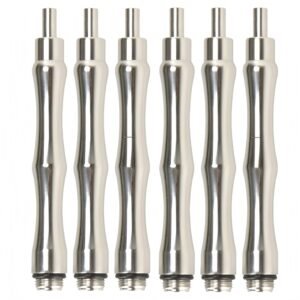
Titanium is one of the most valued engineering metals in modern manufacturing, recognized for its unmatched strength-to-weight ratio, exceptional corrosion resistance, and natural biocompatibility with the human body. From commercial aircraft frames and medical implants to high-performance exhaust systems and offshore industrial equipment, titanium enables performance that steel and aluminum cannot match.
For procurement teams, design engineers, and industry buyers, two questions remain central: How much does titanium cost? and What is titanium used for in real production? This guide answers both in full. We cover current titanium price per pound benchmarks, core factors that shape titanium cost, leading titanium uses across global sectors, titanium exhaust performance advantages, titanium metal alloy grade comparisons, practical guidance for welding titanium, and interesting facts about the element titanium.
By the end, you will have a clear, technically accurate understanding of titanium pricing and application potential to support sourcing and design decisions.
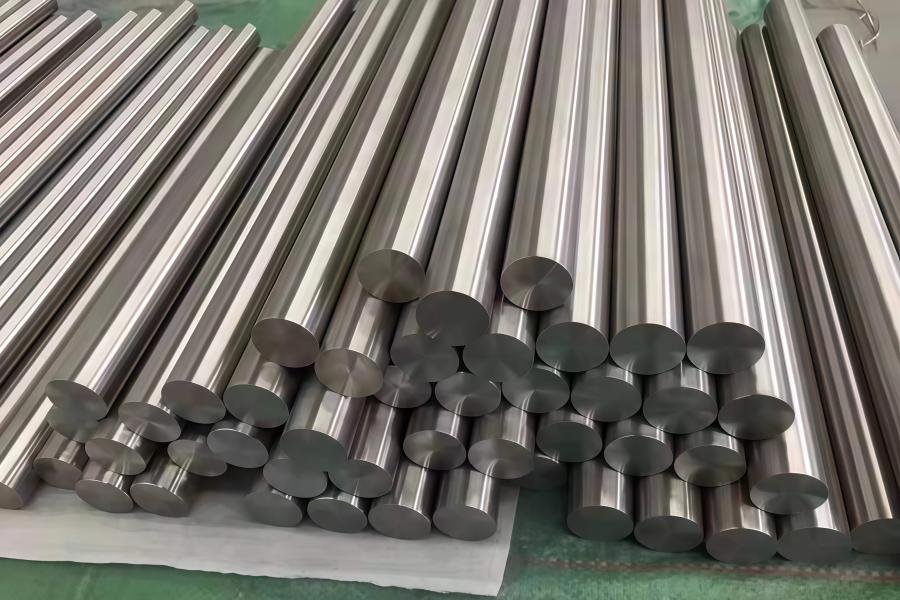
How Much Does Titanium Cost Per Pound?
When evaluating price on titanium, it is critical to understand that pricing varies widely by grade, form, and order volume. There is no single universal price, and costs can differ by 4x or more depending on the material specification.
As of 2026 market benchmarks, typical price of titanium ranges for bulk industrial quantities are as follows, quoted in US dollars per pound:
- Commercially Pure (CP) Titanium – Grades 1 to 4
- Grade 1 (maximum formability): $14 – $22 per pound
- Grade 2 (standard industrial grade): $16 – $26 per pound
- Grade 3 / Grade 4 (higher strength pure grades): $18 – $32 per pound These grades are used primarily for chemical processing, marine hardware, and architectural applications where corrosion resistance and formability are priorities.
- Wrought Titanium Alloys
- Ti-6Al-4V (Grade 5, industry standard): $28 – $48 per pound
- Ti-3Al-2.5V (Grade 9, tubing alloy): $32 – $52 per pound
- Ti-6Al-4V ELI (medical implant grade): $45 – $75 per pound Grade 5 accounts for over half of all titanium alloy consumption worldwide, and is the standard reference when discussing typical titanium price per pound.
- Specialty Forms and Finished Products
- Precision seamless tubing: $35 – $80 per pound
- Thin-gauge sheet and foil: $40 – $90 per pound
- Titanium powder for 3D printing: $60 – $150+ per pound
- Custom machined components: $100 – $300+ per finished pound
Note that these are bulk volume prices. Small quantity orders, custom sizes, aerospace or medical certified material, and rush delivery will all carry a premium. For prototype and low-volume work, it is common to pay two to three times the bulk titanium cost per pound.
Key Factors That Drive Titanium Cost
A common question is why titanium costs so much more than steel or aluminum, even though it is the 9th most abundant element in the Earth’s crust. The reason is not scarcity — it is the extreme difficulty of extracting and processing the metal.
Below are the primary factors that shape price on titanium globally:
1. Extraction and Refining Complexity
Titanium occurs naturally as oxide ores such as ilmenite and rutile, not as pure metal. Extracting pure titanium requires the Kroll process, a multi-step, energy-intensive batch method involving chlorination, distillation, and magnesium reduction under high temperature and inert atmosphere.
Unlike steelmaking or aluminum smelting, the Kroll process cannot be easily scaled into a continuous high-volume production line. This inherent inefficiency is the single largest reason base titanium cost is roughly 5x to 10x higher than stainless steel by weight.
2. Alloying and Melting Requirements
Producing titanium metal alloy adds additional cost. Alloys like Ti-6Al-4V require precise additions of aluminum, vanadium, and other elements, and must be melted under vacuum or inert atmosphere to prevent oxygen, nitrogen, and hydrogen pickup — all of which make the metal brittle.
Vacuum arc remelting (VAR), the standard for high-performance aerospace titanium, is slow and expensive. Multiple remelts are often required for uniform chemistry and structural integrity, further driving up price of titanium for critical applications.
3. Material Form and Processing Labor
Raw titanium sponge is the lowest-cost form of the metal, but has almost no direct industrial use. Every downstream step — pressing, forging, rolling, drawing, extruding, and machining — adds cost.
Thin sheet, small-diameter seamless tubing, and fine wire require many production passes and strict quality control, which is why they command a large premium over bar or plate. Machining titanium also wears tools faster and runs at slower feed rates than steel or aluminum, raising finished component cost significantly.
4. Supply, Demand, and Certification
The global titanium market is relatively small and concentrated compared to steel or aluminum. A handful of major producers dominate sponge supply, and demand is heavily tied to aerospace production cycles. When aircraft order books are strong, titanium cost rises quickly and lead times lengthen.
Additionally, aerospace, medical, and defense applications require full material traceability, test certificates, and compliance with standards like AMS, ASTM, and ISO 13485. This testing and documentation cost is built into the final price on titanium for regulated industries.
What Is Titanium Used For? Core Industrial Applications
The unique combination of high strength, low density, corrosion resistance, and biocompatibility makes titanium irreplaceable across many industries. Below are the most important titanium uses in the modern global economy, ranked by consumption volume.
Aerospace and Defense
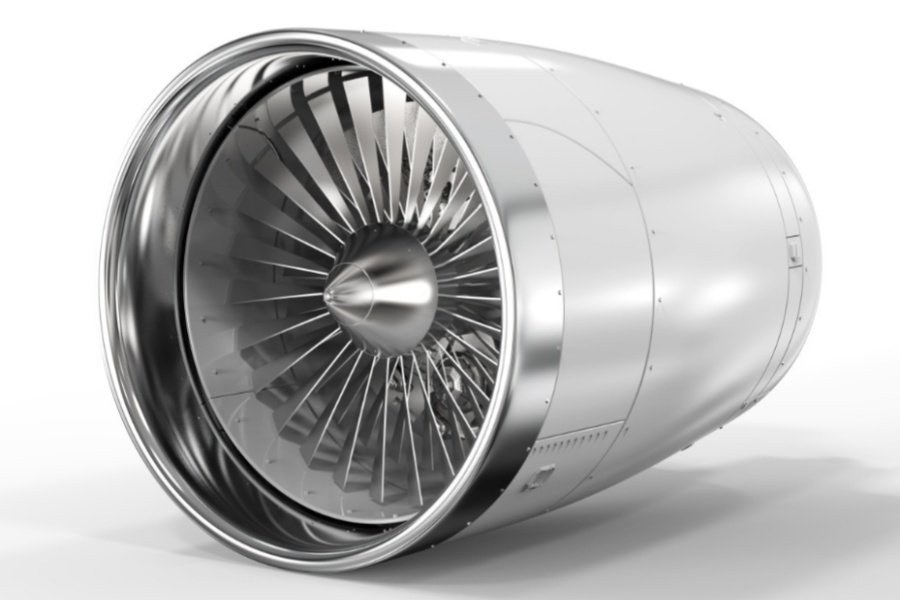
Aerospace accounts for roughly 50% of global titanium demand. In aircraft design, every pound of weight saved translates directly to fuel savings, greater payload, and longer range. Titanium delivers strength comparable to many steels at roughly 56% of the weight, and retains performance at both cryogenic and elevated engine temperatures.
Key applications include fuselage frames, wing structural components, jet engine compressor blades and casings, landing gear parts, missile airframes, and fasteners. Modern wide-body aircraft can contain 150,000 pounds or more of titanium components.
Medical and Biomedical
Titanium is completely biocompatible — it does not trigger immune responses, does not corrode inside the body, and can osseointegrate (bond directly with living bone). No other structural metal offers this capability.
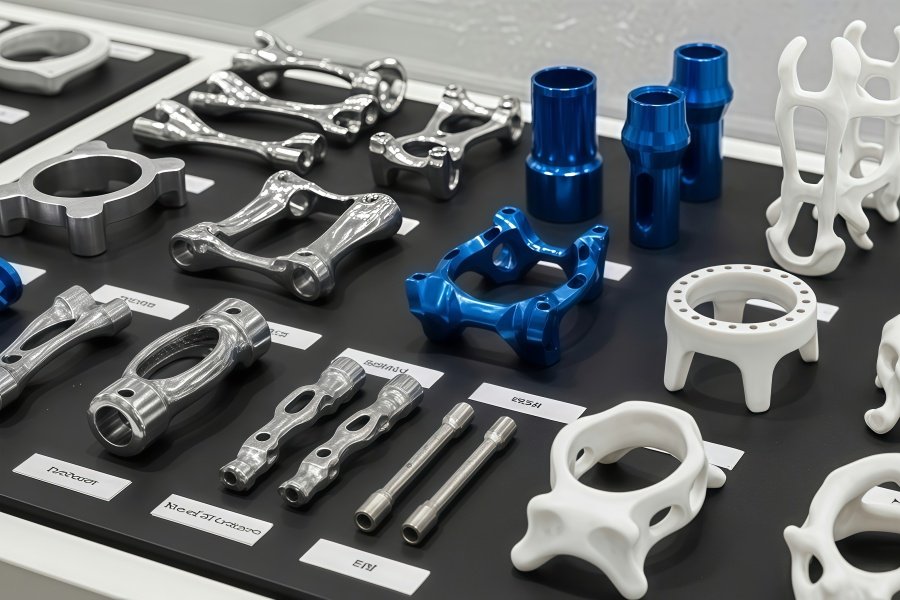
Major medical titanium uses include orthopedic implants (hip replacements, knee replacements, spinal fusion cages, bone plates and screws), dental implants, MRI-compatible surgical instruments, pacemaker cases, and prosthetic limbs. Medical-grade titanium has been one of the fastest-growing market segments for two decades.
Chemical Processing and Oil & Gas
Titanium is effectively immune to attack by seawater, most organic acids, chloride solutions, and many harsh chemical environments. This makes it the material of choice for process equipment where stainless steel would fail in months.
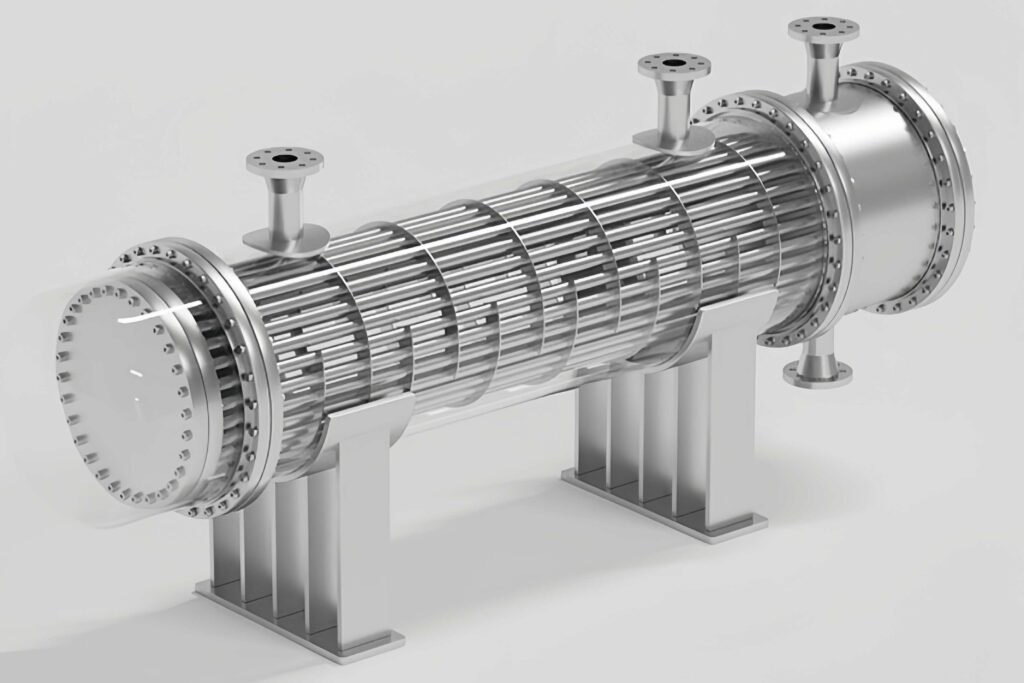
Common applications include heat exchangers, reactor vessels, piping and valve bodies, offshore oil and gas risers, desalination plant components, and pulp and paper processing equipment. While upfront titanium cost is higher, 20+ year service life delivers a far lower total cost of ownership in corrosive environments.
Marine, Consumer, and Industrial
In marine engineering, titanium offers unmatched longevity in saltwater, resisting both general corrosion and stress corrosion cracking. It is used for ship propeller shafts, rudders, deep-sea submersible hulls, and offshore hardware.
In consumer and sporting goods, titanium is used for high-end bicycle frames, golf club components, watch cases, camping gear, and archery equipment. While smaller in volume than aerospace, this segment drives broad public awareness and supports production scale.
Titanium Exhaust: Why It Dominates High-Performance Automotive
One of the most well-known consumer applications of titanium is the titanium exhaust system. From Formula 1 race cars and production supercars to enthusiast street builds and high-performance motorcycles, titanium exhaust is the gold standard for weight savings and durability.
The biggest advantage is weight reduction. A typical titanium exhaust system weighs 40% to 60% less than an equivalent stainless steel system. Removing 10 to 30 pounds of unsprung and under-hood weight delivers measurable improvements in acceleration, handling, and throttle response.
Beyond weight, titanium offers:
- Superior corrosion resistance: Titanium will not rust or corrode even after years of exposure to road salt, moisture, and exhaust condensation. A quality titanium exhaust can easily outlast the vehicle itself.
- High temperature capability: Titanium retains strength at exhaust gas temperatures that would cause mild steel to soften and warp, making it ideal for high-boost turbocharged engines and track use.
- Distinct sound character: Titanium exhaust produces a crisp, resonant exhaust note that many driving enthusiasts prefer over steel.
Most performance titanium exhaust systems are built from Grade 1 or Grade 2 commercially pure titanium tubing, which offers good formability and weldability. High-stress turbo manifold applications may use Grade 5 titanium alloy for added high-temperature strength.
Titanium Metal Alloy: Grades, Properties and Use Cases
Pure titanium is a relatively soft, ductile metal. Most industrial and engineering applications use titanium metal alloy formulations, where controlled additions of alloying elements dramatically boost strength, heat resistance, and fabricability.
Titanium alloys are grouped into three main categories based on crystal structure: alpha alloys, beta alloys, and alpha-beta alloys.
Alpha Titanium Alloys
Alpha alloys contain aluminum and tin as primary alloying elements, and retain a hexagonal close-packed crystal structure at all temperatures. They cannot be strengthened by heat treatment, but offer excellent weldability and high-temperature stability. Common uses include aerospace engine components and welding wire.
Beta Titanium Alloys
Beta alloys contain molybdenum, vanadium, and niobium, which retain a body-centered cubic structure at room temperature after quenching. They are highly formable when solution-treated, and can be age-hardened to very high strength levels. Common uses include springs, fasteners, and biomedical implants.
Alpha-Beta Titanium Alloys
Alpha-beta alloys contain both alpha and beta stabilizers, with a mixed microstructure at room temperature. They can be heat treated and aged to tailor strength, ductility, and toughness across a wide range.
This is the most widely used class of titanium metal alloy, and includes Ti-6Al-4V (Grade 5), the industry workhorse. Grade 5 offers an excellent balance of properties and is used for everything from aircraft structures to medical implants to bicycle frames.
Key Alloy Grade Reference
| Alloy Grade | Common Name | Primary Advantages | Typical Applications |
|---|---|---|---|
| Grade 2 | Commercially Pure | Excellent corrosion resistance, weldable, lower cost | Chemical equipment, marine hardware, exhaust systems |
| Grade 5 | Ti-6Al-4V | High strength, good toughness, heat treatable | Aerospace structures, medical implants, general engineering |
| Grade 9 | Ti-3Al-2.5V | High strength tubing, good fatigue resistance | Hydraulic tubing, bicycle frames, aerospace tubing |
| Grade 23 | Ti-6Al-4V ELI | High purity, superior fatigue and fracture toughness | Surgical implants, spinal hardware, orthopedics |
Welding Titanium: Key Challenges and Best Practices
Welding titanium is very different from welding steel or aluminum. While titanium produces clean, strong welds when handled correctly, it is extremely sensitive to contamination and atmospheric gas pickup at elevated temperatures. Even small amounts of oxygen, nitrogen, or hydrogen absorbed during welding will make the weld zone brittle and prone to failure.
Core Challenges
- High reactivity at temperature: Titanium begins reacting with air above roughly 800°F (425°C), and reacts rapidly at welding temperature if not fully shielded.
- Dual-side shielding requirement: Titanium welds require inert gas shielding on both the top and root side of the joint, unlike stainless steel which only needs front-side coverage.
- Surface contamination sensitivity: Oil, grease, dirt, and even fingerprints can cause weld porosity and embrittlement. Surfaces must be thoroughly cleaned immediately before welding.
- Distortion control: Titanium has low thermal conductivity and high thermal expansion, which can lead to significant weld distortion if fixturing and heat input are not carefully managed.
Recommended Processes and Best Practices
- GTAW/TIG welding is the most common and versatile method for welding titanium, requiring a gas lens, trailing shield, and backside purge.
- Plasma arc, electron beam, and laser beam welding are used for specialized production and thick-section applications.
Critical best practices:
- Use 99.99% purity or higher argon shielding gas.
- Always use a trailing shield on the face side and full back purge on the root side.
- Clean all weld surfaces with a dedicated stainless steel wire brush and solvent immediately before welding.
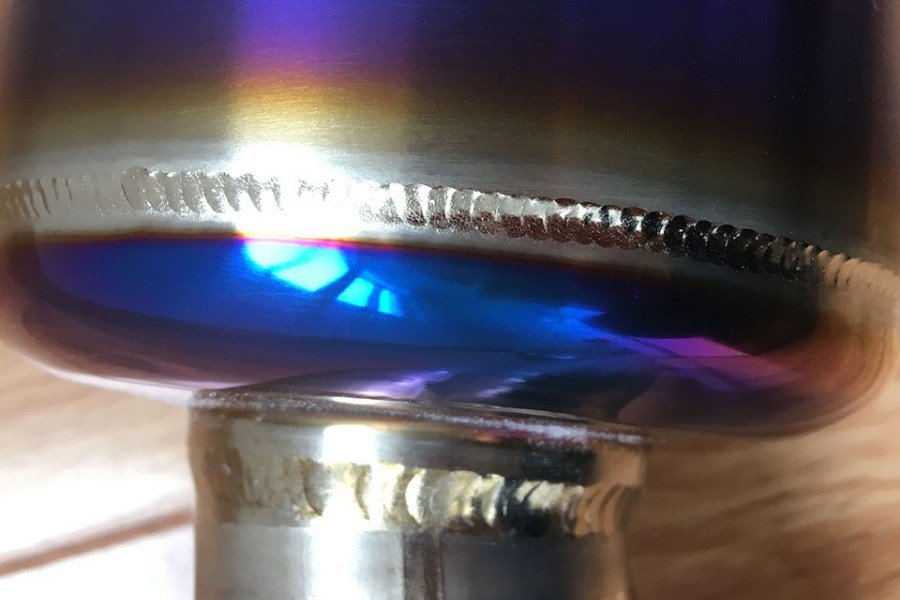
- Inspect weld color after welding: bright silver is ideal; gray, white, or powdery welds indicate contamination and must be removed.
With proper technique, welding titanium produces welds with strength and corrosion resistance matching the base metal.
Interesting Facts About the Element Titanium
Beyond its engineering properties, there are many surprising and random facts about titanium that highlight how unique this element really is. These titanium element fun facts add valuable context for engineers, students, and enthusiasts alike.
- Named after Greek mythology: German chemist Martin Heinrich Klaproth named the element in 1795 after the powerful Titan gods of ancient Greek legend, in tribute to its incredible strength and durability.
- Abundant but hard to purify: One of the most widely shared interesting facts about the element titanium is that it is the 9th most common element in the Earth’s crust — more abundant than copper, zinc, tin, and lead combined. Its high cost comes from refining difficulty, not scarcity.
- Bonds with living bone: Osseointegration — the process where bone tissue grows directly into the surface of a titanium implant — is unique to titanium among structural metals. This is the reason titanium dominates implant medicine.
- Completely non-magnetic: Titanium is fully non-ferromagnetic, making it essential for MRI machine components and surgical tools used inside MRI scanners. Patients with titanium implants can safely undergo MRI procedures.
- Anodizes into any color: Through electrochemical anodizing, titanium forms a thin transparent oxide layer. By controlling oxide thickness, vivid interference colors — gold, blue, purple, green, and more — can be produced without any paint or dye.
- Stronger than steel at half the weight: Grade 5 titanium alloy has tensile strength comparable to many carbon steels, but at only 56% of the density. Pound for pound, it is one of the strongest structural metals available.
- Immune to seawater corrosion: One of the classic interesting facts about titanium is that test samples submerged in deep ocean water for 30+ years show essentially zero signs of corrosion or material degradation.
- Pure titanium is surprisingly soft: Commercially pure titanium is quite soft and malleable, much closer to aluminum in hardness than to steel. The metal’s legendary strength comes from alloying and heat treatment.
Final Thoughts: Is Titanium Worth the Cost?
After reviewing titanium cost structures and the full scope of titanium uses, the question remains: is the premium price on titanium justified?
The answer depends entirely on the application. For general structural use where corrosion and weight are not critical, steel or aluminum will almost always be more cost-effective. But for applications where weight savings directly improve performance, where corrosion causes premature failure, where biocompatibility is required, or where long service life delivers measurable economic value, titanium is often the only material that can do the job.
What makes titanium such a compelling engineering material is not any single property, but the rare combination of strength, light weight, corrosion resistance, biocompatibility, and temperature tolerance all in one metal.
Whether you are sourcing titanium exhaust components, specifying titanium metal alloy for a new design, evaluating welding titanium processes, or researching titanium price per pound for procurement, understanding the full picture of cost and capability will help you make the right material choice.