As a source factory with more than ten years of practical experience in CNC machining, during our daily work of reviewing customer drawings and process evaluation, we frequently receive various questions: What exactly is 5‑axis CNC machining? What are the core differences between 5‑axis machining and conventional 3‑axis CNC machining? Is 5‑axis machining necessary for my product? Does 5‑axis machining always mean high prices? Many manufacturers claim they can provide 5‑axis services, how do we identify genuine 5‑axis machining capabilities?
Many procurement engineers and product designers only have a superficial understanding of 5‑axis machining when dealing with complex special‑shaped parts. This can easily lead to wrong process selection, excessive costs, non‑conforming finished parts, repeated rework and scrap. Drawing on over ten years of hands‑on CNC machining experience in our factory, this article comprehensively explains 5‑axis CNC machining from basic concepts, working principles, pros‑and‑cons comparison, applicable scenarios, cost analysis and common pitfalls, helping you understand this high‑end precision manufacturing technology.
1. What is 5‑Axis CNC Machining?
To understand 5‑axis machining, let us start with the familiar 3‑axis CNC machine tool.
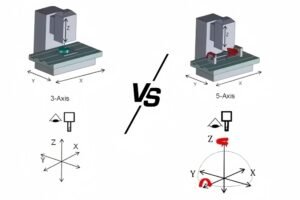
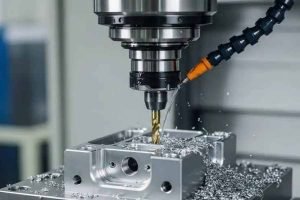
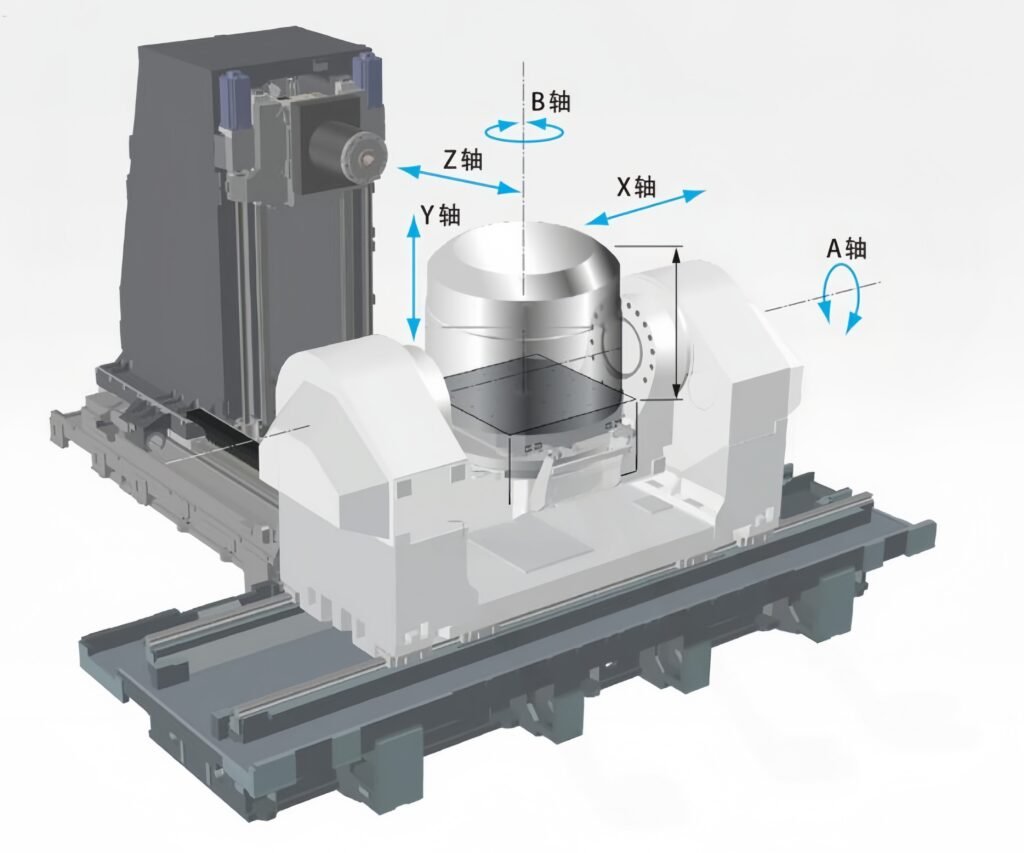
A standard 3‑axis CNC machine tool has three linear axes: X, Y and Z. The cutting tool can move forward‑backward, left‑right and up‑down, yet the tool orientation remains fixed. The workpiece is firmly clamped on fixtures without angle adjustment. If parts contain inclined surfaces, undercuts or multi‑orientation curved surfaces, 3‑axis machines cannot finish all features in one setup. Operators have to disassemble, re‑angle, re‑align and re‑clamp workpieces to complete cutting in multiple procedures.
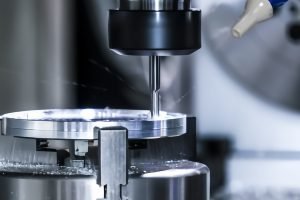
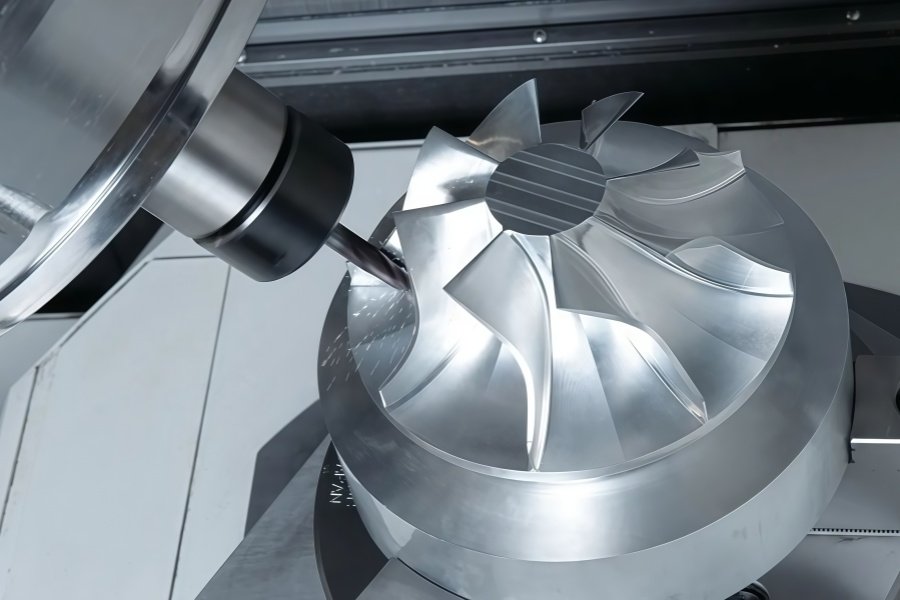
A 5‑axis CNC machine adds two rotary axes (selected from Axis A, Axis B and Axis C according to machine structure) based on the X/Y/Z linear axes. The five axes can move simultaneously in synchronized motion. During processing, both tool position and workpiece/tool tilt angle can be adjusted, allowing the cutting tool to approach the workpiece from nearly any angle.
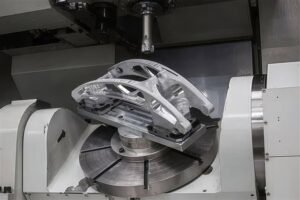
The most notable feature of 5‑axis machining is multi‑surface completion in a single clamping. The workpiece only needs to be fixed once for most or even all cutting operations. Repeated disassembly, flipping and re‑alignment are no longer required.
Two key concepts need to be distinguished: 5‑axis positioning machining (3+2) and true 5‑axis simultaneous machining.
‑ 3+2 (5‑axis positioning): Rotary axes lock after angle adjustment, and cutting is performed in 3‑axis mode. Suitable for simple inclined surfaces and angled holes.
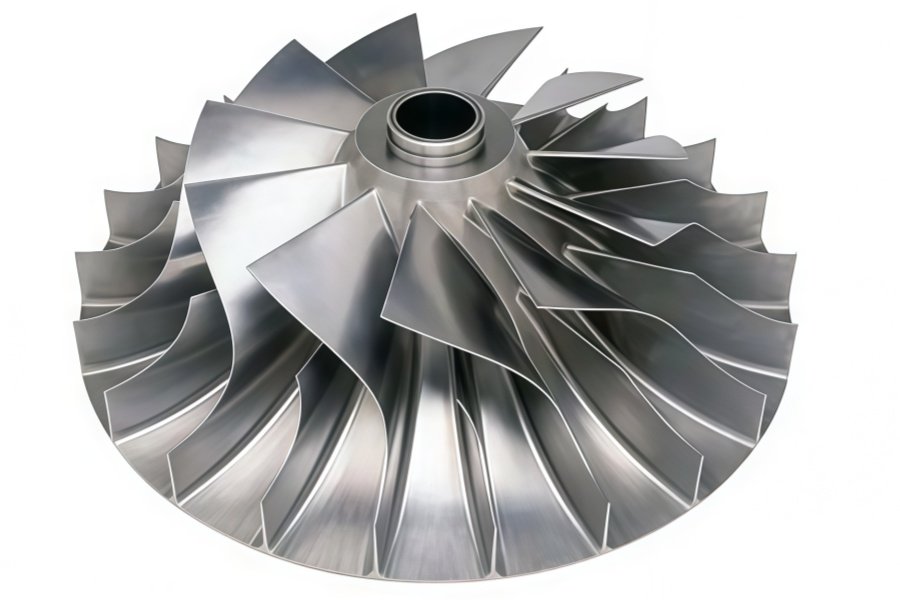
‑ 5‑axis simultaneous machining: All five axes keep moving synchronously during cutting. It handles continuously changing complex curved surfaces, impellers and twisted flow channels, representing the core capability of high‑end precision machining.
Many suppliers market 3+2 positioning service as pure 5‑axis machining. There is a huge performance gap between them. Please pay close attention during procurement.
2. 5‑Axis CNC Machining vs Traditional 3‑Axis Machining
Based on our factory’s decade‑plus experience in prototyping and mass production, we compare the two technologies from precision, machining capability, surface finish, production efficiency, application scope and cost.
2.1 Machining Precision and Error Control
For complex multi‑feature parts, 3‑axis machining requires repeated workpiece disassembly and re‑clamping. Each re‑clamping and re‑alignment introduces positioning deviation. More procedures bring larger accumulated errors. It is difficult to maintain stable high precision, and dimensional tolerance out‑of‑spec and scrap often occur.
For most working conditions, 5‑axis simultaneous machining only needs one‑time clamping. The unified workpiece reference eliminates cumulative positioning deviation caused by repeated flipping. Parts deliver better dimensional consistency. Strict‑tolerance precision components can be stably manufactured, greatly reducing scrap risks from re‑clamping.
2.2 Machining Capability for Complex Structures
3‑axis CNC works well for planes, vertical holes and simple concave‑convex structures. When confronting undercuts, steep inclined planes, multi‑angle angled holes, continuous free‑form surfaces, enclosed twisted flow channels and narrow deep cavities, tool interference occurs. Many structures cannot be processed at all. Even if some features are barely finished, large quantities of special fixtures are required.
5‑axis machining dynamically tilts cutting tools to avoid interference among tools, tool holders and fixtures. It enables cutting of impeller blades, complex mold cavities, special‑shaped medical components and multi‑angle undercut parts which are difficult or impossible for 3‑axis equipment. Design freedom is greatly improved, and designers do not need to modify product structures to fit 3‑axis process limits.
2.3 Surface Quality and Tool Wear
When cutting curved surfaces on 3‑axis machines, ball‑nose tools are mostly used in vertical cutting mode. Only the tiny tool tip contacts the workpiece, resulting in poor cutting conditions, rough surface texture and heavy follow‑up polishing workload. Tool tips wear out rapidly and increase tooling costs.
5‑axis machining adjusts tool posture dynamically to make cutting edges fit curved surfaces instead of relying on point‑contact cutting at tool tips. Uniform cutting force delivers superior surface finish and reduces post‑processing polishing work. Optimized cutting conditions slow down tool wear and indirectly lower tooling expenses.
2.4 Production Cycle & Delivery Efficiency
Complex parts processed by 3‑axis machines require repeated disassembly, clamping, alignment and fixture replacement. Long procedure chains and heavy manual work extend production lead time. Especially for small‑batch prototyping, fixture debugging consumes substantial time.
5‑axis machining finishes most features in one clamping. Time‑consuming flipping, re‑alignment and custom complex fixtures are eliminated. For complex‑structure parts, total machining hours are effectively shortened, accelerating lead time for both prototypes and batch orders.
3. Industries & Parts Suitable for 5‑Axis CNC Machining
From our order cases accumulated over years, 5‑axis machining is widely adopted across multiple high‑end manufacturing sectors. The following scenarios are recommended for 5‑axis processes.
Aerospace Components
5‑axis machining is widely applied in aerospace for impellers, blisks, titanium alloy complex brackets and special‑shaped housings. These parts contain abundant complex curved surfaces made of hard‑to‑cut alloys with strict requirements on dimensional accuracy, strength‑to‑weight ratio. 3‑axis machines can hardly meet standards, and 5‑axis simultaneous machining becomes the mainstream solution.
Precision Mold Manufacturing
Complex cavities and deep curved cavities for injection molds and die‑casting molds. 5‑axis machining reduces electrode quantity and EDM workload. Mold cavity surface finish is improved, polishing hours are cut and mold manufacturing cycles are shortened.
Medical Precision Components
Orthopedic implants and surgical instrument accessories. Medical parts mostly feature human‑body‑adapted free‑form curved surfaces with strict standards for surface roughness, dimensional tolerance and safety stability. Many special‑shaped structures can only be realized by 5‑axis simultaneous machining.
Automotive & Fluid Power Components
Automotive turbine housings, pump impellers and special‑shaped valves. Internal twisted complex flow channels are difficult for 3‑axis machining, while 5‑axis equipment efficiently completes such fluid‑component production.
Automation Equipment & High‑End Custom Parts
Multi‑angle brackets, thin‑wall special‑shaped components and custom parts with abundant angled holes & undercuts for automation machinery. 3‑axis processing needs multiple fixtures and frequent flipping with low efficiency; 5‑axis finishes all features within one clamping.
Scientific Research, Military & Custom Art‑Design Parts
R&D custom prototypes and complex artistic customized parts. 5‑axis machines flexibly process variable drawings without compromising product appearance for manufacturability.
Scenarios Not Recommended for 5‑Axis Machining
Parts with simple structures dominated by planes and straight holes without inclined/curved surfaces or undercuts; high‑volume simple standard parts. 3‑axis machining delivers better cost‑effectiveness to control production costs.
4. Common Misconceptions About 5‑Axis Machining
Misconception 1: All 5‑axis machines guarantee high precision
A 5‑axis machine is only hardware. Final part quality depends on programmer experience, tool selection, fixture design and inspection capabilities. Even with identical 5‑axis equipment, processing quality varies drastically among manufacturers. Owning a 5‑axis machine does not equal competence for complex precision work.
Misconception 2: 5‑axis machining solves every manufacturing problem
5‑axis technology is not omnipotent. Material properties, wall thickness and structural design still set processing limits. Some designs contain inherent manufacturing defects impossible even for 5‑axis machines. Pre‑production process review and proper drawing optimization are necessary. Our factory provides free process evaluation upon receiving drawings, pointing out manufacturing challenges and offering optimization suggestions.
Misconception 3: 3+2 positioning machining equals 5‑axis simultaneous machining
3+2 positioning machining handles angled holes and basic inclined surfaces, yet cannot process continuously changing complex curved surfaces. During procurement, confirm whether your project requires 5‑axis simultaneous machining or 3+2 positioning service. Quotation and processing capacity differ significantly.
Misconception 4: 5‑axis machining is always extremely expensive
Cost is determined by overall part complexity. Simple parts cost more on 5‑axis equipment. For complex multi‑procedure parts, 5‑axis may achieve lower comprehensive costs compared with 3‑axis solutions with multiple fixtures, heavy labor and high scrap probability. As a source manufacturer, we evaluate drawings and propose optimal processes instead of blindly recommending high‑cost options.
5. Key Factors for Selecting a Reliable 5‑Axis CNC Machining Source Factory
Numerous traders and middlemen claim to offer 5‑axis services but outsource all orders externally, leading to uncontrollable quality and lead time. With over ten‑year experience as a source CNC manufacturer, here are core selection criteria:
Verify equipment and confirm in‑house 5‑axis simultaneous‑motion machines
Check factory equipment via on‑site visit or video confirmation. Distinguish genuine 5‑axis simultaneous‑motion machines, simple 3‑axis retrofitted with rotary tables, and pure 3+2 positioning equipment. Confirm machine size matches your part dimensions. Avoid pure middlemen who outsource all production.
Evaluate process experience of engineering teams
5‑axis machining is technically demanding. Programmer expertise is critical. Review past finished cases of similar‑industry and similar‑complexity components. Experienced engineers predict interference and deformation risks in advance, optimize tool paths and improve finished‑product yield.
Complete inspection capabilities
Precision manufacturing relies on quality inspection. Confirm the factory owns coordinate measuring machines, height gauges, micrometers and other complete testing instruments. Dimensional inspection reports should be available after production to guarantee drawings tolerances, instead of visual‑only judgment.
One‑stop supporting service
Post‑processing such as anodizing, sandblasting, electroplating, passivation and painting are needed for many CNC‑machined parts. Qualified source factories coordinate machining and surface finishing in one stop, reducing communication errors from multiple suppliers and controlling quality & delivery schedules.
Pre‑drawing process assessment service
Trustworthy manufacturers will not quote directly upon receiving drawings. They thoroughly assess risks, identify manufacturing difficulties and provide DFM (Design for Manufacturability) suggestions. Optimize designs without hurting product functions to reduce processing difficulty and overall costs.
6. Our 5‑Axis CNC Machining Services
We are a source manufacturing factory with more than ten years of CNC machining experience, owning in‑house equipment and mature 5‑axis precision machining capacity.
Available materials cover aluminum alloy, stainless steel, copper, titanium alloy, engineering plastics and other metals & plastics. We support prototype development, small‑batch and medium‑batch custom production.
Service Workflow
- Receive customer CAD drawings and conduct free technical process review.
- Confirm requirements on material, tolerance, surface finish, quantity and lead time, and provide accurate quotation.
- Carry out programming, custom fixture manufacturing and CNC precision machining.
- Perform dimensional inspection and complete surface treatments including sandblasting, anodizing and electroplating.
- Conduct final full inspection and pack finished goods for delivery.
We serve customers across aerospace, medical devices, automation equipment, auto parts and scientific research sectors. Whether you need simple components or high‑complexity 5‑axis parts with curved surfaces, undercuts and flow channels, we deliver professional process solutions.
If you have CNC machining drawings in hand, please feel free to contact us for process evaluation and quotation.