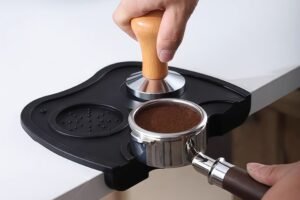
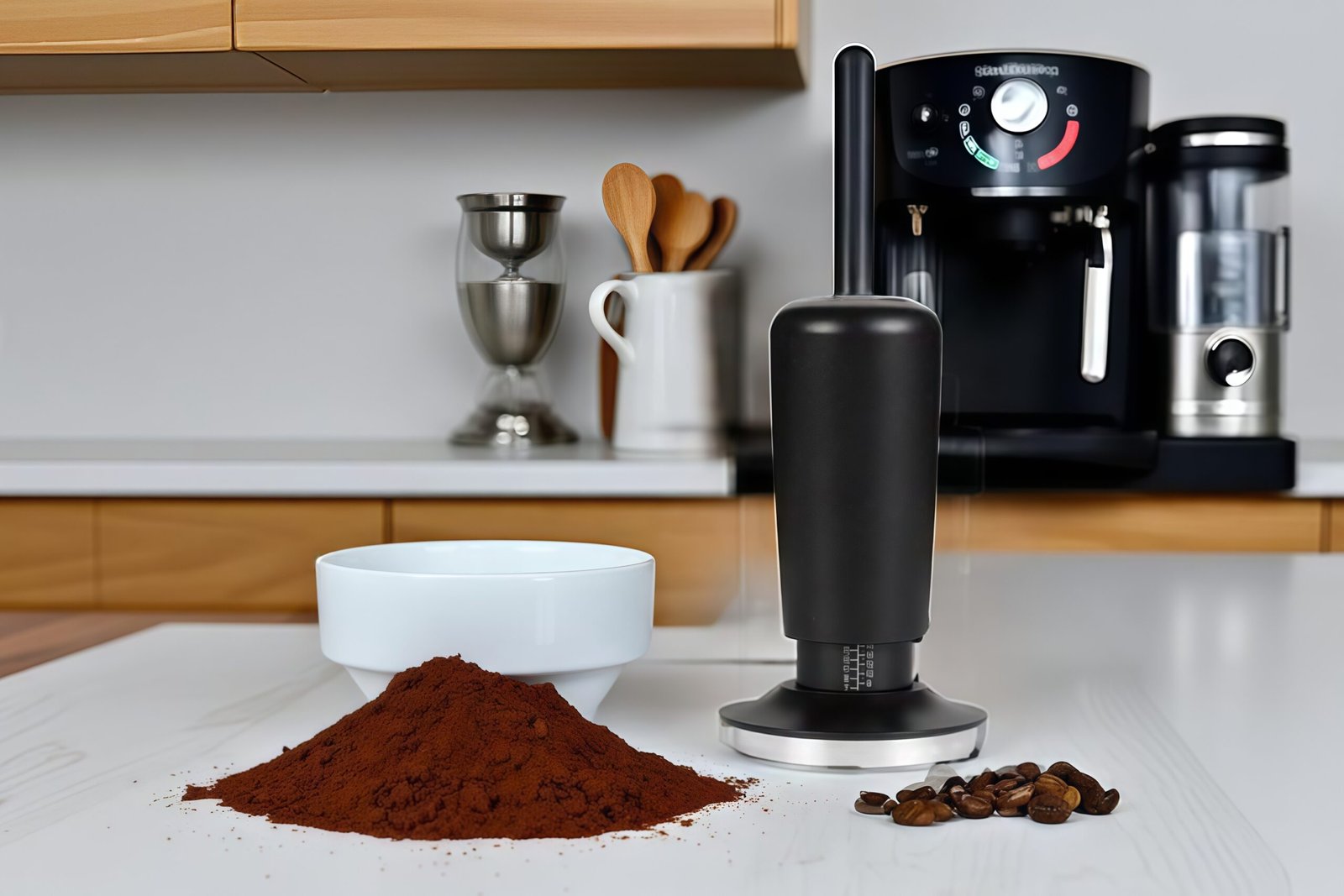
Driven by the global specialty coffee wave, espresso extraction has evolved from a daily habit into an exacting science. For professional baristas, puck preparation inside the portafilter basket dictates extraction uniformity and flavor profile. In this process, a precision espresso tamper kit (typically comprising a tamper and a distributor) is indispensable.
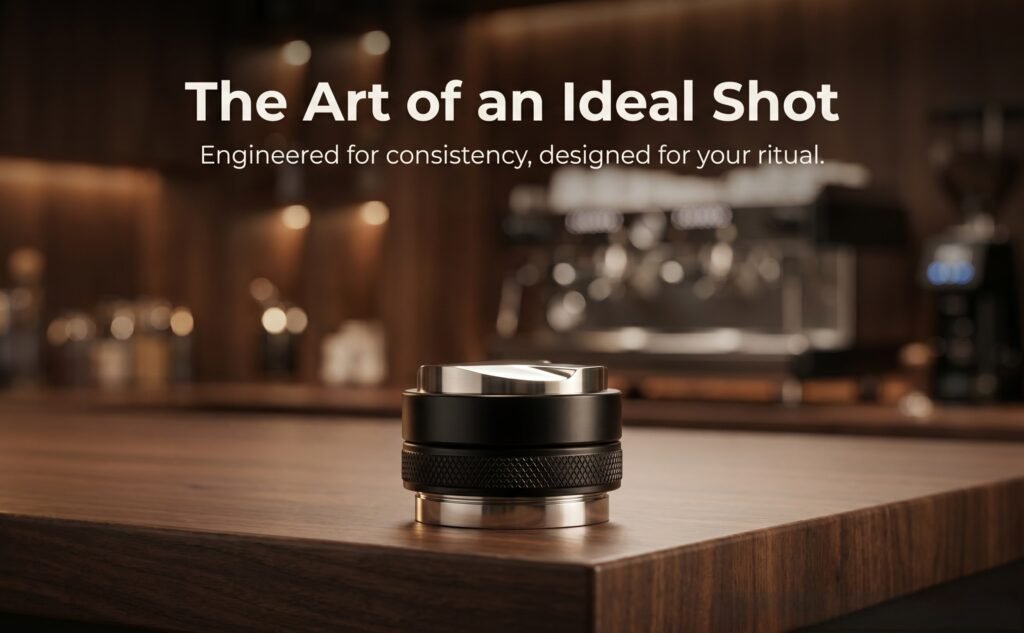
For coffee equipment brands and wholesalers looking to stand out, the answer lies in extreme manufacturing precision and premium material textures. Here is a comprehensive breakdown of the design principles, material selection, CNC machining processes, surface treatments, and quality control behind these high-end hardware accessories.
1. Why Premium Coffee Tools Require CNC Machining
Low-end tampers often rely on die-casting, which, despite its low cost, suffers from inherent flaws in density, dimensional tolerances, and surface finish. In espresso extraction, even a 0.1mm tolerance deviation at the tamper base can cause edge channeling. CNC (Computer Numerical Control) machining is the only viable choice for high-end equipment, offering:
Micron-Level Precision: Modern precision baskets (like VST or IMS) have an inner diameter of around 58.70mm. Achieving a perfect edge-to-edge tamp requires tamper diameters strictly controlled between 58.50mm and 58.55mm.
Perfect Dynamic Balance: CNC parts are milled from solid metal blanks, ensuring uniform density without pores, which translates to a perfectly balanced weight distribution in hand.
Complex Geometric Structures: The intricate V-shaped or propeller-like distribution flutes on modern levelers require multi-axis CNC milling to ensure exact cutting angles for even downward pressure.
Seamless Multi-Material Assembly: Precision CNC threading allows stainless steel bases to pair flawlessly with aluminum or wooden handles without any gaps or wobbling.
2. Core Components of an Espresso Tamper Kit
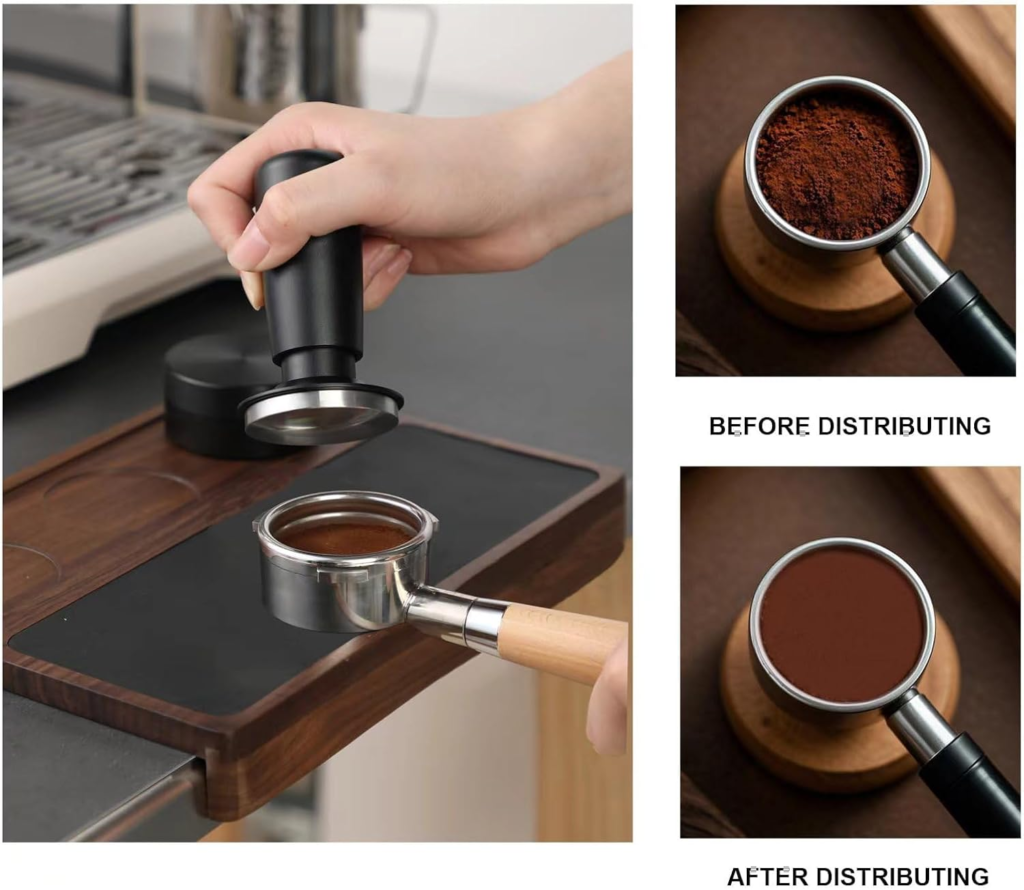
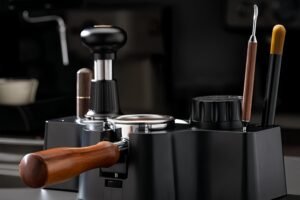
A professional-grade set typically consists of a distributor and a tamper.
The Distributor (Leveler): Designed to evenly distribute coffee grounds before tamping. Its base flutes (three-leaf, clover, or four-leaf designs) require continuous 4-axis or 5-axis CNC milling. The depth adjustment mechanism relies on large-diameter fine threads (e.g., M50+) machined on CNC lathes to guarantee a buttery-smooth rotation.
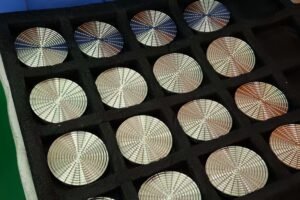
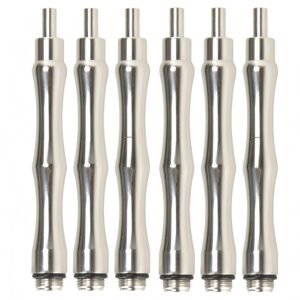
The Tamper: Innovations range from classic flat bases to concentric ripple bases (machined via fine CNC turning to increase puck surface area). High-end calibrated tampers feature self-leveling collars and built-in springs to provide constant downward pressure (e.g., 30 lbs), utilizing multiple micro CNC turned/milled internal components like guide shafts and limit nuts.
3. Material Science: Balancing Performance and Aesthetics
Material selection determines both machining difficulty and the product’s final durability in hot, humid cafe environments.
| Component | Recommended Material | Material Characteristics & CNC Performance |
| Base | Food-Grade SUS 304 / 316 Stainless Steel | The Industry Standard. High density (provides necessary weight), exceptional rust resistance, and FDA compliant. 316 steel requires high-rigidity machines and coated cutting tools due to work-hardening tendencies. |
| Handle / Cap | 6061-T6 / 7075 Aluminum Alloy | Lightweight and excellent for high-speed CNC cutting, yielding a superb surface finish. Can be anodized into various colors (space gray, rose gold) for brand customization. |
| Handle | Engineering Plastics (POM/PEEK) | Warm to the touch, wear-resistant, and dimensionally stable. POM offers excellent machinability, ideal for lightweight, professional barista tools. |
| Weights / Accents | Brass / Pure Copper | High density for center-of-gravity adjustments. Easy to machine, but requires PVD coating or anti-oxidation treatments to prevent tarnishing. |
4. The Core CNC Manufacturing Process
Manufacturing an elite espresso tamper kit is the art of metal cutting.
CAM Programming & Fixture Design: Engineers generate toolpaths from 3D models (STEP/IGES). For tight 58.50mm tolerances, custom fixtures are designed to prevent micro-deformation during clamping.
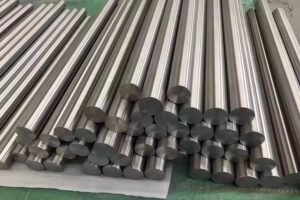
CNC Turning: Stainless steel bars are roughed on a lathe. Precision threads are cut and verified with Go/No-Go gauges. The final pass uses high-gloss turning tools to lock the 58.50mm outer diameter within a ±0.02mm tolerance while achieving a mirror finish (Ra ≤ 0.4) on the bottom to prevent coffee sticking.
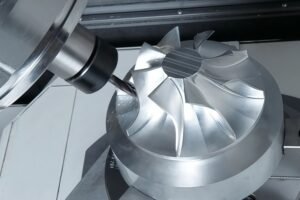
CNC Milling: The distributor’s 3D curved flutes demand 4-axis or 5-axis CNC machining centers. The rotary table allows simultaneous X, Y, and Z-axis cutting, creating seamless slopes without tool marks or hygienic dead zones.
Deburring & Polishing: All sharp edges undergo mechanical chamfering and polishing to ensure a smooth, safe, and premium tactile feel.
5. Surface Finishing Technologies
Anodizing: Applied to aluminum handles for a durable, scratch-resistant oxide layer in matte or glossy customized colors.
PVD Coating: Physical Vapor Deposition adds titanium, rose gold, or black titanium finishes to stainless steel bases. It is food-safe, ultra-thin, and maintains the CNC-machined micron tolerances.
Sandblasting & Brushing: Fine zirconium sandblasting creates a premium matte texture, while brushing delivers a strong industrial aesthetic.
Laser Engraving: High-precision fiber lasers permanently etch brand logos, depth scales, or custom patterns.
6. Strict Quality Control (QC) Systems
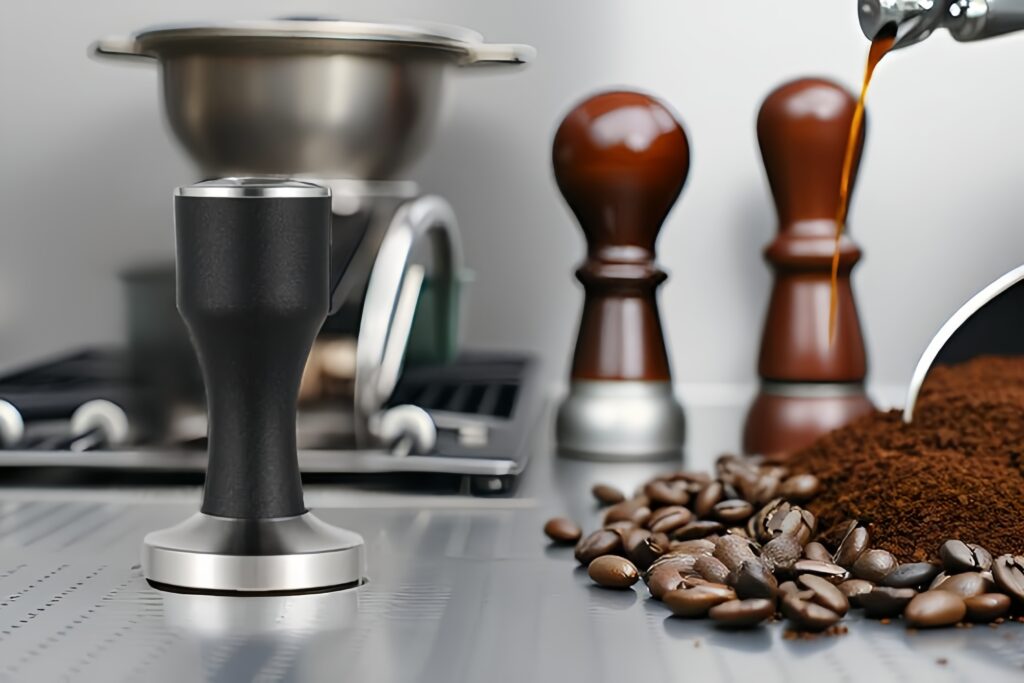
Dimensional Tolerances: Every batch is tested using micrometers and Coordinate Measuring Machines (CMM) to ensure a nominal 58.5mm tamper base strictly falls between 58.48mm and 58.52mm.
Coaxiality Testing: Assembled tampers are spun on a deflection gauge to ensure perfect concentricity between the handle and base, eliminating any “wobble” during use.
Surface Roughness: Gauged to ensure the tamping surface is perfectly smooth, preventing static cling of coffee grounds.
Salt Spray & Thread Testing: Ensures smooth thread damping and verifies that surface treatments can withstand prolonged exposure to wet cafe environments without fading or rusting.
7. Why Choose XML Tech?
When sourcing manufacturing partners, many brands mistakenly look for coffee machine assembly factories. However, a premium espresso tamper kit is fundamentally a collection of ultimate precision hardware components.
As an all-around hardware processing manufacturer capable of machining all metal and plastic series, XML Tech (Shenzhen Xinmingliang Technology Co., Ltd.) provides top-tier custom manufacturing for barista tools.
Comprehensive Material Capabilities: We are not limited to one metal type. From food-grade stainless steel and aluminum to brass, copper, and advanced engineering plastics (POM/PEEK), we have the cutting parameters and expertise to execute complex, multi-material designs.
Advanced CNC Matrix: Our facility houses high-precision CNC lathes, 3-to-5 axis milling machines, and mill-turn centers capable of crafting everything from flat tampers to intricate 3D curved distributors.
One-Stop Service: We manage a strict closed-loop process internally, from Design for Manufacturability (DFM) and rapid prototyping to lean mass production, sandblasting, anodizing, and laser engraving.
Rigorous Quality Assurance: We treat every piece of coffee hardware like a precision medical or aerospace instrument. Full pre-shipment inspections and CMM measuring ensure your tools perfectly match high-end portafilter baskets.
The evolution of specialty coffee is endless, and baristas require exact tools to bring their craft to life. If you are seeking a source factory capable of delivering the highest CNC standards for your brand, XML Tech is your strongest technical backbone.
8. Frequently Asked Questions (FAQ): Custom Espresso Tamper Kits
Why should I choose a 58.5mm precision base over a standard 58mm one for my brand’s espresso tamper kit? A 58.5mm (or 58.55mm) tamper provides a tighter, edge-to-edge fit for precision portafilter baskets like VST or IMS. This eliminates un-tamped rings of coffee grounds around the perimeter, drastically reducing the risk of edge channeling and ensuring a higher, more even extraction yield.
Can XML Tech customize the surface finish and engrave our brand logo? Absolutely. We provide comprehensive custom surface treatments, including PVD coating for stainless steel bases (offering colors like titanium, black, or rose gold) and hard anodizing for aluminum handles. We also utilize high-precision fiber lasers to permanently engrave your brand logo, depth scales, or unique patterns directly onto the components without affecting the micro-tolerances.
Does your factory only machine the raw metal parts, or do you assemble the complete kit? As an all-around hardware processing manufacturer, XML Tech not only machines all custom CNC components across various metals and plastics, but we also handle the complete assembly. We deliver fully assembled, quality-controlled, and seamlessly functioning espresso tamper kits ready for your retail packaging.
What materials do you recommend for a lightweight yet durable distributor tool? To achieve a lightweight profile without compromising durability, we recommend CNC machining the main body and top cap from 6061-T6 or 7075 aluminum alloy, followed by anodizing for scratch resistance. The bottom fluted base, which directly contacts the damp coffee grounds, must always be machined from food-safe SUS 304 or 316 stainless steel to ensure hygiene and long-term corrosion resistance.
Is it possible to combine metal bases with engineering plastics or wood for the handle? Yes. Our advanced CNC turning and milling capabilities allow us to machine precise mating threads on a variety of materials. We regularly pair heavy stainless steel bases with CNC-machined POM (Delrin), PEEK, or custom-machined hardwood handles to create perfectly balanced kits with exceptional tactile contrast.