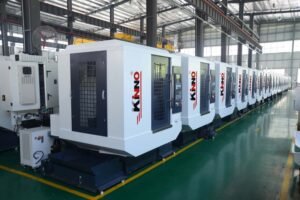
As modern industry demands increasingly complex structures, lightweight designs, and extreme precision, traditional machining technologies are facing unprecedented challenges. In the manufacturing of aerospace engine blades, complex spacecraft housings, custom CNC components for medical and aesthetic devices, and precision molds, parts frequently feature highly complex freeform surfaces, deep cavities, and multi-sided intersecting geometries. Traditional machining methods often fall short when addressing these technical bottlenecks. Today, CNC 5-axis machining technology, with its exceptional spatial flexibility, efficient compound cutting capabilities, and ultra-high precision, has become the foundational process for modern high-end precision manufacturing.
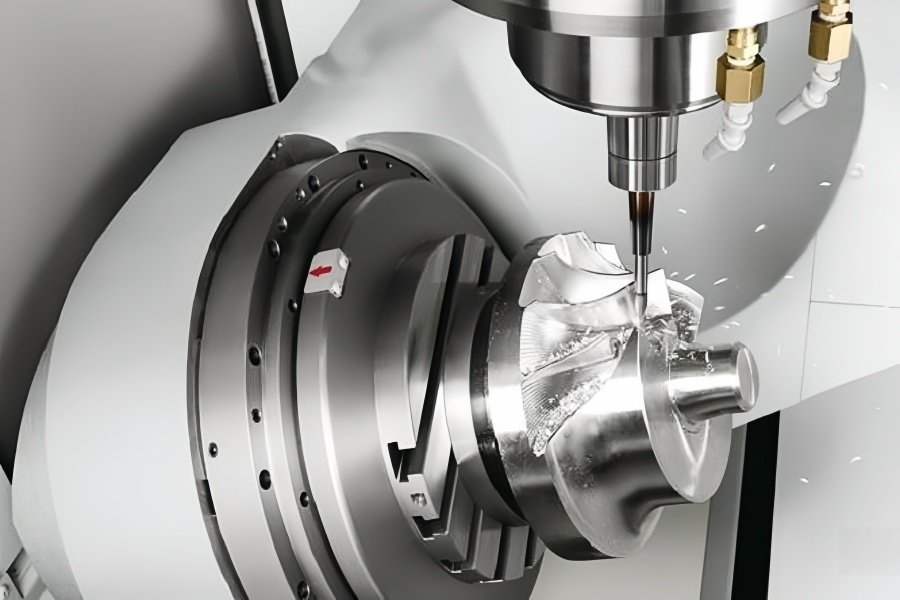
High-End Precision Manufacturing
In today’s globalized high-end manufacturing market, clients have increasingly stringent requirements for part quality, lead times, and cost control. Components in aerospace, medical implants, and automotive engineering typically share these characteristics:
Complex Intersecting 3D Surfaces: Surfaces are rarely simple planes or cylinders; they are mathematically fitted, intricate freeform surfaces.
Multi-Sided and Multi-Angle Features: Parts require milling, drilling, and slotting from multiple different spatial orientations, demanding frequent repositioning with traditional methods.
Widespread Use of Difficult-to-Machine Materials: The extensive application of titanium alloys, high-temperature superalloys, stainless steel, engineering plastics, and high-hardness tool steels—requiring a comprehensive manufacturing capability across a wide range of materials rather than just standard metals—poses extreme tests for tool life, cutting force control, and surface finish.
Relying on legacy low-axis machining equipment inevitably leads to accuracy loss due to repeated setups, cumbersome routing, and an inability to maintain delivery efficiency and profit margins in a fiercely competitive market.
The Inherent Limitations of 3-Axis and 4-Axis Machining
To fully appreciate the indispensability of CNC 5-axis, we must first dissect the fundamental limitations of 3-axis and 4-axis processes when handling complex geometries.
Bottlenecks of 3-Axis CNC Machining
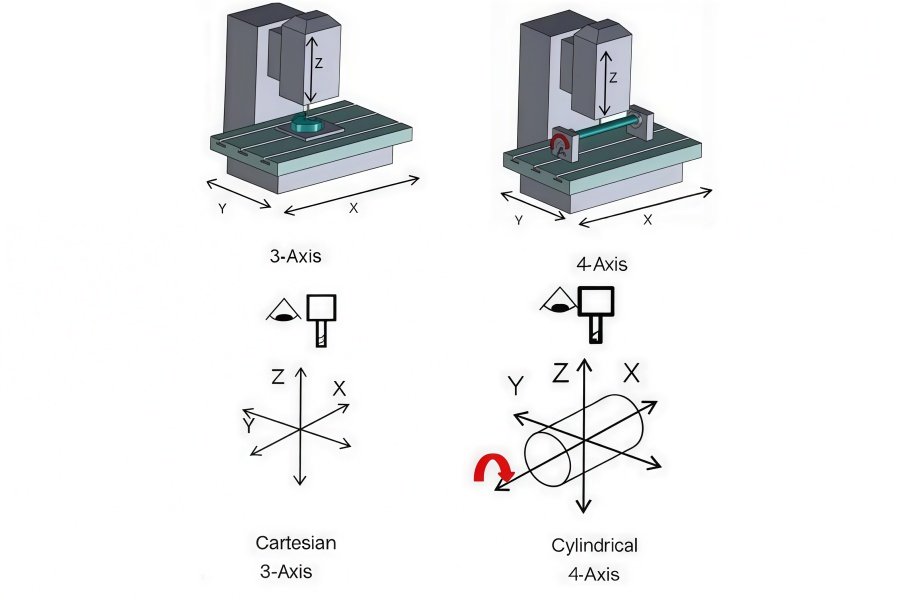
A 3-axis CNC machine (operating along X, Y, and Z linear axes) can only perform tool movements in a single coordinate plane. When machining complex surfaces with steep walls, undercuts, or tilted angles, 3-axis machines reveal fatal flaws:
Blind Spots and Interference: Because the tool axis remains permanently vertical, it cannot adjust its posture. When facing deep cavities or steep walls, the tool holder or spindle easily collides with the workpiece, or the tool simply cannot reach the target area.
Cumulative Setup Errors: To machine a multi-sided part, operators must manually unclamp, rotate, re-clamp, and re-indicate the datum. Every manual intervention introduces micro-positioning errors, ultimately leading to out-of-tolerance cumulative deviations.
Compromised Tool Rigidity: Reaching the bottom of deep pockets in 3-axis machining often requires extra-long, slender tools. This severely degrades rigidity, induces tool chatter, ruins the surface roughness, and shortens tool life.
The Progression and Deficiencies of 4-Axis Machining
4-axis CNC machining adds a rotary axis (usually an A-axis rotating around the X-axis, or a C-axis around the Z-axis). While this solves the problem of machining helical grooves on cylinders, cams, or multi-sided rotary parts, it still struggles with compound surfaces at arbitrary spatial angles. It cannot perform simultaneous dual-rotary interpolation, meaning spatial vector control remains heavily restricted.
Core Technical Principles and Spatial Kinematics of CNC 5-Axis
The fundamental reason CNC 5-axis is considered the crown jewel of CNC machining is that it completely shatters the dimensional constraints of traditional manufacturing
1. Axis Configuration and Spatial Degrees of Freedom
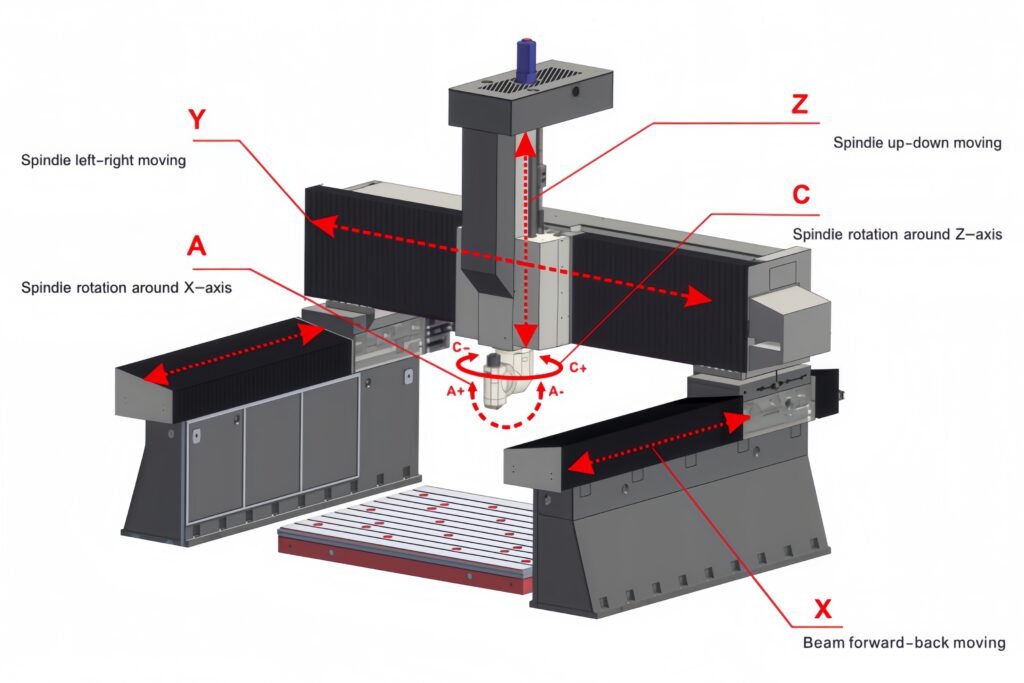
Standard 5-axis machining centers add two rotary axes to the foundational X, Y, and Z linear axes. Depending on the machine’s kinematic structure, common configurations include:
Table-Table (Trunnion): The worktable can both rotate (e.g., C-axis) and tilt (e.g., A or B-axis).
Head-Head (Gimbal): The spindle head tilts and rotates in space while the workpiece remains stationary; ideal for massive, heavy components.
Head-Table (Mixed): One rotary axis is located on the spindle, and the other on the worktable.
Under the precise control of the CNC system, these five axes can execute simultaneous interpolation (Simultaneous 5-axis), allowing the tool tip to approach the workpiece from any direction and at any posture in 3D space.
2. Tool Axis Vector Control
In 5-axis machining, the tool possesses not only a spatial position (X, Y, Z) but also a spatial posture (the tool axis vector I, J, K). The control system utilizes Tool Center Point Control (TCPC) algorithms to calculate the relative position between the tool tip and the workpiece surface in real-time, ensuring the tool always engages the material at the optimal cutting angle during complex surface interpolation.
3. Blind Spot Elimination and Volumetric Cutting Logic
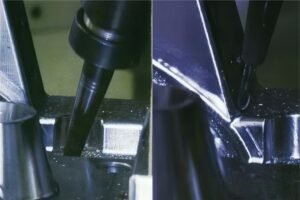
By flexibly adjusting the spatial angle, CNC 5-axis effortlessly bypasses workpiece protrusions, delivering the tool into “blind spots” that 3-axis machines could never reach. Its volumetric cutting logic allows the use of side milling (flank milling) rather than relying solely on end milling (point contact), exponentially expanding the cutting envelope and material removal rate (MRR).
In-Depth Breakdown of the 10 Core Advantages of CNC 5-Axis
Deploying CNC 5-axis on the factory floor drives a comprehensive process upgrade across ten critical dimensions:
1.Single Setup Forming (Done-in-One): The vast majority of complex parts require only a single setup on a 5-axis machine to complete machining on 5, or even 6, sides. This fundamentally eradicates the positioning errors caused by multiple clampings.
2.Elimination of Mismatch Marks for Perfect Transitions: When a 3-axis machine processes a multi-sided part, noticeable “blend marks” or “mismatch lines” frequently appear where different toolpaths intersect. 5-axis machining utilizes continuous, smooth simultaneous toolpaths, maintaining constant cutting engagement across surface transitions and delivering a flawless finish.
3.Ultra-High Surface Profile Accuracy: By minimizing datum transformations, geometric and positional tolerances (such as concentricity, symmetry, and perpendicularity) are drastically improved. Dynamic error compensation and RTCP (Rotation Tool Center Point) features ensure micron-level precision.
4.Machining of Complex Geometries and Undercuts: Faced with negative rake angles, undercuts, deep internal cavities, and intersecting compound hole patterns, traditional methods require expensive custom fixtures or multiple EDM (Electrical Discharge Machining) electrodes. CNC 5-axis cuts these features directly to size in one pass by simply tilting the tool axis.
5.Drastic Reduction in Fixturing Costs: Conventional multi-operation machining requires designing and fabricating dedicated fixtures for every single face. 5-axis machining generally utilizes universal machine vises, modular workholding, or simple standard pallets, drastically cutting non-standard fixture development time and capital expenditure.
6.Minimization of Human Error: Multi-operation processes rely heavily on the operator’s skill in indicating the workpiece. 5-axis machining is highly automated; by keeping the part in the machine for the entire cycle, it eliminates manual realignment phases and locks in process stability.
7.Significantly Shortened Lead Times: Freed from the cumbersome cycle of “clamp – indicate – machine – unclamp – re-clamp,” the total manufacturing lead time for individual parts can typically be compressed by 40% to over 60%, heavily boosting a company’s delivery competitiveness for B2B orders.
8.Superior Surface Finish and Cutting Efficiency: 5-axis technology permits the use of much shorter, highly rigid cutting tools. Because long tool overhangs are avoided, cutting chatter is virtually eliminated, allowing for aggressive cutting parameters while yielding exceptionally low Ra surface roughness values.
9.Reduction or Elimination of Secondary Hand Finishing: Complex molds or aerospace components produced via legacy methods often require skilled toolmakers to spend hours on manual polishing. Due to superior toolpath kinematics, 5-axis machined parts can almost always proceed directly to post-treatment or final assembly.
10.Perfect Compliance with Stringent High-Tech Industry Standards: Whether meeting the extreme material fatigue life requirements in aerospace or the microscopic precision limits for biocompatibility in medical implants, CNC 5-axis is the mandatory baseline capability for satisfying top-tier international quality systems.
Typical Applications and Industry Scenarios
In the modern industrial landscape, CNC 5-axis is widely deployed in sectors demanding ultimate precision and reliability:
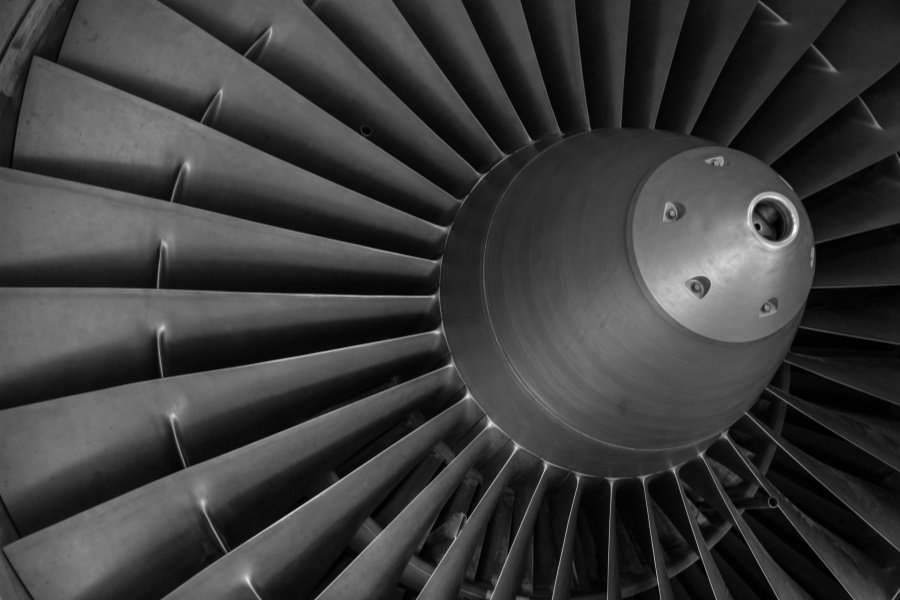
Aerospace Industry: Integral blisks, turbine blades, rocket engine combustion chamber housings, titanium structural beams, and fuselage ribs.
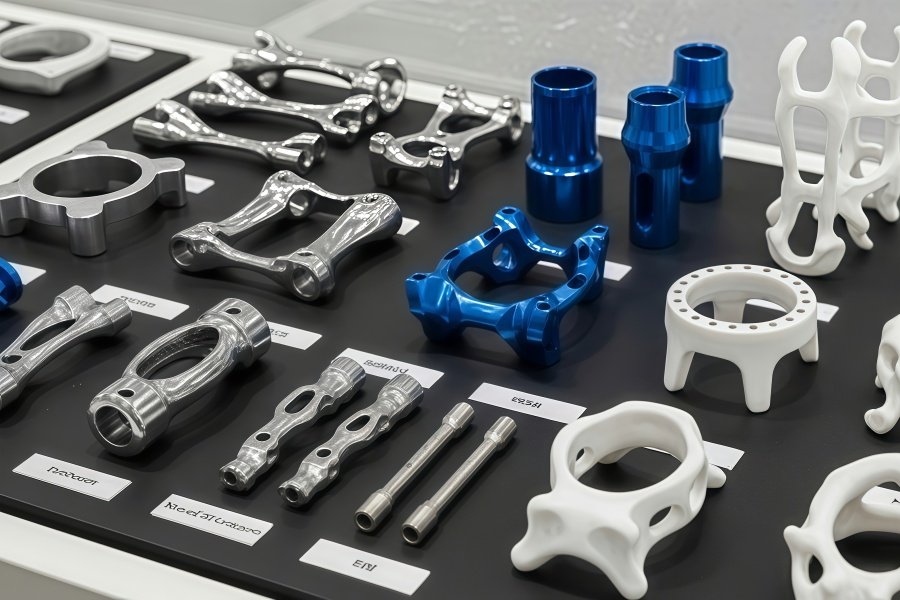
High-End Medical & Aesthetic Components: Custom CNC components such as orthopedic implants (hips, knees), complex titanium dental substructures, surgical instrument assemblies, and precision microdermabrasion accessories
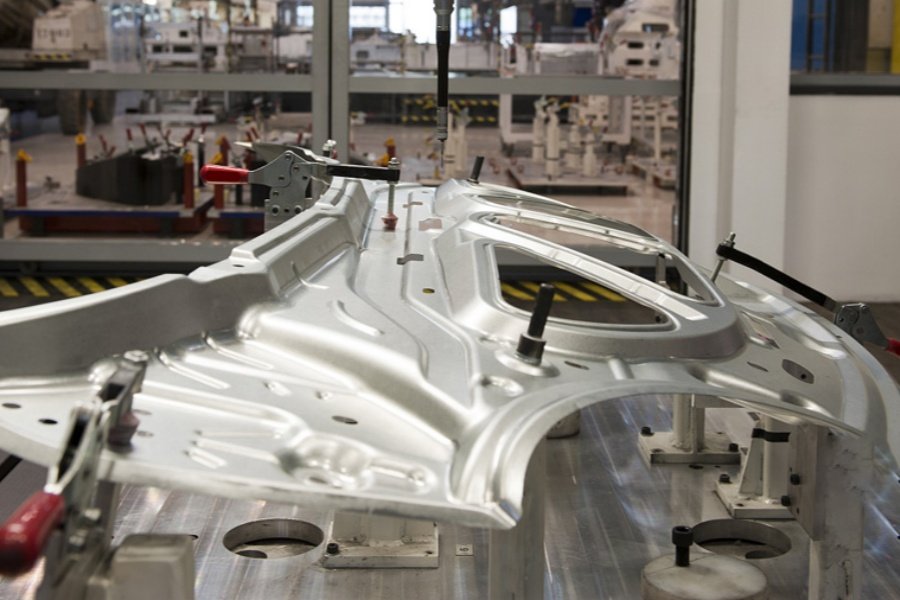
Precision Mold Manufacturing: Automotive stamping dies, complex multi-cavity injection molds for consumer electronics, deep-cavity shoe sole molds, and optical lens molds.
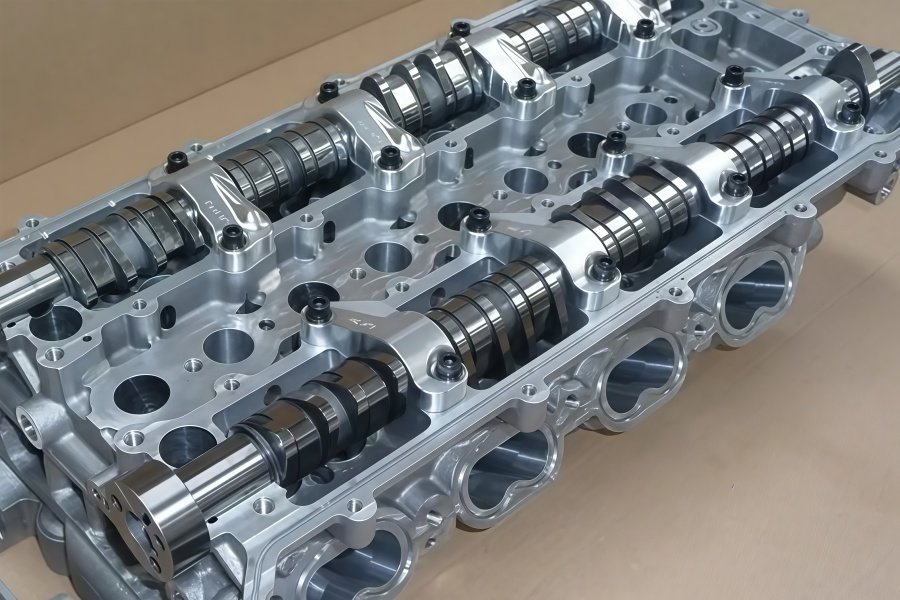
Premium Automotive and Motorsport: High-performance cylinder heads, turbocharger impellers, transmission housings, and lightweight suspension control arms.
Comprehensive Process Comparison: 3-Axis vs. 4-Axis vs. CNC 5-Axis
| Comparison Metric | 3-Axis CNC Machining | 4-Axis CNC Machining | CNC 5-Axis Simultaneous |
| Degrees of Freedom | 3 Linear (X, Y, Z) | 3 Linear + 1 Rotary (A or C) | 3 Linear + 2 Rotary (A/C or B/C) |
| Setup Frequency | Multiple (Often 3-6 setups) | Multiple or Reduced (Good for rotary) | Single Setup (Completes most/all faces) |
| Machining Blind Spots | Extensive; cannot reach undercuts | Moderate; restricted by single-axis limit | None; tool axis reaches any spatial angle |
| Tooling Selection | Requires long tools for deep pockets | Moderate; limited by axial clearance | Utilizes shortest, most rigid tools possible |
| Surface Quality | Prone to mismatch marks | Good, but complex surfaces show transitions | Continuous smooth cutting; exceptional finish |
| Overall Efficiency | Low (cumbersome routing, high idle time) | Medium | Extremely High (intensive consolidation) |
From Manufacturing Pain Points to Process Upgrades: Strategic Enterprise Value
For modern comprehensive hardware manufacturing enterprises, investing in CNC 5-axis technology is not merely a hardware upgrade—it is a dimensional leap in productive capability.
When confronting increasingly strict international B2B orders and complex custom component requirements, factories often face the dilemma of “excess low-end capacity and insufficient high-end capability.” By deploying CNC 5-axis machining centers, a facility can completely break through the technical barriers of processing complex, custom multi-material components. It consolidates operations that previously required multiple machines, custom fixtures, and numerous operators into a single, highly efficient cell. This dramatically lowers comprehensive manufacturing costs and scrap rates while supplying the core technical confidence needed to secure premium global manufacturing contracts, enabling a strategic transition from competing on price to commanding a premium on engineering capability and uncompromising quality.
Partner with a Comprehensive CNC Manufacturing Expert Transitioning to 5-axis manufacturing requires a partner with deep engineering expertise. At Shenzhen Xinmingliang Technology Co., Ltd., we are a comprehensive precision hardware manufacturer equipped to handle complex multi-material projects. Whether you need custom aerospace components, precision microdermabrasion accessories, or intricate molds, our advanced 5-axis CNC capabilities ensure your designs are realized with uncompromising quality.