Most cost reduction conversations start too late. By the time a purchase order is issued, the geometry, the tolerance block and the material callout are already frozen, and the only lever left on the table is the hourly rate. That lever moves very little, and it moves in only one direction.
The money that is actually available sits upstream. It sits in decisions a designer and a buyer make before the RFQ leaves the building, and in how clearly those decisions get communicated to the shop that quotes the job.
This article breaks a CNC machining quote into the six drivers that produce it. For each driver, it shows what a buyer can change, what cannot be changed, and what the trade-off looks like in a real shop. The goal is not a cheaper part. The goal is a part that costs what it should cost, with the tolerance still where the assembly needs it.
What Actually Drives the Price on a CNC Machining Quote
A quote is not a guess about how hard a part looks. It is the sum of five inputs, and every line item on the page traces back to one of them.
The Five Inputs Behind Every Line Item
The first input is material, priced from the blank size rather than the finished part size. The second is machine time, which is cycle time multiplied by the shop rate for whichever machine the job occupies. The third is setup, meaning programming, fixture work, tool loading and the first-article check. The fourth is secondary operations, from anodizing to heat treat to assembly. The fifth is risk allowance.
That fifth input is the one buyers rarely see and always pay for. A shop that receives a drawing with an ambiguous datum, an unreachable corner radius or a tolerance tighter than the process can hold will add margin. It is not dishonesty. It is how a shop protects itself from a rework loop it cannot price.
Which Inputs a Buyer Can Move, and Which Cannot
Machine time per cubic inch of removed material is fixed by physics and by the material. No purchasing tactic changes it. What a buyer can move is the volume of material that has to be removed, the number of times the part is handled, and the precision demanded at each surface.
Everything in this article follows from that split. If a change does not reduce removed volume, reduce handling, or relax a tolerance that was never needed, it is not a cost reduction. It is a negotiation, and negotiations have a floor. The rest of the work happens in the drawing, which is why a structured DFM review, run as part of our CNC Machining Services, returns more than any round of price pressure.
Material Stock: Size, Grade and Buy-to-Fly Ratio
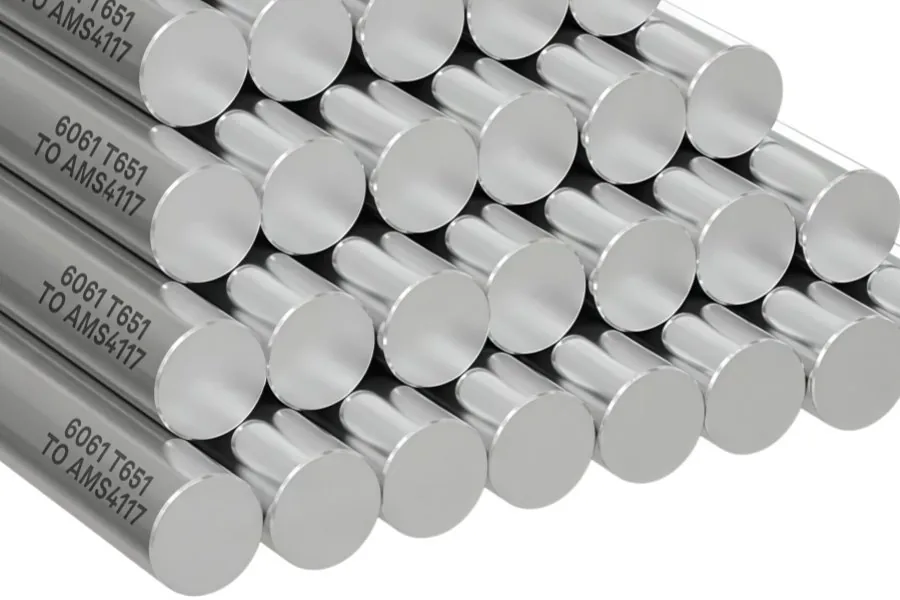
Material is often the largest single line on a machining quote, and it is also the line buyers misunderstand most often. Shops buy stock by weight and by size. They do not buy it by the finished envelope.
Why 6061 and 7075 Quote Differently
Two aluminum grades with similar density can quote at very different prices, and the gap comes from three places at once. The first is mill price. The second is cutting behavior, because a harder alloy cuts slower and wears tools faster. The third is availability in the thickness you need, which decides whether the shop can order a standard plate or has to pay for a special mill run.
A detailed comparison of 6061 and 7075 covers the mechanical side. From a cost standpoint, the usable conclusion is narrower. Specify the stronger alloy only where the strength is doing structural work. When 7075 is called out on a bracket that carries no load, the buyer is paying a material premium and a machining premium for a property the part never uses.
The same logic extends to titanium. Titanium is not expensive because of its price per kilogram alone. It is expensive because it cuts slowly, generates heat at the edge, and tolerates fewer mistakes. The reasons behind that premium, starting with why titanium machining carries a premium, are worth reading before a titanium callout becomes a habit.
Oversized Blanks and What They Waste
Buy-to-fly ratio is the weight of stock purchased divided by the weight of the finished part. A high ratio means most of the material you paid for leaves the shop as chips.
Two habits push that ratio up. The first is ordering a standard plate because it is on the shelf, then machining down to a thin section. The second is designing a part that must be carved from a solid block when the same function could be served by a near-net shape, a casting, or two pieces bolted together.
Neither habit is free. Chips carry the price of the material plus the price of the machine time that made them. When a design can start closer to final form, both costs fall at the same time, and no supplier conversation is required.
Tolerance: The Spec That Multiplies Every Other Line
Tolerance is the only specification that raises every other line on the quote at once. Tighten it and you add operations, add inspection, add scrapped parts, and add the risk allowance described earlier. That is why it deserves more attention than any other callout on the drawing.
Read the Tolerance Stack Before You Tighten Anything
A tolerance stack is the arithmetic of how individual part tolerances accumulate into the clearance or interference at the assembly. Designers who skip this step often compensate by tightening everything, which is the expensive way to solve an arithmetic problem.
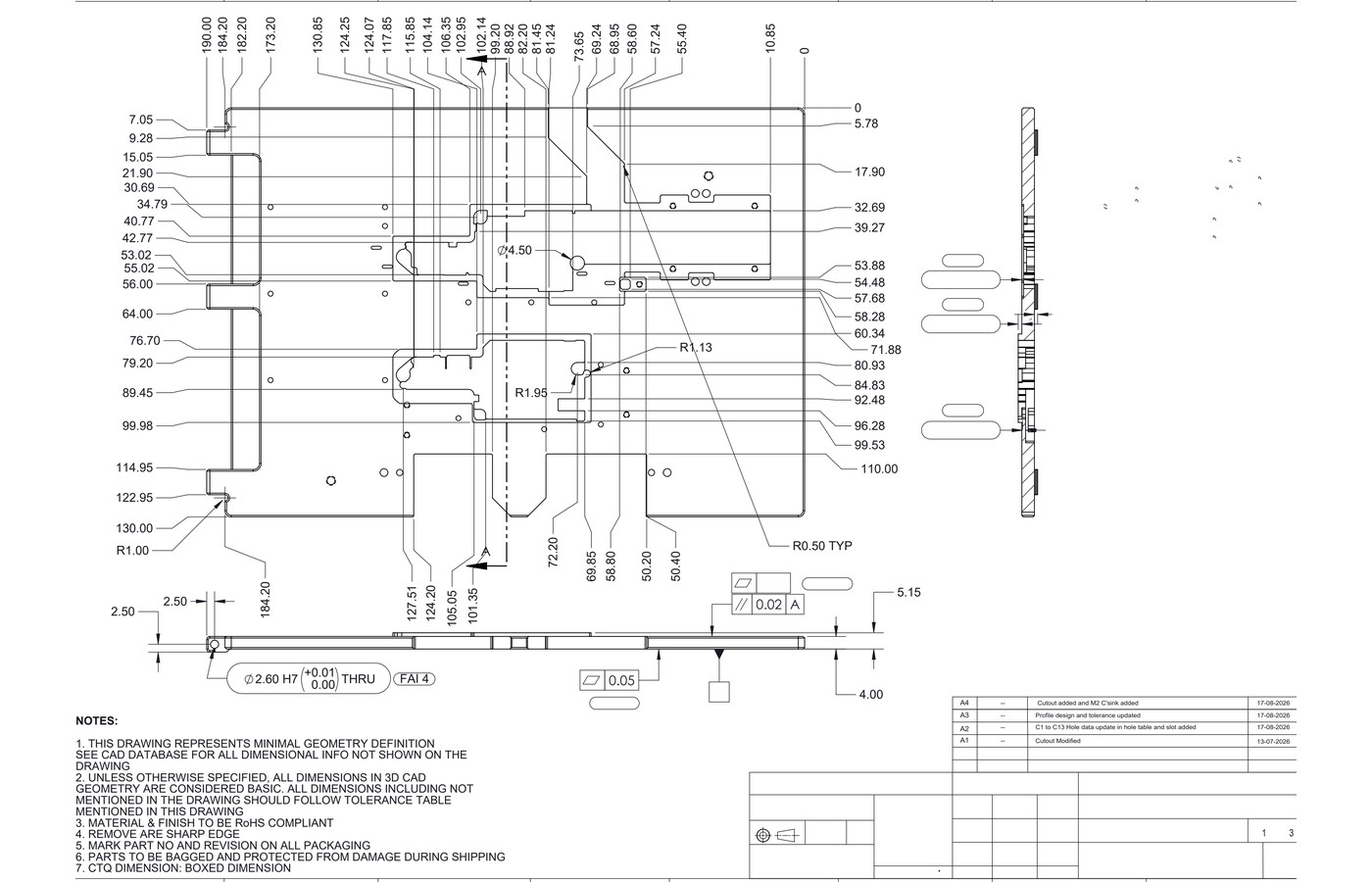
The cheaper approach is to identify the two or three dimensions that actually control the fit and spend the precision there. Everything else can relax. On a typical machined assembly, that means a small number of critical features carry the tight callouts while the surrounding geometry sits at general tolerance.
The design guide to tolerance control and DFM covers how to define those critical features so the shop can inspect them without guesswork. A datum scheme that matches how the part is fixtured does more for a tight tolerance than any note added to the title block.
When a General Tolerance Is the Correct Call
General tolerance classes exist for a reason. ISO 2768 provides standard tolerance grades for dimensions that carry no functional requirement, and the medium class covers most non-critical features on a machined part. Applying it deliberately tells the shop which dimensions matter.
The failure mode is the opposite habit: a drawing where every dimension carries a two-decimal tolerance because the CAD template shipped that way. Shops quote that drawing at the tightest requirement, then hold the part to it, then inspect it. All three steps cost money the design never needed.
If a dimension has no assembly consequence, no sealing function and no mating interface, it does not need a tight callout. Understanding what a machine can actually hold helps here, because a tolerance that sits outside normal process capability will be quoted with a safety margin regardless of what the print says.
Setup Count: The Fastest Way to Reduce CNC Machining Cost
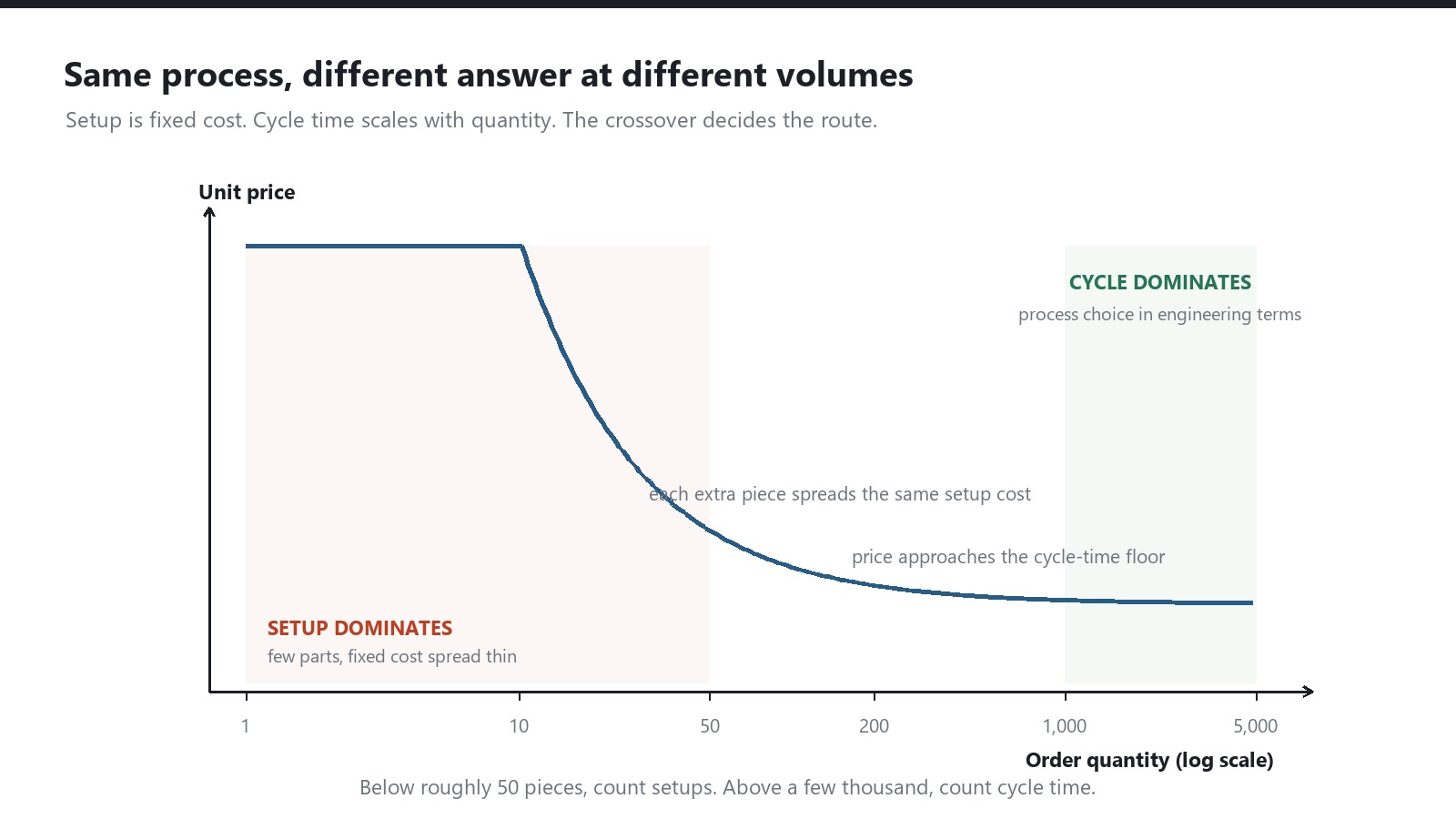
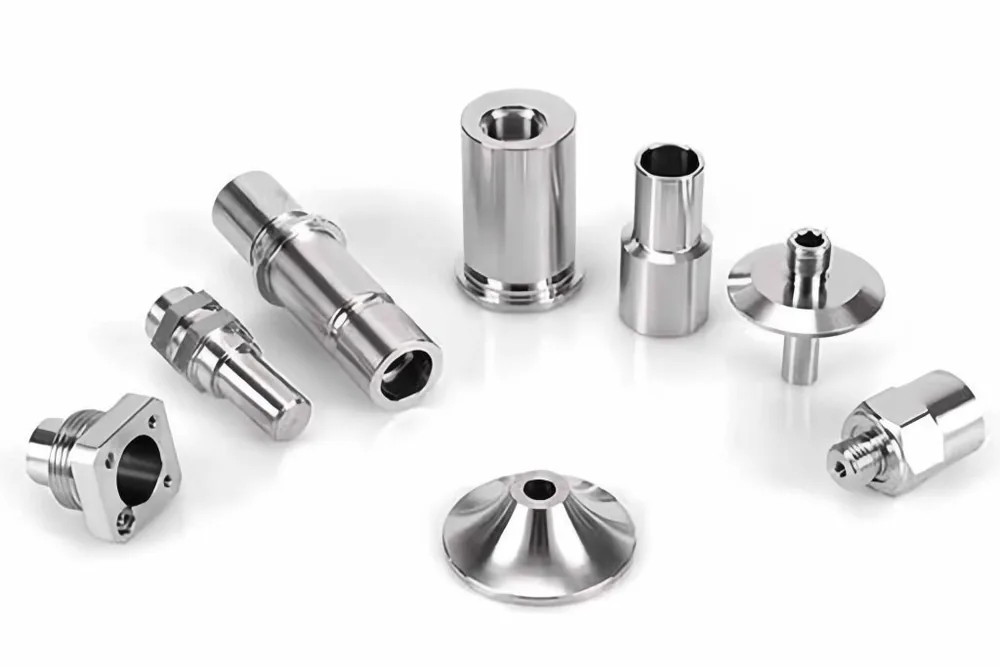
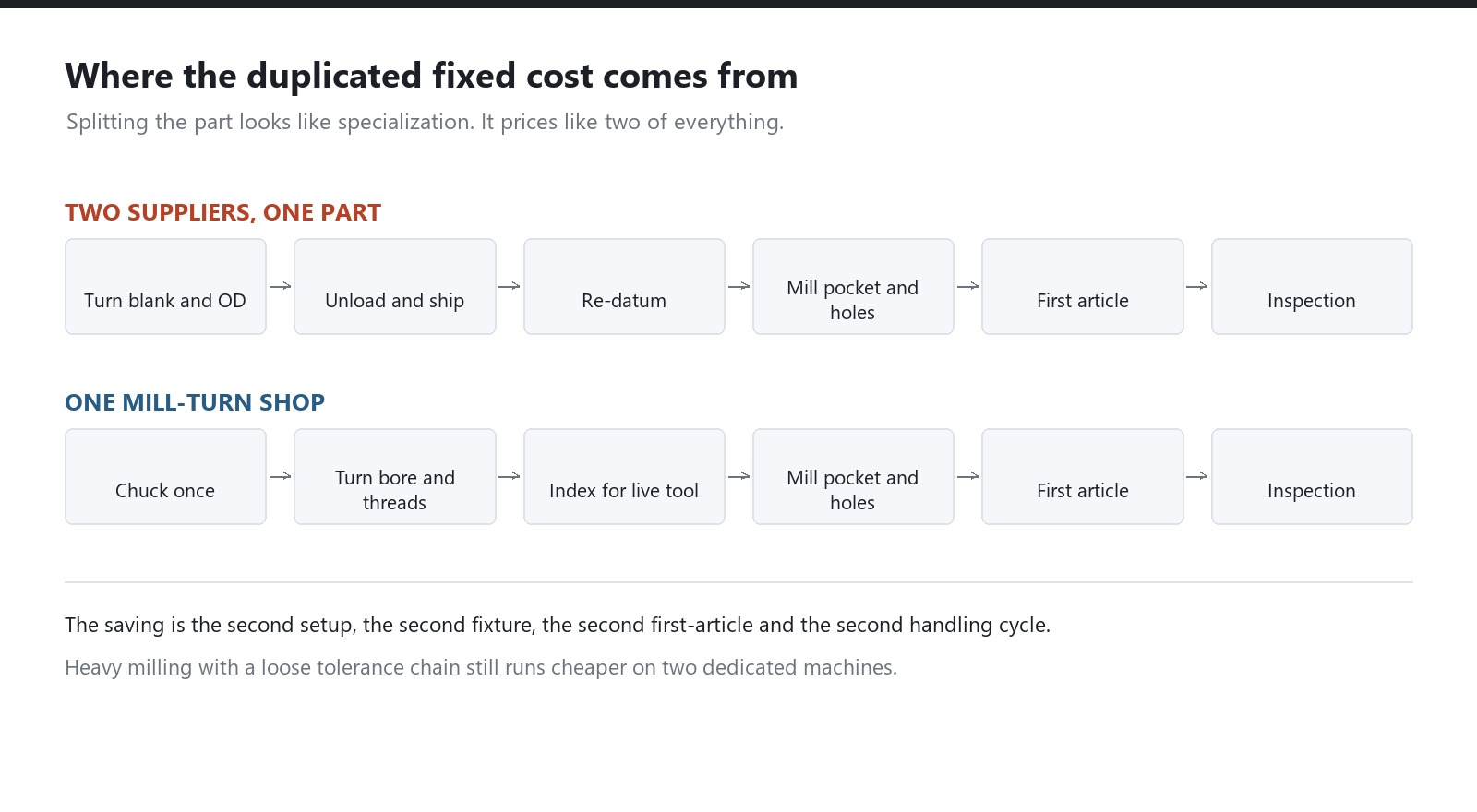
If a buyer wants one actionable answer to how to reduce CNC machining cost, this is it. Setup is where a shop spends labor that produces no chip. Every additional setup adds a fresh fixture, a fresh zero, a fresh first-article check and a fresh chance to introduce error.
Part Orientation and Fixture Design
The number of setups is decided by geometry, not by the machine. A part with features on five faces needs either multiple orientations or a machine that can reach them in one. A part with features on one face and a clean back side may need only two.
Orientation matters as much as count. A part clamped on a thin wall will deflect under cutting force, so the shop has to slow down or add support. Both responses cost money. Designing a clamping surface that is stiff and accessible removes the problem before it reaches the shop floor.
When 5-Axis Pays for Itself
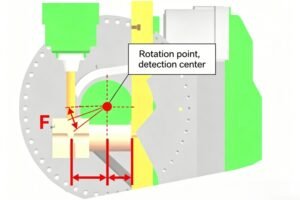
Five-axis machining is usually described as a capability for complex surfaces. That description is accurate but incomplete, because the cost argument is often stronger than the geometry argument. A single setup on a five-axis machine can replace three setups on a three-axis machine, and the savings come from eliminated handling rather than from faster cutting.
Five-axis is not automatically more expensive than three-axis work. Whether it costs more depends on what it replaces. When a part needs four orientations and tight true position across them, five-axis usually wins on total cost. When a part is a simple plate with holes on one face, it does not.
The trade-off is worth stating plainly. Five-axis raises the hourly rate and lowers the number of hours. The crossover point sits where the setup savings exceed the rate premium, and that point moves with part complexity, not with volume alone.
Surface Finish and Secondary Operations: Spec by Function
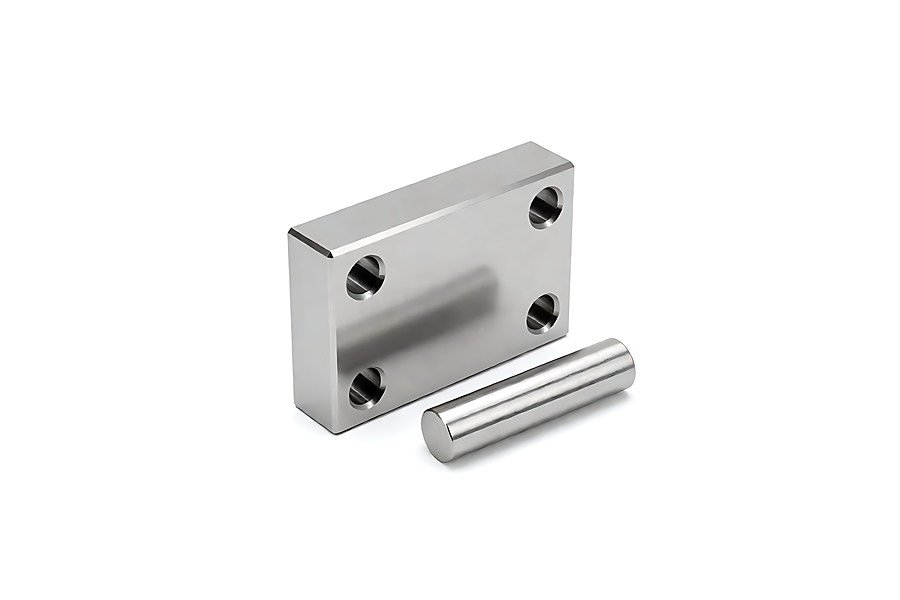
Most surface finish callouts on a drawing were copied from an earlier revision, and nobody remembers why they are there. Secondary operations are where that habit gets expensive, because each one adds a vendor, a handling step and a queue.
Anodizing vs Powder Coating: What Each Adds to Cost and Lead Time
Anodizing is an electrochemical conversion of the aluminum surface. It changes dimension slightly, because the oxide layer grows into and out of the surface, so threaded holes and precision bores need masking or an allowance. It also adds a process step outside the machine shop in most cases.
Powder coating is an applied polymer layer. It builds more thickness than anodizing, which matters on mating surfaces and on parts with fine features. It is generally the more forgiving option where the requirement is color and abrasion resistance rather than dimensional control.
The practical rule is to specify finish by what the surface must survive, not by what the last project used. A part that lives indoors and never gets touched does not need the same treatment as a part exposed to salt spray.
Volume, Lead Time and the RFQ Itself
Two levers remain after the drawing is settled, and both are commercial rather than technical. Neither requires a redesign, which makes them the easiest to use and the easiest to forget.
What a Complete RFQ Contains
A complete inquiry gives the shop enough information to quote without adding margin for unknowns. That means a drawing with a revision letter, a 3D model in a neutral format, the material and temper, the finish and its masking requirements, the quantity with any annual forecast, the inspection level expected, and the date the parts are needed.
Each missing item becomes a question, and each question becomes a delay or a cushion in the price. A drawing without a material temper, for example, forces the shop to assume the worst case. A quantity quoted as a single number with no forecast prevents the shop from planning a bar feed or a batch run.
Lead time works the same way. A shop schedules around the dates it is given. When a date is firm and the quantity is real, the job can be planned into a gap in the schedule. When the date is soft, the job goes to the back of the queue, because the shop cannot commit capacity to a moving target.
The most reliable path to an accurate quote is to send the full package the first time through the CNC Machining Quote Form, including the drawing revision and the model. A quote built on complete information is the only quote that can be compared honestly against another.
Conclusion
How to reduce CNC machining cost comes down to six moves, and only one of them happens in a conversation about price. Buy material closer to final form. Spend tolerance only where the assembly needs it. Combine setups by changing orientation or by using five-axis where it replaces handling. Specify finish by function. Quote a real quantity with a real date. Send a complete package.
The rest is arithmetic that the shop does on your behalf, and it works better when the input is clean. If you have a part where the cost does not match the geometry, send the drawing and the model to our team through the CNC Machining Quote Form. We will review the design for manufacturing before quoting, and tell you which of the six drivers is carrying the price. More background on how we approach this work sits on the About Us page, and other cost and process breakdowns are collected on the Blog Homepage.